Dubai Telegraph - Lost in space: Sperm struggles to navigate during weightless sex

EUR -
AED 4.241855
AFN 72.754432
ALL 96.085419
AMD 435.786045
ANG 2.067238
AOA 1058.976619
ARS 1584.416613
AUD 1.668657
AWG 2.081577
AZN 1.963562
BAM 1.958501
BBD 2.324366
BDT 141.598951
BGN 1.973957
BHD 0.4371
BIF 3429.837876
BMD 1.154828
BND 1.483084
BOB 7.992229
BRL 6.039519
BSD 1.154021
BTN 108.748324
BWP 15.866361
BYN 3.465669
BYR 22634.620324
BZD 2.321041
CAD 1.59793
CDF 2639.364949
CHF 0.916119
CLF 0.026908
CLP 1062.27995
CNY 7.978876
CNH 7.987226
COP 4265.678972
CRC 535.051764
CUC 1.154828
CUP 30.602931
CVE 110.419186
CZK 24.48783
DJF 205.509637
DKK 7.471699
DOP 69.577759
DZD 153.567517
EGP 60.919445
ERN 17.322414
ETB 178.357225
FJD 2.596341
FKP 0.863621
GBP 0.864129
GEL 3.112263
GGP 0.863621
GHS 12.616672
GIP 0.863621
GMD 84.881166
GNF 10116.864079
GTQ 8.828404
GYD 241.439229
HKD 9.036947
HNL 30.644056
HRK 7.535594
HTG 151.132345
HUF 387.707374
IDR 19533.908305
ILS 3.605952
IMP 0.863621
INR 108.504369
IQD 1511.824159
IRR 1516461.819995
ISK 142.794582
JEP 0.863621
JMD 181.370119
JOD 0.818764
JPY 184.255628
KES 150.011361
KGS 100.990148
KHR 4621.4733
KMF 493.110949
KPW 1039.411558
KRW 1738.569596
KWD 0.354798
KYD 0.961751
KZT 555.968746
LAK 24926.915142
LBP 103344.902703
LKR 362.949956
LRD 211.76754
LSL 19.74324
LTL 3.409906
LVL 0.698544
LYD 7.369162
MAD 10.774645
MDL 20.270569
MGA 4809.737001
MKD 61.728412
MMK 2425.11916
MNT 4138.703025
MOP 9.299606
MRU 46.033882
MUR 53.849906
MVR 17.842152
MWK 2001.120298
MXN 20.502867
MYR 4.612359
MZN 73.795522
NAD 19.74324
NGN 1600.175159
NIO 42.469671
NOK 11.138601
NPR 173.997719
NZD 1.996437
OMR 0.444039
PAB 1.154016
PEN 3.993912
PGK 4.986964
PHP 69.450197
PKR 322.123193
PLN 4.272562
PYG 7553.009814
QAR 4.207018
RON 5.097294
RSD 117.41827
RUB 93.810626
RWF 1685.267852
SAR 4.332547
SBD 9.287166
SCR 15.993858
SDG 694.05154
SEK 10.849022
SGD 1.482671
SHP 0.86642
SLE 28.350504
SLL 24216.169179
SOS 659.529514
SRD 43.377631
STD 23902.59906
STN 24.534472
SVC 10.098101
SYP 128.697299
SZL 19.737732
THB 37.904329
TJS 11.044217
TMT 4.041896
TND 3.39495
TOP 2.780547
TRY 51.230572
TTD 7.833006
TWD 36.827525
TZS 2967.974997
UAH 50.639111
UGX 4293.013226
USD 1.154828
UYU 46.784924
UZS 14056.506376
VES 533.634686
VND 30430.861232
VUV 137.451427
WST 3.175234
XAF 656.877088
XAG 0.016748
XAU 0.000259
XCD 3.12098
XCG 2.079913
XDR 0.814663
XOF 656.87424
XPF 119.331742
YER 275.599659
ZAR 19.643269
ZMK 10394.833581
ZMW 21.667349
ZWL 371.854006
  • RBGPF

    -13.5000

    69

    -19.57%

  • CMSC

    -0.0350

    22.875

    -0.15%

  • BCC

    -0.9800

    73.67

    -1.33%

  • BP

    0.9750

    46.385

    +2.1%

  • AZN

    -3.2800

    183.86

    -1.78%

  • RIO

    -2.0200

    85.52

    -2.36%

  • GSK

    -0.2800

    54.42

    -0.51%

  • BCE

    -0.0250

    25.465

    -0.1%

  • BTI

    -0.0200

    58.43

    -0.03%

  • RYCEF

    -0.6000

    15.3

    -3.92%

  • NGG

    -1.5200

    82.77

    -1.84%

  • CMSD

    0.0100

    22.69

    +0.04%

  • JRI

    -0.0600

    12.04

    -0.5%

  • RELX

    -0.2600

    32.21

    -0.81%

  • VOD

    0.0350

    14.755

    +0.24%

Lost in space: Sperm struggles to navigate during weightless sex
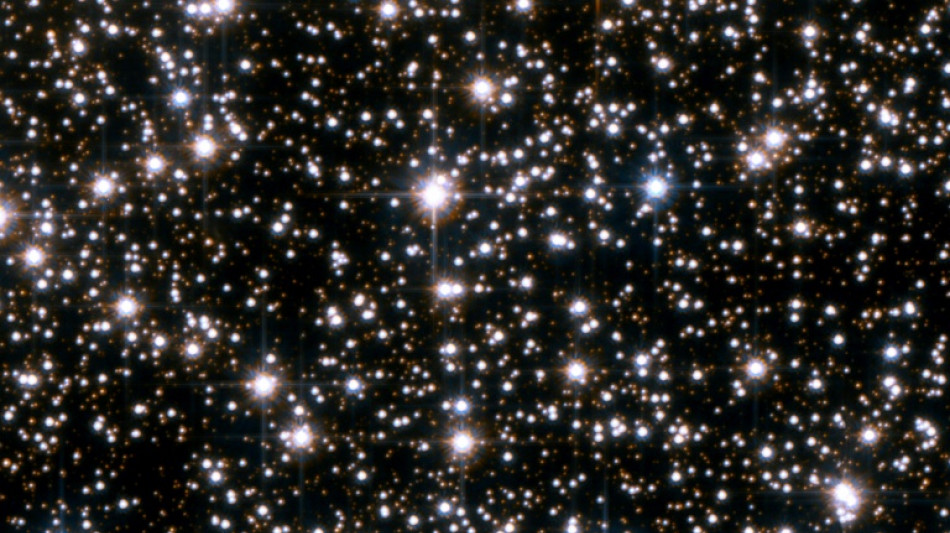
Lost in space: Sperm struggles to navigate during weightless sex / Photo: © ESA/AFP/File

Lost in space: Sperm struggles to navigate during weightless sex

Scientists have used a tiny plastic "obstacle course" to test how much sperm would struggle to navigate during sex in the weightlessness of space.

Text size:

Some particularly resilient sperm still made it through the course, suggesting that conceiving children in space will still be possible, according to research published on Thursday.

However a bigger problem could be that the development of embryos after fertilisation was harmed by a lack of gravity, the Australian team of researchers found.

With humanity setting its eyes on colonising space -- next week NASA hopes to launch its first crewed mission around the Moon in half a century -- scientists have been studying how difficult it will be to procreate on spaceships or other worlds.

One of the biggest challenges is that sperm will no longer be pulled downwards by Earth's gravity.

"Sperm need to actively find their way to an egg, and this study is the first to put that ability to the test under space-like conditions," Nicole McPherson, a researcher at Adelaide University in Australia, told AFP.

The scientists used a plastic chamber that resembles the female reproductive tract to act as a "miniature obstacle course", the senior author of the new study said.

"Think of it as a tiny race track... sperm are introduced at one end and have to swim their way through to the other."

- Filtering out weak runners -

Both human and mice sperm were sent down the course, which was inside a device that uses constant rotation to simulate the microgravity of space.

The sperm was about 50 percent worse at navigating through the course compared to how they perform under Earth's gravity.

This worked out to be roughly a 30-percent drop in successful fertilisation, according to the study in the journal Communications Biology.

However the sperm that did make it through seemed to produce better-quality embryos, which could turn out to be "beneficial", McPherson said.

It appeared that the stress of microgravity acted as a "filter" that effectively cleared the field, "leaving only the most capable sperm in the running," she explained.

A bigger problem came in the first 24 hours after sperm had fertilised the eggs.

"The results reversed sharply, with fewer embryos formed, and those that did were of poorer quality," McPherson said.

This suggests that microgravity "may not be the deal-breaker we feared, but protecting the embryo from weightlessness in those critical first hours will likely be essential for reproduction in space," she added.

Some including billionaire SpaceX founder Elon Musk have ambitious plans to make humans an interplanetary species by establishing settlements on the Moon then Mars.

There has also been speculation that the first baby conceived outside the bounds of Earth could be the result of a couple having sex on a flight launched by the booming space tourism industry.

McPherson emphasised that much more research is needed to understand how reproduction works in space, adding that fertilisation is "only one small piece of a very long and complex puzzle".

"We are still a long way from seeing the first space baby."

G.Mukherjee--DT