Dubai Telegraph - Gas shortages push India's poor back to wood and coal

EUR -
AED 4.238811
AFN 75.022966
ALL 91.672628
AMD 419.537692
ANG 2.066447
AOA 1059.55903
ARS 1739.351817
AUD 1.619413
AWG 2.07901
AZN 1.957383
BAM 1.956934
BBD 2.324627
BDT 142.102356
BGN 1.943034
BHD 0.435048
BIF 3450.970122
BMD 1.154204
BND 1.468738
BOB 13.33061
BRL 5.938261
BSD 1.154159
BTN 110.753228
BWP 15.620918
BYN 3.504601
BYR 22622.396885
BZD 2.321225
CAD 1.607968
CDF 2669.093803
CHF 0.945126
CLF 0.027889
CLP 1101.203245
CNY 7.746382
CNH 7.746544
COP 3605.53684
CRC 516.494861
CUC 1.154204
CUP 30.586404
CVE 110.327507
CZK 24.306268
DJF 205.527333
DKK 7.475508
DOP 67.868746
DZD 154.356205
EGP 59.774608
ERN 17.313059
ETB 185.827115
FJD 2.567526
FKP 0.855416
GBP 0.856252
GEL 2.989216
GGP 0.855416
GHS 13.25551
GIP 0.855416
GMD 84.83445
GNF 10148.793838
GTQ 8.81103
GYD 241.467851
HKD 9.05417
HNL 31.071061
HRK 7.534598
HTG 150.846116
HUF 365.292269
IDR 20419.021596
ILS 3.512185
IMP 0.855416
INR 110.699119
IQD 1512.584241
IRR 1586568.712443
ISK 139.820478
JEP 0.855416
JMD 181.782203
JOD 0.818363
JPY 179.229979
KES 149.422829
KGS 100.934904
KHR 4675.66929
KMF 492.845335
KPW 1038.783897
KRW 1577.940296
KWD 0.356256
KYD 0.961849
KZT 516.204696
LAK 25829.745926
LBP 103354.904211
LKR 380.75737
LRD 201.515043
LSL 18.778905
LTL 3.408064
LVL 0.698166
LYD 7.317715
MAD 10.91233
MDL 20.065455
MGA 5049.641947
MKD 61.561745
MMK 2423.199621
MNT 4154.59545
MOP 9.325424
MRU 46.225673
MUR 54.039998
MVR 17.77448
MWK 2004.271858
MXN 19.783361
MYR 4.668291
MZN 73.765567
NAD 18.769115
NGN 1529.554162
NIO 42.25512
NOK 10.78124
NPR 177.205165
NZD 2.008309
OMR 0.443795
PAB 1.154159
PEN 3.872336
PGK 5.127547
PHP 72.433244
PKR 319.961663
PLN 4.342075
PYG 6869.921965
QAR 4.203553
RON 5.260055
RSD 117.373314
RUB 97.18192
RWF 1695.453227
SAR 4.331814
SBD 9.256137
SCR 16.02754
SDG 694.306762
SEK 11.28161
SGD 1.469515
SHP 0.856679
SLE 28.439506
SLL 24203.069786
SOS 659.570827
SRD 43.570862
STD 23889.690871
STN 24.873095
SVC 10.098765
SYP 15006.959696
SZL 18.744258
THB 38.370374
TJS 10.647078
TMT 4.051256
TND 3.363062
TOP 2.779046
TRY 56.159985
TTD 7.832471
TWD 36.768321
TZS 3053.59421
UAH 51.524515
UGX 4535.56966
USD 1.154204
UYU 46.416499
UZS 13578.869679
VES 970.897898
VND 29987.372116
VUV 136.297398
WST 3.152705
XAF 655.957
XAG 0.017855
XAU 0.000267
XCD 3.119294
XCG 2.080124
XDR 0.816082
XOF 655.957
XPF 119.331742
YER 273.035606
ZAR 18.741265
ZMK 10389.219903
ZMW 22.534865
ZWL 371.653192
SSP 6516.900596
MXV 2.243306
  • RYCEF

    0.2600

    19.3

    +1.35%

  • GSK

    -0.0400

    50.01

    -0.08%

  • CMSC

    -0.1000

    20.32

    -0.49%

  • RIO

    -0.3800

    97.26

    -0.39%

  • RELX

    -1.5000

    34.22

    -4.38%

  • VOD

    0.1500

    17.68

    +0.85%

  • RBGPF

    0.0000

    69.99

    0%

  • BCE

    -0.2534

    22.9

    -1.11%

  • NGG

    -0.0300

    74.93

    -0.04%

  • CMSD

    -0.1700

    20.07

    -0.85%

  • AZN

    -1.9300

    161.85

    -1.19%

  • BCC

    0.6800

    75.93

    +0.9%

  • JRI

    -0.2065

    11.62

    -1.78%

  • BP

    1.0300

    46.96

    +2.19%

  • BTI

    -0.7700

    56.52

    -1.36%

Gas shortages push India's poor back to wood and coal
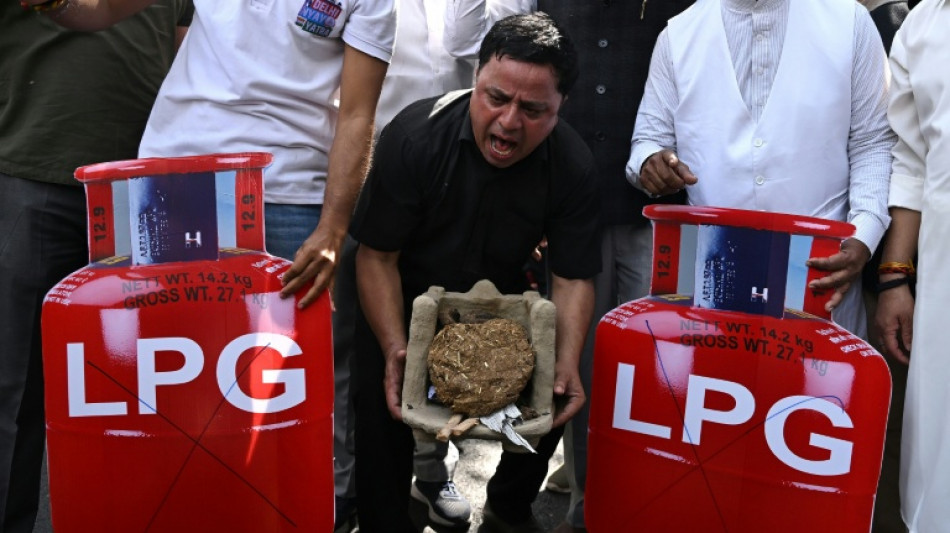
Gas shortages push India's poor back to wood and coal / Photo: Arun SANKAR - AFP

Gas shortages push India's poor back to wood and coal

Soaring black-market prices of cooking gas in India's capital are pushing poorer families back to wood and coal, raising health risks and worsening air quality in the highly polluted megacity.

Text size:

India is the world's second-largest buyer of liquefied petroleum gas (LPG), which is used for cooking and predominantly sourced from the Middle East -- and supplies have been strangled by the ongoing war.

India's Prime Minister Narendra Modi has urged states to curb black marketing and avoid panic, stressing that India's energy supplies remain stable.

In the low-income Madanpur Khadar neighbourhood, 36-year-old domestic helper Sheela Kumari says she has been forced to abandon LPG cooking gas cylinders for cooking after prices more than doubled.

"We used to buy cylinders for 1,800–2,000 rupees ($19-$21), but now on the black market it has gone up to 5,000 ($53)," she told AFP, nearly as much as she entire monthly salary of 6,000 rupees.

"It is unimaginable for us," she said. "The next best option for us was going back to wood and coal."

Kumari said a 14 kilogramme cylinder lasts only 15–20 days for her family of six, even when they stretch its use out.

But she says a 10 kilogramme bundle of firewood, lasting several days, costs 30 rupees ($0.30).

"There are health repercussions, and my children cough," she said. "But tell me a way out?"

- 'Too expensive' -

Her neighbour, 45-year-old Munni Bai, who has asthma, had switched to using an electric cooker as well as biogas from cow dung, to help her breathing.

But now she said she was being forced to resume use of alternative fuels.

"Gas is too expensive," she said. "We cannot depend on it -- we moved from coal and wood, due to my health issue, but now it is difficult to sustain."

But activists say the problem is more about access.

Many migrant workers lack documentation needed for subsidised LPG and rely on informal markets, where hoarding has pushed up prices.

"There is no major shortage yet, but hoarding has increased," said Deepak, who uses only one name, from the Centre for Advocacy and Research (CFAR).

"Many migrants depend on black-market cylinders, and prices have gone up two to three times".

New Delhi, and its wider sprawling metropolitan region of 30 million residents, is regularly ranked among the world's most polluted capitals, due to a deadly mix of emissions from power plants, heavy traffic, as well as the burning of rubbish and crops.

For the past decades, India's government has pushed its "Ujjwala" or "light" clean-energy scheme, to provide over 100 million LPG connections to poor households.

Burning wood, coal and biomass indoors exposes families to high levels of smoke and toxic particles, increasing the risk of respiratory illnesses.

Women and children, who spend more time near cooking areas, are especially vulnerable.

A.Murugan--DT