Dubai Telegraph - EU misstep on mercosur Deal

EUR -
AED 4.244436
AFN 73.389503
ALL 96.041475
AMD 437.227891
ANG 2.068863
AOA 1059.809568
ARS 1591.117901
AUD 1.663809
AWG 2.082925
AZN 1.95873
BAM 1.954592
BBD 2.335977
BDT 142.332035
BGN 1.975509
BHD 0.436313
BIF 3444.885879
BMD 1.155736
BND 1.48259
BOB 8.014012
BRL 6.040997
BSD 1.159793
BTN 109.092106
BWP 15.805369
BYN 3.437405
BYR 22652.420245
BZD 2.332679
CAD 1.597868
CDF 2635.077814
CHF 0.915938
CLF 0.026863
CLP 1060.688624
CNY 7.976305
CNH 7.983216
COP 4277.782432
CRC 539.269051
CUC 1.155736
CUP 30.626997
CVE 110.196419
CZK 24.476637
DJF 206.535037
DKK 7.471618
DOP 69.927086
DZD 153.324525
EGP 60.76882
ERN 17.336036
ETB 181.097361
FJD 2.598383
FKP 0.863596
GBP 0.865357
GEL 3.1147
GGP 0.863596
GHS 12.680109
GIP 0.863596
GMD 84.943654
GNF 10165.761288
GTQ 8.876476
GYD 242.648987
HKD 9.035831
HNL 30.712152
HRK 7.532279
HTG 152.086665
HUF 387.510676
IDR 19534.245254
ILS 3.607282
IMP 0.863596
INR 108.781896
IQD 1519.467505
IRR 1517654.369857
ISK 143.206866
JEP 0.863596
JMD 182.687885
JOD 0.819347
JPY 184.298222
KES 149.910497
KGS 101.068161
KHR 4651.145599
KMF 493.499383
KPW 1040.178735
KRW 1741.537699
KWD 0.354915
KYD 0.966507
KZT 559.596576
LAK 25005.762183
LBP 103706.496104
LKR 364.767721
LRD 212.827547
LSL 19.536695
LTL 3.412587
LVL 0.699093
LYD 7.395525
MAD 10.808973
MDL 20.279642
MGA 4834.054262
MKD 61.622775
MMK 2427.238714
MNT 4125.361797
MOP 9.339568
MRU 46.21164
MUR 53.891528
MVR 17.856098
MWK 2011.174446
MXN 20.55545
MYR 4.617149
MZN 73.903122
NAD 19.53661
NGN 1599.98893
NIO 42.683805
NOK 11.207202
NPR 174.54888
NZD 1.9938
OMR 0.444374
PAB 1.159783
PEN 4.010639
PGK 5.010925
PHP 69.637122
PKR 323.708741
PLN 4.281654
PYG 7546.401433
QAR 4.229668
RON 5.094603
RSD 117.440085
RUB 93.618694
RWF 1693.560664
SAR 4.335627
SBD 9.29447
SCR 16.592438
SDG 694.597244
SEK 10.810885
SGD 1.482844
SHP 0.867101
SLE 28.373451
SLL 24235.212834
SOS 662.793245
SRD 43.155748
STD 23921.396123
STN 24.484974
SVC 10.148772
SYP 128.226865
SZL 19.547089
THB 37.968233
TJS 11.105189
TMT 4.045075
TND 3.403382
TOP 2.782734
TRY 51.276297
TTD 7.88616
TWD 36.924603
TZS 2976.087716
UAH 50.922669
UGX 4291.329287
USD 1.155736
UYU 46.95078
UZS 14145.319039
VES 534.054338
VND 30438.611836
VUV 138.119748
WST 3.164637
XAF 655.554687
XAG 0.016593
XAU 0.00026
XCD 3.123433
XCG 2.090317
XDR 0.815303
XOF 655.560356
XPF 119.331742
YER 275.815943
ZAR 19.686745
ZMK 10403.013897
ZMW 21.717766
ZWL 372.146432
  • RBGPF

    -13.5000

    69

    -19.57%

  • CMSC

    0.0400

    22.91

    +0.17%

  • CMSD

    0.0500

    22.68

    +0.22%

  • BCC

    1.0800

    74.65

    +1.45%

  • VOD

    0.0600

    14.72

    +0.41%

  • BCE

    -0.3400

    25.49

    -1.33%

  • NGG

    1.9600

    84.29

    +2.33%

  • RYCEF

    0.3700

    16.06

    +2.3%

  • JRI

    0.2400

    12.1

    +1.98%

  • RELX

    0.0100

    32.47

    +0.03%

  • RIO

    0.7700

    87.54

    +0.88%

  • BTI

    0.6900

    58.45

    +1.18%

  • BP

    0.6200

    45.41

    +1.37%

  • AZN

    1.3600

    187.14

    +0.73%

  • GSK

    1.7500

    54.7

    +3.2%


EU misstep on mercosur Deal


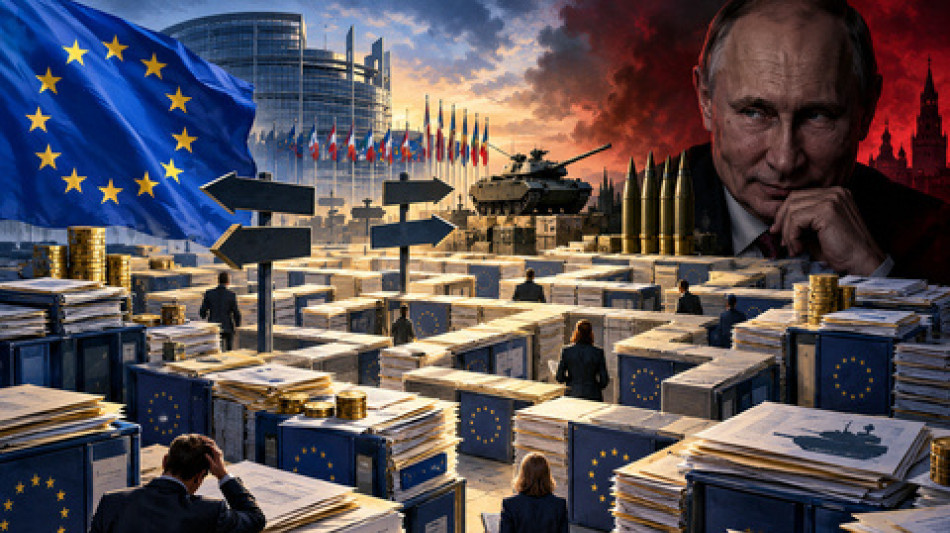
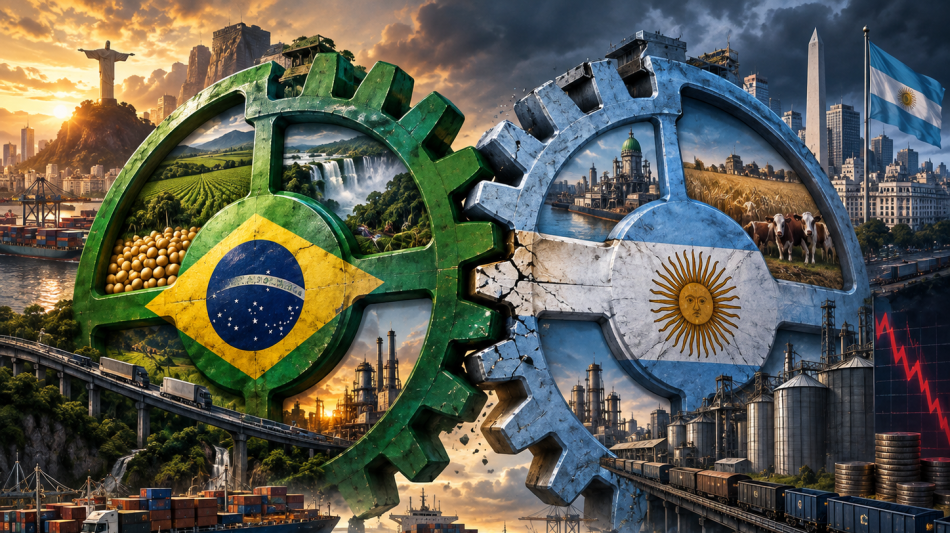
The European Union has spent decades negotiating a comprehensive trade agreement with the Mercosur bloc of South American nations. The pact would create a market of more than 700 million people and eliminate tariffs on over 90 percent of bilateral trade, allowing European manufacturers to sell more cars, machinery and wines to Argentina, Brazil, Paraguay and Uruguay, while letting South American producers export beef, poultry, sugar and other agricultural commodities to Europe. It is intended to secure access to raw materials, diversify supply chains and demonstrate Europe’s commitment to multilateralism at a time when global trade relations are under strain.

Long negotiations and last‑minute hesitation
The deal, however, has repeatedly stalled because of domestic European politics. French lawmakers demanded that their government refer the agreement to the EU’s Court of Justice, arguing that the way Brussels sought to bypass national parliaments violated EU treaties. France’s president assured protesting farmers that he would not support the agreement until stronger safeguards were added, reflecting longstanding fears that cheap South American imports would undercut European producers and that lax environmental rules in Brazil could lead to further deforestation. Austria, Poland, Ireland and Hungary sided with Paris and called for a “blocking minority” in the Council of Ministers. Italy, a potential swing vote, also hesitated until Brussels offered extra funding and a strengthened safeguard clause to protect sensitive products. In the European Parliament, a group of 145 members petitioned to send the accord to the EU Court, a move that would freeze ratification.

This domestic resistance provoked mass demonstrations. Thousands of farmers drove tractors into Brussels, Paris and other European capitals, blocking roads and throwing potatoes at police. They fear the pact would allow imports produced under looser health and environmental standards, undermining local markets and depressing prices. French unions demanded “mirror clauses” requiring Mercosur producers to meet EU pesticide rules and stricter inspections at the border. Brussels responded by including a legally binding safeguard mechanism in the agreement that would allow tariffs to be re‑imposed if imports from Mercosur harmed EU farmers. Supporters, led by Germany and Spain, argue that Europe cannot afford to turn inward. They warn that Chinese firms are expanding across Latin America and that failing to ratify the pact would leave the EU isolated.

Trump’s tariff offensive
The debate within Europe coincides with an aggressive trade posture from Washington. President Donald Trump has recast U.S. trade policy around tariffs, imposing broad levies on steel, aluminium and automobiles. Negotiators seeking a U.S.–EU trade accord reported in June 2025 that Washington was insisting on a 10 percent baseline “reciprocal tariff” on most European goods, and some officials acknowledged it would be difficult to avoid such duties. European carmakers such as Mercedes and Stellantis have already pulled earnings guidance because of uncertainty over U.S. tariffs. Failing to secure a new trade arrangement could expose European industry to levies of up to 50 percent.

On 17 January 2026, Trump escalated tensions further. In a post on his social network, he announced that additional 10 percent tariffs on goods from Denmark, Norway, Sweden, France, Germany, the Netherlands, Finland and Great Britain would take effect on 1 February and rise to 25 percent on 1 June. He linked the levies to an extraordinary demand that Denmark sell Greenland to the United States. European leaders rejected the threat and warned that using tariffs to force the sale of a territory undermined alliances. Trade experts noted that such measures would erode the basis for a U.S.–EU deal and encourage Europeans to look elsewhere for markets.

Europe’s self‑inflicted wound
Against this backdrop of mounting tariffs, the EU’s hesitance to ratify its largest free‑trade agreement looks like a self‑inflicted wound. The Mercosur pact would give European exporters a new market just as the U.S. threatens to close its own. It would offer Latin American partners an alternative to Chinese investment and send a message that Europe remains open for business. Delaying or blocking the deal not only frustrates South American allies but also signals that the EU lacks the capacity to act decisively in its own interest.

Critics in Europe acknowledge that domestic concerns must be addressed but argue that these are not insurmountable. The latest version of the agreement includes a safeguard mechanism that would temporarily reintroduce tariffs if imports surge. It also strengthens cooperation on digital trade and protects critical raw materials, reflecting lessons from Russia’s war in Ukraine. The pact commits both regions to uphold the Paris climate agreement and provides for stricter monitoring of deforestation. Supporters believe these measures strike a balance between protecting European farmers and promoting free trade.

Geopolitical ramifications
The stakes go beyond economics. In the days before the Mercosur signing ceremony, U.S. tariff threats and talk of a possible military seizure of Greenland drew condemnation from European officials. At the same time, Latin American leaders warned they would not wait indefinitely; Brazil’s president suggested he would abandon the deal if it were not signed soon. Europe’s credibility as a global actor depends on demonstrating that it can deliver agreements without being held hostage by internal politics. The more Europe hesitates, the more it encourages partners to seek alternatives with China or the United States.

A call for strategic clarity
Europe cannot insulate itself from global shocks by retreating behind national borders. Protectionism at home invites retaliation abroad, as Trump’s escalating tariffs demonstrate. By stalling the Mercosur agreement, the EU undermines its own leverage in negotiations with Washington and risks turning potential allies into competitors. Ratifying the pact, with appropriate safeguards for farmers and the environment, would expand markets for European goods, strengthen ties with a region rich in critical raw materials and agricultural products, and send a clear message that the EU is committed to open, rules‑based trade. In a world where tariffs are wielded as political weapons, shooting oneself in the foot is a mistake Europe cannot afford to make.
Featured


Marhabaan, welcome to the UAE and Dubai!

Marhabaan, welcome to the UAE and Dubai! The "skyward striving" Dubai next to ancient desert cities. Mysterious Bedouins and magnificent mosques exist peacefully alongside futuristic cities. Discover wadis and oases, golden sandy deserts, paradisiacal beaches and Arabian hospitality. The modern and the ancient Orient united in a book for dreaming.On this journey to Dubai and Abu Dhabi in the United Arab Emirates, the fairy tales of 1001 Arabian Nights meet the modern Arab world. These cascading cities enchant with their sky-high skyscrapers, fragrant souks, huge shopping centres and the ancient cultural heritage of the sheikhs.You can choose to stay in 4- or 5-star hotels with breakfast and swimming pools. You also have more options to book excursions so you can feel the magic of the East even more. If you want to do something out of the ordinary, you can spend an extra night in an enchanting hotel in the middle of the emirate's desert. Experience your own fairytale from 1001 nights and look forward to a holiday with plenty of casual extravagance in two superlative desert cities!

Trade and business at the Dubai Gold Souk

If Naif Deira is associated with a specific context, organization, or field, providing more details could help me offer more relevant information. Keep in mind that privacy considerations and ethical guidelines limit the amount of information available about private individuals, especially those who are not public figures. The Dubai Gold Souk is one of the most famous gold markets in the world and is located in the heart of Dubai's commercial business district in Deira. It's a traditional market where you can find a wide variety of gold, silver, and precious stone jewelry. The Gold Souk is known for its extensive selection of jewelry, including rings, bracelets, necklaces, and earrings, often crafted with intricate designs.Variety: The Gold Souk offers a vast array of jewelry designs, with a focus on gold. You can find items ranging from traditional to modern styles.Competitive Pricing: The market is known for its competitive pricing, and bargaining is a common practice. Prices are typically based on the weight of the gold and the craftsmanship involved.Gold and More: While gold is the primary focus, the souk also offers other precious metals such as silver and platinum, as well as a selection of gemstones.Cultural Experience: Visiting the Gold Souk provides not only a shopping experience but also a glimpse into the traditional trading culture of Dubai. The vibrant market is a popular destination for both tourists and locals.Security: The market is generally safe, and there are numerous shops with security measures in place. However, as with any crowded area, it's advisable to take standard precautions regarding personal belongings.Gold Souk is just one part of the larger Deira Souk complex, which also includes the Spice Souk and the Textile Souk. It's a must-visit for those interested in jewelry, and it reflects the rich cultural and trading history of Dubai.

Dubai: Amazing City Center, Night Walking Tour

During this excursion, we leisurely explore Dubai Downtown and Burj Khalifa in the evening, giving you the chance to witness the captivating transformation of the district as it comes alive with the vibrant glow of thousands of lights. As the sun sets, the illuminated facade of Burj Khalifa and the enchanting Dubai Fountain collaborate to produce a genuinely magical atmosphere.Dubai Downtown, also known as Downtown Dubai, is a distinguished and iconic district situated in the heart of Dubai, United Arab Emirates. It is a renowned neighborhood celebrated for its striking architecture, luxurious living, and exceptional entertainment options. At the core of Downtown Dubai stands the Burj Khalifa, a towering skyscraper that holds the title of the world's tallest man-made structure and serves as an emblem of modern Dubai.Burj Khalifa: The focal point of Downtown Dubai, Burj Khalifa, is famous for its groundbreaking height, reaching an impressive 828 meters (2,722 feet). Designed by architect Adrian Smith, its distinctive Y-shaped design encompasses a mix of residential, commercial, and hotel spaces.Dubai Mall: Adjacent to Burj Khalifa is the Dubai Mall, one of the largest shopping malls globally, featuring an extensive array of retail outlets, from high-end boutiques to international brands. The mall also provides various dining options, and entertainment attractions like an indoor ice rink and an aquarium, and hosts the mesmerizing Dubai Fountain.Dubai Fountain: Located just outside the Dubai Mall, the Dubai Fountain is a captivating attraction that presents a nightly spectacle of water, music, and light, captivating visitors with its perfectly synchronized performances.Emaar Boulevard: Stretching through Downtown Dubai, this boulevard is adorned with restaurants, cafes, and shops, making it a popular spot for leisurely strolls, dining, and people-watching.Luxury Living: Downtown Dubai boasts numerous upscale residential buildings and hotels, making it an appealing locale for those seeking a sophisticated urban lifestyle.Cultural Attractions: The Dubai Opera, an iconic cultural venue within the district, hosts a diverse range of performances, including opera, ballet, concerts, and theater productions.Transportation: Downtown Dubai is well-connected through public transportation, including the Dubai Metro, facilitating easy access to other parts of the city.In summary, Downtown Dubai is a dynamic and vibrant district that stands as a testament to Dubai's modernity and grandeur. It seamlessly combines architectural wonders with shopping, entertainment, and cultural offerings, creating a truly extraordinary destination.