Dubai Telegraph - Will US Forces Invade Iran?

EUR -
AED 4.327055
AFN 75.406758
ALL 95.495644
AMD 439.303524
ANG 2.108897
AOA 1081.616181
ARS 1622.129361
AUD 1.642752
AWG 2.120816
AZN 1.99729
BAM 1.957355
BBD 2.372544
BDT 144.525784
BGN 1.965409
BHD 0.4447
BIF 3499.345681
BMD 1.178231
BND 1.497264
BOB 8.16935
BRL 5.836833
BSD 1.178016
BTN 109.69834
BWP 15.793277
BYN 3.341297
BYR 23093.325032
BZD 2.369142
CAD 1.607554
CDF 2722.891359
CHF 0.917367
CLF 0.026396
CLP 1038.870123
CNY 8.032884
CNH 8.030339
COP 4218.526021
CRC 536.717204
CUC 1.178231
CUP 31.223118
CVE 110.576494
CZK 24.287521
DJF 209.395262
DKK 7.47287
DOP 71.106011
DZD 155.697739
EGP 61.268322
ERN 17.673463
ETB 185.104055
FJD 2.586158
FKP 0.871465
GBP 0.871125
GEL 3.16358
GGP 0.871465
GHS 13.04282
GIP 0.871465
GMD 86.011116
GNF 10341.921652
GTQ 9.006001
GYD 246.451573
HKD 9.225371
HNL 31.352399
HRK 7.533138
HTG 154.25991
HUF 361.787939
IDR 20184.508663
ILS 3.52175
IMP 0.871465
INR 109.721513
IQD 1543.482438
IRR 1558799.439626
ISK 143.190693
JEP 0.871465
JMD 186.608223
JOD 0.835338
JPY 187.212046
KES 152.168353
KGS 103.035888
KHR 4724.705808
KMF 492.500509
KPW 1060.406232
KRW 1733.908388
KWD 0.363224
KYD 0.981663
KZT 549.437091
LAK 25856.275939
LBP 105494.187853
LKR 372.769763
LRD 217.088712
LSL 19.275921
LTL 3.479009
LVL 0.7127
LYD 7.45233
MAD 10.873598
MDL 20.178685
MGA 4884.944926
MKD 61.625631
MMK 2474.001155
MNT 4211.203844
MOP 9.501186
MRU 45.2554
MUR 54.681006
MVR 18.204002
MWK 2045.990995
MXN 20.394466
MYR 4.653665
MZN 75.353783
NAD 19.275902
NGN 1585.541807
NIO 43.276696
NOK 10.975568
NPR 175.516944
NZD 1.99455
OMR 0.453018
PAB 1.178016
PEN 4.04962
PGK 5.123832
PHP 70.561875
PKR 328.549227
PLN 4.231204
PYG 7510.965961
QAR 4.291128
RON 5.098909
RSD 117.397738
RUB 88.307289
RWF 1720.806184
SAR 4.419447
SBD 9.471462
SCR 16.884433
SDG 708.116482
SEK 10.752122
SGD 1.496713
SHP 0.879668
SLE 29.043159
SLL 24706.90769
SOS 673.358782
SRD 44.123577
STD 24387.000149
STN 24.860671
SVC 10.307012
SYP 130.2494
SZL 19.276061
THB 37.726978
TJS 11.155471
TMT 4.129699
TND 3.402142
TOP 2.836897
TRY 52.894557
TTD 7.994214
TWD 37.03648
TZS 3066.846547
UAH 52.030762
UGX 4364.466697
USD 1.178231
UYU 46.8262
UZS 14268.376418
VES 566.29441
VND 31026.353473
VUV 137.779114
WST 3.199117
XAF 656.467289
XAG 0.014745
XAU 0.000244
XCD 3.184228
XCG 2.12305
XDR 0.817688
XOF 656.274432
XPF 119.331742
YER 281.184731
ZAR 19.276093
ZMK 10605.488828
ZMW 22.293329
ZWL 379.389859
  • RBGPF

    -13.5000

    69

    -19.57%

  • BCC

    0.9300

    83.97

    +1.11%

  • JRI

    0.0400

    13.13

    +0.3%

  • BCE

    -0.1400

    23.95

    -0.58%

  • CMSD

    0.0050

    23.085

    +0.02%

  • NGG

    -0.9000

    86.02

    -1.05%

  • GSK

    -1.0000

    57.35

    -1.74%

  • RIO

    -0.3200

    99.83

    -0.32%

  • BTI

    0.3800

    57.06

    +0.67%

  • CMSC

    -0.0398

    22.73

    -0.18%

  • RELX

    0.0600

    36.74

    +0.16%

  • RYCEF

    -0.4600

    17.2

    -2.67%

  • VOD

    0.1700

    15.65

    +1.09%

  • AZN

    -4.1100

    200.69

    -2.05%

  • BP

    0.5300

    45.12

    +1.17%


Will US Forces Invade Iran?


When the United States and Israel launched Operation Epic Fury on 28 February 2026, President Donald Trump said the campaign would be decisive. In speeches since then he has repeated four core objectives: destroy Iran’s ballistic missiles and the factories that build them; annihilate the Iranian navy; sever Tehran’s support for proxy militias; and ensure the Islamic Republic never acquires a nuclear weapon. Officials insist the mission is on course and that Iran’s navy and air force have been “eliminated,” with more than 12,000 Iranian targets struck and more than 155 vessels destroyed. The White House has described the war as a short, focused campaign.

Military records and independent reporting show a more complicated picture. Before the war Iran possessed an estimated 2,500 ballistic missiles. Although U.S. and Israeli strikes have degraded production lines and reduced Iran’s launch rate by about 90 %, intelligence sources say only about one‑third of the arsenal has been destroyed and that Tehran retains a modest capacity to hit Israel and the Gulf. The bombing has extended beyond military targets; Iranian officials say strikes have hit pharmaceutical plants, desalination facilities and other industrial sites, while the Iranian Red Crescent reports hundreds of civilian casualties. More than 2,000 Iranians have been killed, according to Al Jazeera, and U.S. Central Command acknowledges that thirteen American service members have died. Israel’s simultaneous campaign in Lebanon has displaced 1.2 million people, and Gaza’s humanitarian relief has been halted after Israel closed the Rafah crossing.

Shifting goals and international unease
The justifications for Operation Epic Fury have expanded. Trump’s initial pledge to aid Iranian protesters was followed by calls for regime change, then by claims of pre‑empting an imminent Iranian attack and of avenging alleged plots against the president. As the war unfolded, officials such as Secretary of State Marco Rubio and Secretary of War Pete Hegseth insisted the mission was narrowly focused on missile and naval destruction. Analysts note that the rhetoric has evolved to fit battlefield developments, creating confusion about the operation’s true purpose. Critics, including international legal scholars, argue that the campaign risks undermining the UN Charter and could normalise unilateral war. The UN High Commissioner for Human Rights has warned that the conflict’s spread “like wildfire” demands urgent de‑escalation.

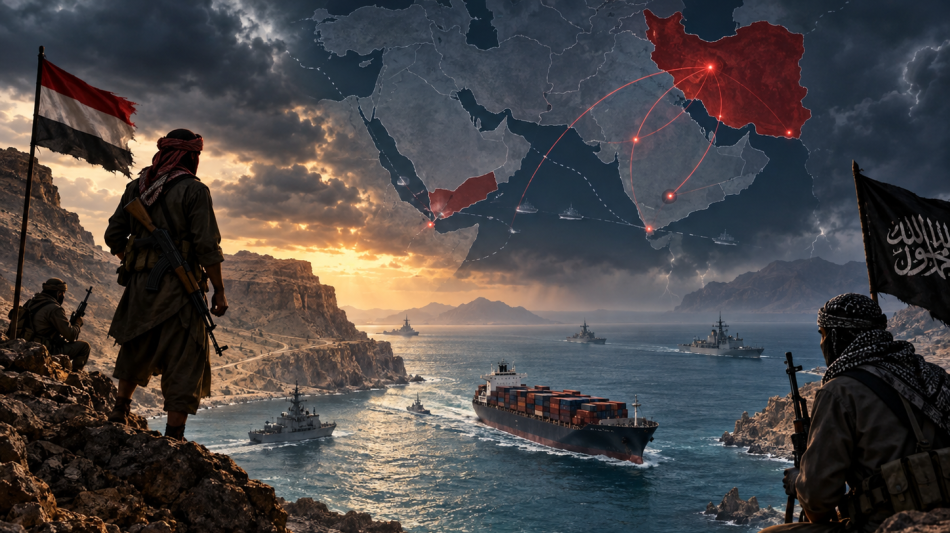
Allies are divided. Israel and several Gulf states have provided logistical support, but Spain, France and Italy have restricted U.S. access to airspace and bases. Britain is hosting talks on reopening the Strait of Hormuz, while China and Pakistan have proposed a ceasefire plan. Meanwhile, Iran’s regional partners continue to launch rockets and drones at Israel and U.S. facilities, and Iranian officials say they have “zero trust” in Washington. The prolonged closure of the Strait has pushed global oil prices higher and caused what some economists describe as the worst trade rupture in eighty years. Australia’s prime minister warned his citizens to prepare for months of economic turbulence.

Ground operations: speculation and reality
Talk of an imminent U.S. invasion of Iran has intensified after the Pentagon disclosed preparations for limited ground operations. According to officials, plans under consideration involve raids by special operations forces and Marines on Kharg Island and coastal areas near the Strait of Hormuz. Additional forces from the 82nd Airborne Division and a Marine Expeditionary Unit have already arrived in the region. White House press secretary Karoline Leavitt stressed that preparing options does not mean a final decision has been made. Supporters argue that seizing small pieces of terrain could help reopen the waterway and destroy remaining missile batteries; critics counter that such raids would expose U.S. troops to drones, mines and a determined Iranian defence.

Military scholars caution that history offers little comfort for a land war in Iran. Iran is a vast country with rugged terrain and a large standing army and Revolutionary Guard corps. Control of the 200‑kilometre‑long Strait requires keeping the entire waterway open, while Iran only has to close a single chokepoint. Limited raids might not compel Tehran to surrender; they could instead harden Iranian resolve, invite Russian assistance and produce U.S. casualties that erode domestic support. Retired officers note that the last major amphibious operation conducted by U.S. forces was the Incheon landing in the Korean War, underscoring the logistical difficulty of large‑scale landings in hostile territory—a point echoed by commenters online.

Voices from the public sphere
Public reactions reveal both anxiety and bravado. Some commenters salute the “fire, boom” rhetoric Trump used to describe air strikes, while others lampoon it as reckless and unbecoming of a head of state. Many question the wisdom of seeking “undisputed victory” in a country as large and resilient as Iran, warning that prolonged fighting will leave the rest of the world to “suffer for no good reason.” References to historic amphibious operations hint at scepticism about a ground invasion’s feasibility, and several contributors object to the war proceeding without congressional approval. Others voice fear that seizing Iranian oil facilities would be seen globally as plunder. There are, however, voices that praise the campaign and suggest that critics are simply “haters.” Taken together, the comments reflect a divided public grappling with the tension between perceived national security imperatives and the moral, legal and economic costs of war.

An uncertain path forward
Despite confident pronouncements from Washington, the path to a decisive end appears uncertain. Iran’s ability to launch drones and missiles has been dented but not destroyed; its proxies remain active across the Middle East; and the Strait of Hormuz—a lifeline for global commerce—remains contested. The domestic mood in the United States is mixed, and international support is fragmenting. Limited ground raids could deliver symbolic victories but risk entangling U.S. forces in exactly the kind of drawn‑out conflict Trump vowed to avoid. As diplomats convene and militaries mobilise, the world watches to see whether the current campaign marks the prelude to a broader invasion or the crest of an offensive that will soon wind down.

Featured


Marhabaan, welcome to the UAE and Dubai!

Marhabaan, welcome to the UAE and Dubai! The "skyward striving" Dubai next to ancient desert cities. Mysterious Bedouins and magnificent mosques exist peacefully alongside futuristic cities. Discover wadis and oases, golden sandy deserts, paradisiacal beaches and Arabian hospitality. The modern and the ancient Orient united in a book for dreaming.On this journey to Dubai and Abu Dhabi in the United Arab Emirates, the fairy tales of 1001 Arabian Nights meet the modern Arab world. These cascading cities enchant with their sky-high skyscrapers, fragrant souks, huge shopping centres and the ancient cultural heritage of the sheikhs.You can choose to stay in 4- or 5-star hotels with breakfast and swimming pools. You also have more options to book excursions so you can feel the magic of the East even more. If you want to do something out of the ordinary, you can spend an extra night in an enchanting hotel in the middle of the emirate's desert. Experience your own fairytale from 1001 nights and look forward to a holiday with plenty of casual extravagance in two superlative desert cities!

Trade and business at the Dubai Gold Souk

If Naif Deira is associated with a specific context, organization, or field, providing more details could help me offer more relevant information. Keep in mind that privacy considerations and ethical guidelines limit the amount of information available about private individuals, especially those who are not public figures. The Dubai Gold Souk is one of the most famous gold markets in the world and is located in the heart of Dubai's commercial business district in Deira. It's a traditional market where you can find a wide variety of gold, silver, and precious stone jewelry. The Gold Souk is known for its extensive selection of jewelry, including rings, bracelets, necklaces, and earrings, often crafted with intricate designs.Variety: The Gold Souk offers a vast array of jewelry designs, with a focus on gold. You can find items ranging from traditional to modern styles.Competitive Pricing: The market is known for its competitive pricing, and bargaining is a common practice. Prices are typically based on the weight of the gold and the craftsmanship involved.Gold and More: While gold is the primary focus, the souk also offers other precious metals such as silver and platinum, as well as a selection of gemstones.Cultural Experience: Visiting the Gold Souk provides not only a shopping experience but also a glimpse into the traditional trading culture of Dubai. The vibrant market is a popular destination for both tourists and locals.Security: The market is generally safe, and there are numerous shops with security measures in place. However, as with any crowded area, it's advisable to take standard precautions regarding personal belongings.Gold Souk is just one part of the larger Deira Souk complex, which also includes the Spice Souk and the Textile Souk. It's a must-visit for those interested in jewelry, and it reflects the rich cultural and trading history of Dubai.

Dubai: Amazing City Center, Night Walking Tour

During this excursion, we leisurely explore Dubai Downtown and Burj Khalifa in the evening, giving you the chance to witness the captivating transformation of the district as it comes alive with the vibrant glow of thousands of lights. As the sun sets, the illuminated facade of Burj Khalifa and the enchanting Dubai Fountain collaborate to produce a genuinely magical atmosphere.Dubai Downtown, also known as Downtown Dubai, is a distinguished and iconic district situated in the heart of Dubai, United Arab Emirates. It is a renowned neighborhood celebrated for its striking architecture, luxurious living, and exceptional entertainment options. At the core of Downtown Dubai stands the Burj Khalifa, a towering skyscraper that holds the title of the world's tallest man-made structure and serves as an emblem of modern Dubai.Burj Khalifa: The focal point of Downtown Dubai, Burj Khalifa, is famous for its groundbreaking height, reaching an impressive 828 meters (2,722 feet). Designed by architect Adrian Smith, its distinctive Y-shaped design encompasses a mix of residential, commercial, and hotel spaces.Dubai Mall: Adjacent to Burj Khalifa is the Dubai Mall, one of the largest shopping malls globally, featuring an extensive array of retail outlets, from high-end boutiques to international brands. The mall also provides various dining options, and entertainment attractions like an indoor ice rink and an aquarium, and hosts the mesmerizing Dubai Fountain.Dubai Fountain: Located just outside the Dubai Mall, the Dubai Fountain is a captivating attraction that presents a nightly spectacle of water, music, and light, captivating visitors with its perfectly synchronized performances.Emaar Boulevard: Stretching through Downtown Dubai, this boulevard is adorned with restaurants, cafes, and shops, making it a popular spot for leisurely strolls, dining, and people-watching.Luxury Living: Downtown Dubai boasts numerous upscale residential buildings and hotels, making it an appealing locale for those seeking a sophisticated urban lifestyle.Cultural Attractions: The Dubai Opera, an iconic cultural venue within the district, hosts a diverse range of performances, including opera, ballet, concerts, and theater productions.Transportation: Downtown Dubai is well-connected through public transportation, including the Dubai Metro, facilitating easy access to other parts of the city.In summary, Downtown Dubai is a dynamic and vibrant district that stands as a testament to Dubai's modernity and grandeur. It seamlessly combines architectural wonders with shopping, entertainment, and cultural offerings, creating a truly extraordinary destination.