Dubai Telegraph - Iran war fuels terror risks

EUR -
AED 4.190388
AFN 75.874588
ALL 93.859535
AMD 416.274986
AOA 1046.314438
ARS 1707.327971
AUD 1.629329
AWG 2.053834
AZN 1.939027
BAM 1.957093
BBD 2.294185
BDT 140.502814
BHD 0.429572
BIF 3402.828576
BMD 1.141019
BND 1.470307
BOB 12.649356
BRL 5.803332
BSD 1.139022
BTN 109.934658
BWP 15.73398
BYN 3.267158
BYR 22363.967361
BZD 2.290883
CAD 1.607753
CDF 2578.702671
CHF 0.929639
CLF 0.027497
CLP 1082.199536
CNY 7.727091
CNH 7.723174
COP 3672.539977
CRC 518.328774
CUC 1.141019
CUP 30.236997
CVE 110.33692
CZK 24.121597
DJF 202.831321
DKK 7.475658
DOP 66.332074
DZD 152.143502
EGP 58.58253
ERN 17.115281
ETB 183.844212
FJD 2.539622
FKP 0.856448
GBP 0.854343
GEL 2.995211
GGP 0.856448
GHS 13.246634
GIP 0.856448
GMD 84.435768
GNF 9993.119638
GTQ 8.68974
GYD 238.305333
HKD 8.948217
HNL 30.508351
HRK 7.537336
HTG 148.92185
HUF 359.345579
IDR 20526.470778
ILS 3.465964
IMP 0.856448
INR 109.775356
IQD 1492.18572
IRR 1568900.771986
ISK 143.003514
JEP 0.856448
JMD 180.664595
JOD 0.809005
JPY 186.64271
KES 147.757141
KGS 99.781676
KHR 4605.840731
KMF 495.202064
KRW 1672.362654
KWD 0.35383
KYD 0.949227
KZT 541.587766
LAK 25792.037903
LBP 102002.181385
LKR 382.782862
LRD 206.164383
LSL 19.239009
LTL 3.369131
LVL 0.690191
LYD 7.288719
MAD 10.666953
MDL 20.132299
MGA 5047.201417
MKD 61.593826
MMK 2396.138529
MNT 4100.817242
MOP 9.200778
MRU 45.460836
MUR 54.015819
MVR 17.629454
MWK 1975.052767
MXN 19.885281
MYR 4.66163
MZN 72.911668
NAD 19.239009
NGN 1557.102301
NIO 41.915669
NOK 10.9236
NPR 175.892568
NZD 1.96678
OMR 0.438645
PAB 1.139052
PEN 3.876361
PGK 5.09512
PHP 70.436793
PKR 316.391986
PLN 4.311306
PYG 6886.458579
QAR 4.140935
RON 5.229742
RSD 117.387948
RUB 88.770502
RWF 1678.364579
SAR 4.276069
SBD 9.220692
SCR 15.363408
SDG 685.184361
SEK 11.029983
SGD 1.471341
SLE 27.641148
SOS 650.912871
SRD 43.121954
STD 23616.784271
STN 24.515013
SVC 9.966584
SZL 19.236201
THB 38.258539
TJS 10.507649
TMT 3.993566
TND 3.37623
TRY 54.037049
TTD 7.739112
TWD 36.90454
TZS 3006.582083
UAH 51.045778
UGX 4293.798799
USD 1.141019
UYU 45.739814
UZS 13785.106271
VES 845.838791
VND 30025.90822
VUV 135.408239
WST 3.145013
XAF 656.373335
XAG 0.019205
XAU 0.000279
XCD 3.08366
XCG 2.052856
XDR 0.816318
XOF 656.381969
XPF 119.331742
YER 272.189869
ZAR 19.051167
ZMK 10270.53691
ZMW 21.100661
ZWL 367.40757
  • RBGPF

    -0.7300

    66

    -1.11%

  • CMSC

    -0.0650

    21.725

    -0.3%

  • AZN

    0.9900

    169.26

    +0.58%

  • GSK

    0.6100

    51.35

    +1.19%

  • RELX

    1.5500

    34.41

    +4.5%

  • BP

    -0.1100

    43.82

    -0.25%

  • BTI

    1.1200

    60.96

    +1.84%

  • BCE

    0.0900

    21.3

    +0.42%

  • RIO

    -0.2900

    91.22

    -0.32%

  • NGG

    -0.0700

    82.3

    -0.09%

  • BCC

    1.3800

    77.84

    +1.77%

  • JRI

    0.1600

    13.06

    +1.23%

  • CMSD

    -0.0200

    21.98

    -0.09%

  • VOD

    -0.1000

    15.15

    -0.66%

  • RYCEF

    -0.1900

    18.17

    -1.05%


Iran war fuels terror risks


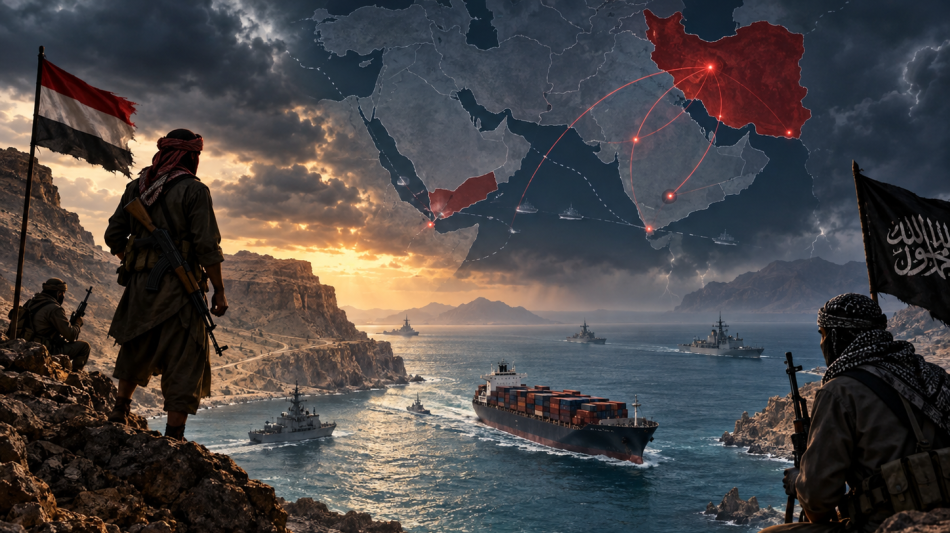
Terrorism fears, energy markets and geopolitical calculations have become deeply intertwined since the United States and Israel launched their assault on Iran. The assassination of Ayatollah Ali Khamenei and the sustained bombing campaign have unleashed ripple effects far beyond the Middle East. Officials across Europe and Asia warn that the conflict could trigger a wave of transnational terrorism and drive a spike in energy prices that would undermine economic stability.

Across Europe, security services have been tracking a spate of attacks and foiled plots linked to Iranian networks. Recent analyses note that Iran has expanded its collaboration with criminal groups abroad, using them to intimidate dissidents and target journalists, politicians and Jewish communities in Western countries. Investigators in Germany found that a former motorcycle‑gang member was sponsored by Iran to plan an assault on a synagogue in Bochum, while U.S. prosecutors say members of a Russian organised crime network were paid to plot the killing of an Iranian‑American activist. Authorities warn that hiring criminals gives Tehran plausible deniability and allows it to contract violence without sustaining a permanent terrorist infrastructure. Security analysts caution that dissidents and activists who celebrated the Supreme Leader’s demise may become targets for Iran’s violence‑for‑hire networks, especially in countries that support the U.S. campaign. They also point out that Iranian agents embedded in embassies and other institutions could be activated to sabotage military bases or diplomatic facilities if the regime feels cornered.

The immediate threat is not purely hypothetical. Since the war began on 28 February, at least eight incidents across Western and Eastern Europe have been linked to suspected Iranian sleeper cells. A network in Baku was dismantled after plotting to bomb the Israeli embassy, a synagogue and an oil pipeline; British police arrested four suspected operatives in London; improvised explosive devices detonated outside the U.S. embassy in Oslo and Jewish institutions in Liège, Rotterdam and Amsterdam; and a financial building in Amsterdam was bombed. Security services also arrested suspected spies surveilling a British nuclear submarine base. A new militant group calling itself Harakat Ashab al‑Yamin al‑Islamia claimed responsibility for some attacks and threatened more violence. Analysts warn that the group may be a front for Iran’s Revolutionary Guard or a disinformation campaign, but the attacks have already heightened anxiety across the continent. European governments say they have thwarted more than one hundred Iranian‑linked plots since 1979, and the current conflict has revived fears of reactivated sleeper cells.

Beyond orchestrated networks, experts worry about individuals seeking revenge. The martyrdom narrative surrounding Khamenei’s death could motivate lone offenders who view violence as a sacred duty. U.S. investigators are treating the 1 March mass shooting at an Austin, Texas bar—where the perpetrator wore a hoodie emblazoned with an Iranian flag—as a terrorist attack potentially linked to the war. Similar shootings in Ontario and an attempted attack on a Michigan synagogue are under investigation for possible Iranian inspiration. National security officials caution that such events may be the tip of the spear and that other radicalised individuals could strike in Europe or North America. European Union intelligence services fear that Iranian militias or allied groups could exploit the chaos to free jihadist prisoners, amplifying the risk of an Islamic State resurgence.

The conflict’s shockwaves are also threatening Europe’s energy security. The Strait of Hormuz, through which about one‑fifth of global oil and liquefied natural gas once transited, is effectively closed by Iranian attacks on tankers and infrastructure. European energy officials warn that kerosene shipments from Middle Eastern refineries will cease by early April and that regional stockpiles may be insufficient to prevent spot shortages and soaring prices. Natural‑gas prices in Europe have jumped more than seventy per cent since the war began as traders fear extended disruption. Analysts note that Europe depends on the Middle East for about fifteen per cent of its jet fuel and has not fully refilled depleted gas storage after cutting Russian pipeline supplies. They caution that Asia’s large economies—China, Japan, South Korea and Taiwan—could outbid Europe for scarce liquefied natural gas cargoes, driving prices even higher.

Public frustration over Europe’s vulnerability is mounting. Commentary on social media reflects a perception that European leaders undermined their own security by shutting down nuclear reactors, blocking gas projects and relying on imports. Users lament the high cost of electricity and heating, argue that environmental policies left Europe unprepared for a supply shock and demand greater energy self‑sufficiency. Some accuse left‑wing governments of sacrificing economic resilience to ideological goals; others fear that Gulf producers could further restrict shipments and force rationing. These grievances, while anecdotal, illustrate how the war has become a lightning rod for broader discontent about energy policy.

Similar tensions are developing in Asia. Southeast Asian governments have adopted a neutral stance toward the conflict, but analysts warn that Iran’s retaliatory measures could activate dormant networks across the region. With the world’s largest Muslim population concentrated in Indonesia and significant minorities across Malaysia, Brunei, Myanmar, the Philippines and Thailand, the region is watching for sectarian spillover. Experts note that Iran’s proxy Hezbollah staged operations in Thailand in the 1990s and caution that if the regime feels cornered it could call on sympathisers to mount attacks. Regional leaders worry that rising oil prices and travel risks will undermine tourism and that hundreds of thousands of migrant workers in the Middle East could be displaced, cutting remittance flows and dampening growth. The same sources emphasise that the war’s economic fallout complicates tariff negotiations with Washington and forces governments to balance diplomatic relations with domestic stability.

Diplomats in Hanoi, Kuala Lumpur and Singapore are also recalibrating energy and trade strategies. Some neutral countries with high growth ambitions fear that prolonged instability will push inflation higher and disrupt supply chains. Thailand has formed a “war room” to manage the crisis after a commercial ship flying its flag was attacked by Iranian forces, while Vietnam and Indonesia are reconsidering trade pacts linked to U.S. policy. These debates underscore how the Iran conflict is reshaping economic planning across Asia.

The broader geopolitical stakes are immense. Analysts warn that Iran’s collaboration with organised crime, the activation of sleeper cells, potential lone‑wolf attacks and the prospect of state‑led sabotage blur the line between war and terrorism. At the same time, the closure of strategic waterways has sparked fears of a prolonged energy crisis that could slow growth and stoke political unrest. Public dissatisfaction with energy policy and security concerns is intensifying across Europe and Asia. Unless the conflict de‑escalates and governments bolster counter‑terrorism cooperation and diversify energy supplies, the war in Iran could trigger a major crisis on two continents.
Featured


Marhabaan, welcome to the UAE and Dubai!

Marhabaan, welcome to the UAE and Dubai! The "skyward striving" Dubai next to ancient desert cities. Mysterious Bedouins and magnificent mosques exist peacefully alongside futuristic cities. Discover wadis and oases, golden sandy deserts, paradisiacal beaches and Arabian hospitality. The modern and the ancient Orient united in a book for dreaming.On this journey to Dubai and Abu Dhabi in the United Arab Emirates, the fairy tales of 1001 Arabian Nights meet the modern Arab world. These cascading cities enchant with their sky-high skyscrapers, fragrant souks, huge shopping centres and the ancient cultural heritage of the sheikhs.You can choose to stay in 4- or 5-star hotels with breakfast and swimming pools. You also have more options to book excursions so you can feel the magic of the East even more. If you want to do something out of the ordinary, you can spend an extra night in an enchanting hotel in the middle of the emirate's desert. Experience your own fairytale from 1001 nights and look forward to a holiday with plenty of casual extravagance in two superlative desert cities!

Trade and business at the Dubai Gold Souk

If Naif Deira is associated with a specific context, organization, or field, providing more details could help me offer more relevant information. Keep in mind that privacy considerations and ethical guidelines limit the amount of information available about private individuals, especially those who are not public figures. The Dubai Gold Souk is one of the most famous gold markets in the world and is located in the heart of Dubai's commercial business district in Deira. It's a traditional market where you can find a wide variety of gold, silver, and precious stone jewelry. The Gold Souk is known for its extensive selection of jewelry, including rings, bracelets, necklaces, and earrings, often crafted with intricate designs.Variety: The Gold Souk offers a vast array of jewelry designs, with a focus on gold. You can find items ranging from traditional to modern styles.Competitive Pricing: The market is known for its competitive pricing, and bargaining is a common practice. Prices are typically based on the weight of the gold and the craftsmanship involved.Gold and More: While gold is the primary focus, the souk also offers other precious metals such as silver and platinum, as well as a selection of gemstones.Cultural Experience: Visiting the Gold Souk provides not only a shopping experience but also a glimpse into the traditional trading culture of Dubai. The vibrant market is a popular destination for both tourists and locals.Security: The market is generally safe, and there are numerous shops with security measures in place. However, as with any crowded area, it's advisable to take standard precautions regarding personal belongings.Gold Souk is just one part of the larger Deira Souk complex, which also includes the Spice Souk and the Textile Souk. It's a must-visit for those interested in jewelry, and it reflects the rich cultural and trading history of Dubai.

Dubai: Amazing City Center, Night Walking Tour

During this excursion, we leisurely explore Dubai Downtown and Burj Khalifa in the evening, giving you the chance to witness the captivating transformation of the district as it comes alive with the vibrant glow of thousands of lights. As the sun sets, the illuminated facade of Burj Khalifa and the enchanting Dubai Fountain collaborate to produce a genuinely magical atmosphere.Dubai Downtown, also known as Downtown Dubai, is a distinguished and iconic district situated in the heart of Dubai, United Arab Emirates. It is a renowned neighborhood celebrated for its striking architecture, luxurious living, and exceptional entertainment options. At the core of Downtown Dubai stands the Burj Khalifa, a towering skyscraper that holds the title of the world's tallest man-made structure and serves as an emblem of modern Dubai.Burj Khalifa: The focal point of Downtown Dubai, Burj Khalifa, is famous for its groundbreaking height, reaching an impressive 828 meters (2,722 feet). Designed by architect Adrian Smith, its distinctive Y-shaped design encompasses a mix of residential, commercial, and hotel spaces.Dubai Mall: Adjacent to Burj Khalifa is the Dubai Mall, one of the largest shopping malls globally, featuring an extensive array of retail outlets, from high-end boutiques to international brands. The mall also provides various dining options, and entertainment attractions like an indoor ice rink and an aquarium, and hosts the mesmerizing Dubai Fountain.Dubai Fountain: Located just outside the Dubai Mall, the Dubai Fountain is a captivating attraction that presents a nightly spectacle of water, music, and light, captivating visitors with its perfectly synchronized performances.Emaar Boulevard: Stretching through Downtown Dubai, this boulevard is adorned with restaurants, cafes, and shops, making it a popular spot for leisurely strolls, dining, and people-watching.Luxury Living: Downtown Dubai boasts numerous upscale residential buildings and hotels, making it an appealing locale for those seeking a sophisticated urban lifestyle.Cultural Attractions: The Dubai Opera, an iconic cultural venue within the district, hosts a diverse range of performances, including opera, ballet, concerts, and theater productions.Transportation: Downtown Dubai is well-connected through public transportation, including the Dubai Metro, facilitating easy access to other parts of the city.In summary, Downtown Dubai is a dynamic and vibrant district that stands as a testament to Dubai's modernity and grandeur. It seamlessly combines architectural wonders with shopping, entertainment, and cultural offerings, creating a truly extraordinary destination.