How deforestation turbocharged Indonesia's deadly floods / Photo: CHAIDEER MAHYUDDIN - AFP
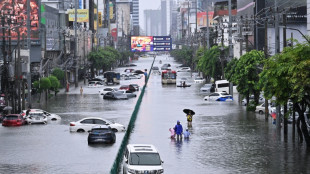
The deadly flooding that has killed hundreds in Indonesia was largely the result of monsoon rains and a rare tropical storm. But something else may have played a role: deforestation.
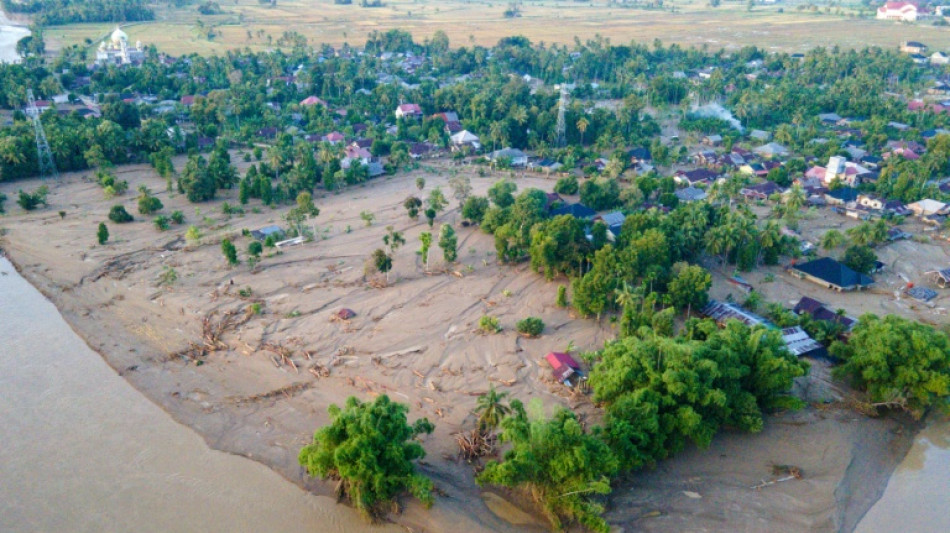
Environmentalists, experts and even Indonesia's government have pointed to the role forest loss played in flash flooding and landslides that washed torrents of mud into villages and stranded residents on roofs.
Forests help absorb rainfall and stabilise the ground held by their roots, and their absence makes areas more prone to flash flooding and landslides.
Indonesia is regularly among the countries in the world with the largest annual forest loss.
Mining, plantations and fires have caused the clearance of large tracts of the country's lush rainforest over recent decades.
In 2024, over 240,000 hectares of primary forest was lost, and that was less than the year before, according to analysis by conservation start-up The TreeMap's Nusantara Atlas project.
"Forests upstream act as a protective barrier, a bit like a sponge," explained David Gaveau, founder of The TreeMap.
"The canopy captures some of the rain before it reaches the ground. The roots also help stabilise the soil. When the forest is cleared upstream, rainwater runs off rapidly into rivers creating flash floods."
- 'Prevent deforestation' -
Environmentalists have long urged the government to better protect the country's forests, which are a key carbon sink, absorbing planet-warming carbon dioxide.
Indonesia's forests are also home to enormous biodiversity and some of the world's most threatened species, including orangutans.
And in the wake of the flooding, even the country's president urged action.
"We must truly prevent deforestation and forest destruction," President Prabowo Subianto said Friday as the scale of the disaster began to emerge.
"Protecting our forests is crucial."
The floods carried not only collapsed hillsides and torrents of mud, but also timber that fuelled speculation about the link between deforestation and the disaster.
On one beach in Padang, AFP saw workers dressed in orange using chainsaws to break up massive logs strewn along the sand.
The forestry ministry is reportedly investigating claims of illegal logging in affected areas, and Forestry Minister Raja Juli Antoni called the disaster a chance to "evaluate our policies".
"The pendulum between the economy and ecology seems to have swung too far towards the economy and needs to be pulled back to the centre," he said over the weekend.
That is a message environmentalists in Indonesia have long delivered.
In one of the worst-affected areas, Batang Toru, "there are seven companies operating along the upstream region," said Uli Arta Siagian, forest and plantation campaign manager for conservation group Walhi.
"There is a gold mine that has already cleared around 300 hectares of forest cover... the Batang Toru Hydropower Plant has caused the loss of 350 hectares of forest," she told AFP.
Large tracts of forest have also been converted into palm oil plantations.
"All of this contributes to increasing our vulnerability."
- Protection and restoration -
Sumatra, where the flood damage was concentrated, is particularly vulnerable because its river basins are relatively small, explained Kiki Taufik, head of Greenpeace Indonesia's forest campaign.
"The massive change in forest cover is the main factor in the occurrence of flash floods," he told AFP, accusing the government of "recklessly and carelessly" granting permits for mines and plantations.
Deforestation rates in Sumatra are among the highest in Indonesia, according to Herry Purnomo, country director at the Center for International Forestry Research and World Agroforestry (CIFOR-ICRAF).
Losing forest also raises flooding risks because soil washes into rivers, raising the riverbed and reducing the capacity of waterways to absorb sudden torrential downpours, he said.
Two things are needed, added Herry, a professor at IPB University in Bogor: "Prevent deforestation, avoid it, and also carry out restoration."
G.Gopalakrishnan--DT