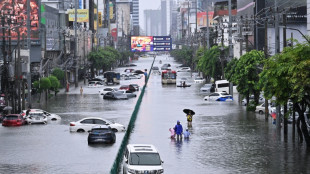
Dubai Telegraph - EU monitor says sea temperatures near all-time highs as El Nino looms

EUR -
AED 4.235923
AFN 75.541706
ALL 92.858321
AMD 421.009012
ANG 2.065142
AOA 1057.682403
ARS 1721.466389
AUD 1.635645
AWG 2.076148
AZN 1.959073
BAM 1.955344
BBD 2.322938
BDT 141.56695
BGN 1.955718
BHD 0.434898
BIF 3448.165097
BMD 1.153416
BND 1.476143
BOB 13.522843
BRL 5.977299
BSD 1.153321
BTN 110.019315
BWP 15.525375
BYN 3.46866
BYR 22606.948185
BZD 2.319548
CAD 1.608853
CDF 2624.020763
CHF 0.937237
CLF 0.026783
CLP 1054.118009
CNY 7.778462
CNH 7.77957
COP 3631.091108
CRC 517.874607
CUC 1.153416
CUP 30.565517
CVE 110.239264
CZK 24.227555
DJF 205.384722
DKK 7.475547
DOP 67.503655
DZD 153.320499
EGP 57.991774
ERN 17.301236
ETB 186.563445
FJD 2.554181
FKP 0.85376
GBP 0.854918
GEL 3.010741
GGP 0.85376
GHS 12.837003
GIP 0.85376
GMD 85.352655
GNF 10131.63467
GTQ 8.798946
GYD 241.296805
HKD 9.050657
HNL 30.919513
HRK 7.533995
HTG 150.853474
HUF 362.900364
IDR 20597.236628
ILS 3.43854
IMP 0.85376
INR 110.05434
IQD 1510.834182
IRR 1585514.089054
ISK 142.193314
JEP 0.85376
JMD 182.467401
JOD 0.8178
JPY 183.764503
KES 149.194708
KGS 100.865868
KHR 4667.89
KMF 493.661676
KPW 1038.073911
KRW 1638.369187
KWD 0.35614
KYD 0.961188
KZT 536.724696
LAK 26021.812148
LBP 103280.788081
LKR 384.463576
LRD 209.334759
LSL 18.605656
LTL 3.405737
LVL 0.69769
LYD 7.346285
MAD 10.682906
MDL 20.021326
MGA 4967.818678
MKD 61.516172
MMK 2421.995415
MNT 4149.954325
MOP 9.321985
MRU 46.21821
MUR 54.383738
MVR 17.831256
MWK 1999.959099
MXN 19.670294
MYR 4.714036
MZN 73.69364
NAD 18.605495
NGN 1569.095488
NIO 42.440092
NOK 10.985188
NPR 176.030904
NZD 1.973621
OMR 0.443495
PAB 1.153326
PEN 3.891891
PGK 5.103808
PHP 70.720518
PKR 320.132986
PLN 4.304767
PYG 6883.33334
QAR 4.192685
RON 5.244349
RSD 117.303501
RUB 96.9701
RWF 1698.932827
SAR 4.375959
SBD 9.30223
SCR 15.816679
SDG 692.629264
SEK 11.028552
SGD 1.476406
SHP 0.854526
SLE 28.316011
SLL 24186.54936
SOS 659.146116
SRD 43.449205
STD 23873.376744
STN 24.494069
SVC 10.091644
SYP 14996.711366
SZL 18.610494
THB 38.221849
TJS 10.656951
TMT 4.036955
TND 3.38478
TOP 2.777148
TRY 55.104454
TTD 7.821106
TWD 37.072507
TZS 3051.36471
UAH 51.555064
UGX 4281.963209
USD 1.153416
UYU 46.209212
UZS 13776.783674
VES 882.82631
VND 30075.314996
VUV 136.788908
WST 3.149723
XAF 655.801054
XAG 0.017719
XAU 0.000263
XCD 3.117164
XCG 2.078606
XDR 0.81614
XOF 655.798212
XPF 119.331742
YER 273.53274
ZAR 18.595737
ZMK 10382.123271
ZMW 21.682938
ZWL 371.399392
  • RBGPF

    0.0000

    72.16

    0%

  • CMSC

    0.0100

    21.45

    +0.05%

  • VOD

    0.1900

    16.09

    +1.18%

  • CMSD

    -0.0400

    21.59

    -0.19%

  • RIO

    0.2300

    101.22

    +0.23%

  • NGG

    0.4100

    80.68

    +0.51%

  • RYCEF

    0.5500

    21.1

    +2.61%

  • BCE

    -0.2400

    23.13

    -1.04%

  • GSK

    -0.6000

    50.3

    -1.19%

  • BCC

    -1.2800

    84.25

    -1.52%

  • RELX

    -0.8200

    34.55

    -2.37%

  • JRI

    -0.0200

    12.71

    -0.16%

  • AZN

    -0.2500

    158.5

    -0.16%

  • BP

    -0.2300

    42.93

    -0.54%

  • BTI

    -0.9700

    55.84

    -1.74%

EU monitor says sea temperatures near all-time highs as El Nino looms
EU monitor says sea temperatures near all-time highs as El Nino looms / Photo: Valery HACHE - AFP

EU monitor says sea temperatures near all-time highs as El Nino looms

The European Union's climate monitor said Friday that ocean temperatures are edging toward record highs as conditions shift toward a potentially powerful El Nino weather pattern.

Text size:

Samantha Burgess from the European Centre for Medium-Range Weather Forecasts (ECMWF) said sea surface temperatures in recent days were just shy of the all-time highs of 2024 -- and May looked set to break its own record.

"It's a matter of days before we are back in record-breaking ocean SSTs (sea surface temperatures) again," Burgess, strategic lead for climate at ECMWF, told AFP.

The Copernicus Climate Change Service said daily sea surface temperatures in April "gradually inched" toward near-record highs, reflecting the transition to El Nino expected in coming months.

Copernicus, which is overseen by the ECMWF, said sea surface temperatures in April were the second-highest measured, with marine heatwaves breaking records in the ocean between the tropical Pacific and United States.

Last month, the World Meteorological Organization said El Nino conditions could develop as soon as May to July.

One phase of a natural climate cycle in Pacific Ocean temperatures and trade winds, El Nino influences global weather and increases the likelihood of drought, heavy rainfall and other climate extremes.

It also adds heat to a planet already warmed from burning fossil fuels. The last El Nino helped make 2023 and 2024 the second- and first-hottest years on record, respectively.

Some weather agencies forecast the coming event will be even stronger -- possibly rivalling a "super" El Nino three decades ago.

Zeke Hausfather, a scientist at Berkeley Earth, an independent climate research organisation, wrote last week that a strong El Nino could significantly raise the chances of 2027 becoming the hottest year ever recorded.

Burgess said it was still too early to predict the event's intensity with confidence as forecasts made during the Northern Hemisphere spring could be unreliable.

But she said regardless of its strength, this El Nino would not go unnoticed.

"We're likely to see 2027 exceed 2024 for the warmest year on record," she said. El Nino's impact on global temperatures typically comes the year after its peak, she added.

- Extremes -

Copernicus said the upturn in ocean temperatures over March and April indicated the transition from neutral conditions to El Nino was underway.

Scientists stress that El Nino alone is not driving the extraordinary ocean warmth or its knock-on effects, such as coral bleaching and marine heatwaves.

The phenomenon is unfolding against a backdrop of long-term global warming caused primarily by greenhouse gas emissions, with oceans absorbing around 90 percent of the excess heat generated by human activity.

In its monthly bulletin, Copernicus said April was the third-hottest globally and 1.43C above the 1850-1900 pre-industrial benchmark.

Arctic sea ice remained near record lows in April while Europe endured varied conditions that set the stage for a hotter and drier summer at risk of drought of wildfires, it said.

"We just keep seeing extremes. Every month we have more data that the climate change impact is creating these extreme events," said Burgess.

Y.Al-Shehhi--DT