Weather at Beijing Olympics should be better than Pyeongchang
Those competing in this month's Beijing Winter Olympics will face frosty temperatures but should be spared the Siberian winds and chill factor that sparked postponements and athlete anger during the last Games in South Korea.
Pyeongchang 2018 was bedevilled by sweeping high winds of up to 80 kilometres (50 miles) an hour which forced delays to alpine skiing and snowboarding events.
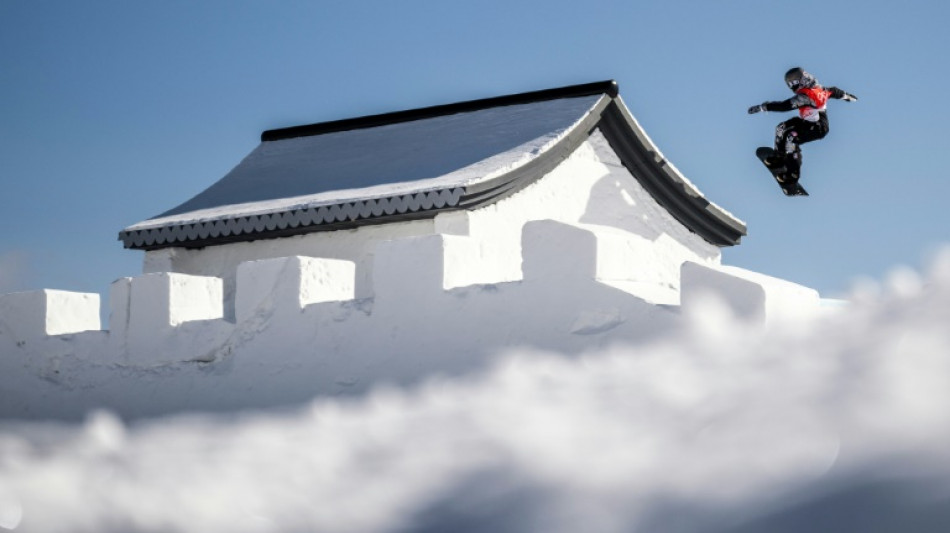
Multiple snowboarders were injured after accidents caused by sudden gusts in both practice and competition, triggering anger that the events were allowed to go ahead in such conditions.
While Northern China's winters are harsh and unforgiving, as a region it has something Pyeongchang did not -- fairly predictable and fixed weather patterns.
"Thus far, the weather forecast looks cold, but stable," Jenny Wiedeke, a spokesperson for the International Ski Federation, told AFP.
The blustery conditions that made Pyeongchang so risky for snowboarders should be less of an issue -- wind speeds so far this month have been recorded at a maximum of around 35 kilometres an hour.
"The wind is expected to be weak or potentially moderate," said Yann Amice, a meteorologist and former consultant for the French Winter Olympic teams.
Wiedeke said Olympic organisers will also have plans in place to mitigate against a sudden flurry of high winds.
"If it is a windy day for an Alpine downhill, the start might be lowered to a less windy altitude. In ski jumping, some hills have wind nets installed if they are in a wind location to act as a barrier," she said.
- Cold and constant -
Daytime temperatures in the mountains outside Beijing where the main skiing and snowboarding events will take place regularly dip below -16 Celsius (three Fahrenheit).
The cold could become a problem if the mercury plunges below -20C -- the point where an event like cross country can be postponed.
Recent night temperatures in Zhangjiakou have been recorded as low as -25C.
Previous Games in Russia's low-lying Sochi and Canada's Vancouver saw an opposite meteorological problem -- warm temperatures creating slushy conditions or shortages of snow.
Amice says that should not be an issue at Yanqing, where the alpine sports are taking place, or at Zhangjiakou which will host cross-country skiing, the biathlon, snowboarding, freestyle skiing and ski jumping.
"As the site is geographically landlocked, we don't expect any major upheavals... The cold temperatures will remain a constant," he told AFP.
"We are a long way from the very changeable conditions of Vancouver or Sochi where we had monstrous high to low changes in temperatures."
- 'Bulletproof ice' -
One meteorological phenomenon usually associated with the Winter Olympics that is unlikely at the Beijing Games is days in a row of heavy snow dumps.
Beijing's surroundings are incredibly dry, meaning snowfall is a rarity even with temperatures reliably well below freezing.
As a result virtually all the snow on the slopes for this year's Games has been made artificially, with thousands of gallons of water used.
Earlier this week twice defending snowboard slopestyle champion Jamie Anderson described the artificial snow at Zhangjiakou as being densely packed.
"It's not quite ideal, but I would say we're all making the most of it," she said. "You definitely don't want to fall. It feels like pretty bulletproof ice."
X.Wong--DT