Clouds and conspiracies: concerns over push to make rain / Photo: SADIQ ASYRAF - AFP
Can countries control the clouds? And should they?
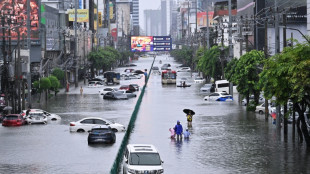
As climate change drives floods and drought, rainmaking is in fashion across the world, despite mixed evidence that it works and concerns it can stoke cross-border tensions.
While attempting to control the weather might sound like science fiction, countries have been seeding clouds for decades to try to make rain or snow fall in specific regions.
Invented in the 1940s, seeding involves a variety of techniques including adding particles to clouds via aircraft.
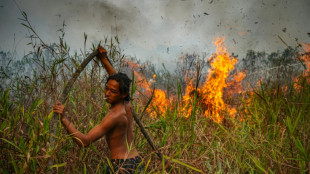
It is used today across the world in an attempt to alleviate drought, fight forest fires and even to disperse fog at airports.
In 2008, China used it to try to stop rain from falling on Beijing's Olympic stadium.
But experts say that there is insufficient oversight of the practice, as countries show an increasing interest in this and other geoengineering techniques as the planet warms.
The American Meteorological Society has said that "unintended consequences" of cloud seeding have not been clearly shown -- or ruled out -- and raised concerns that unanticipated effects from weather modification could cross political boundaries.
But experts say the main risk might be more a matter of perception.
"If a country learns that its neighbour is changing the weather, it will be tempted to blame the neighbour to explain a drought," according to a research note published this month by Marine de Guglielmo Weber, a researcher at France's Strategic Research Institute at the Paris Military School (IRSEM).
China, for example, is one of the world's most prolific weather modifiers, launching the Sky River initiative in 2018 with the aim of alleviating water shortages and boosting the country's food security.
The country has conducted operations on the Tibetan plateau, but de Guglielmo Weber warned that this could be seen to affect water availability in downstream countries, such as its rival India.
- 'Cloud theft' -
French writer Mathieu Simonet, who has campaigned for clouds to have UN protection, said seeding could stoke fake news and misinformation "in today's explosive world".
"I think the real risk of cloud theft is psychological," he said.
In 2018, for example, an Iranian general accused Israel of "stealing clouds" to prevent rain falling in Iran, which was then suffering a severe drought.
In a context of "extremely intense informational confusion", de Guglielmo Weber warned: "Sometimes it's the conspiracy that wins out," adding that this can be fuelled by mistrust of scientific institutions.
In 2024, for example, following huge floods in southern Brazil and in the United Arab Emirates, thousands of climate sceptic social media accounts spread false accusations that the torrential rains were triggered by cloud seeding.
De Guglielmo Weber said that raises the challenge of proving, or disproving, the role of weather modification.
And there have been instances when cloud seeding was used deliberately in warfare.
The United States used it during "Operation Popeye" to slow the enemy advance during the Vietnam War.
In response, the UN created a 1976 convention prohibiting "military or any other hostile use of environmental modification techniques".
A number of countries have not signed the convention, said de Guglielmo Weber. She added that the accord "is very limited" and does not apply if a country causes a climate hazard by accident.
- 'Silver bullet' -
Researcher Laura Kuhl said there was "significant danger that cloud seeding may do more harm than good", in a 2022 article for the Bulletin of the Atomic Scientists.
"Cloud seeding is perhaps the ultimate silver bullet, in which literal silver in the form of silver iodide is infused into clouds, causing ice crystals to form and water to condense into rain or snow," wrote Kuhl, an associate professor at Northeastern University in the United States, a specialist in climate adaptation.
She said technological fixes like weather manipulation could distract attention from more complex discussions and reinforce things like unequal water access.
Meanwhile, research on the effects of cloud seeding on neighbouring regions is mixed -- and some evidence suggests it does not work very well even in the target area.
An assessment published in 2019 by an expert team on weather modification from the World Meteorological Organization found seeding increases precipitation between "essentially zero" and around 20 percent.
It recognised that more countries were turning to cloud seeding but added: "Sometimes desperate activities are based on empty promises rather than sound science."
C.Akbar--DT