Dubai Telegraph - Climate change made ferocious LA wildfires more likely: study

EUR -
AED 4.289106
AFN 72.978162
ALL 95.257832
AMD 430.626595
ANG 2.090731
AOA 1071.954318
ARS 1625.161268
AUD 1.61676
AWG 2.104791
AZN 1.975394
BAM 1.950866
BBD 2.35234
BDT 143.366756
BGN 1.949976
BHD 0.440574
BIF 3473.926594
BMD 1.167706
BND 1.487107
BOB 8.070483
BRL 5.841102
BSD 1.167941
BTN 111.907547
BWP 16.45018
BYN 3.262963
BYR 22887.045797
BZD 2.348898
CAD 1.602963
CDF 2621.501329
CHF 0.914764
CLF 0.026521
CLP 1043.777298
CNY 7.923063
CNH 7.924371
COP 4427.265468
CRC 530.737107
CUC 1.167706
CUP 30.94422
CVE 110.582325
CZK 24.315267
DJF 207.524926
DKK 7.473023
DOP 69.705106
DZD 154.85073
EGP 61.744578
ERN 17.515596
ETB 182.35277
FJD 2.556926
FKP 0.863742
GBP 0.871224
GEL 3.129164
GGP 0.863742
GHS 13.323215
GIP 0.863742
GMD 84.670566
GNF 10252.462715
GTQ 8.910462
GYD 244.338834
HKD 9.146171
HNL 31.060436
HRK 7.537074
HTG 152.937269
HUF 357.757189
IDR 20488.168117
ILS 3.389386
IMP 0.863742
INR 111.733392
IQD 1529.930214
IRR 1535533.939684
ISK 143.604208
JEP 0.863742
JMD 184.662916
JOD 0.827932
JPY 184.719789
KES 150.925387
KGS 102.11626
KHR 4684.838406
KMF 492.771763
KPW 1050.901516
KRW 1742.544498
KWD 0.360144
KYD 0.973334
KZT 552.849263
LAK 25636.994177
LBP 104568.109284
LKR 379.879139
LRD 213.982322
LSL 19.171807
LTL 3.447933
LVL 0.706334
LYD 7.413249
MAD 10.715122
MDL 20.075962
MGA 4891.522719
MKD 61.636893
MMK 2452.025909
MNT 4180.541034
MOP 9.422645
MRU 46.670951
MUR 54.767933
MVR 17.994673
MWK 2024.769903
MXN 20.111005
MYR 4.590834
MZN 74.61249
NAD 19.171807
NGN 1600.971677
NIO 42.9811
NOK 10.777054
NPR 179.047686
NZD 1.9735
OMR 0.448982
PAB 1.167921
PEN 3.991986
PGK 5.088
PHP 71.919089
PKR 325.295202
PLN 4.242511
PYG 7116.998355
QAR 4.257322
RON 5.200946
RSD 117.400016
RUB 85.533366
RWF 1708.257212
SAR 4.389495
SBD 9.379319
SCR 17.107269
SDG 701.210948
SEK 10.915254
SGD 1.489188
SHP 0.871811
SLE 28.720739
SLL 24486.222194
SOS 667.480245
SRD 43.446834
STD 24169.165267
STN 24.438082
SVC 10.21889
SYP 129.065111
SZL 19.157461
THB 37.801579
TJS 10.914054
TMT 4.09865
TND 3.402893
TOP 2.811557
TRY 53.05533
TTD 7.929739
TWD 36.813698
TZS 3030.197606
UAH 51.341978
UGX 4367.839825
USD 1.167706
UYU 46.51116
UZS 14003.220669
VES 593.270376
VND 30763.225588
VUV 137.88004
WST 3.162758
XAF 654.288044
XAG 0.013813
XAU 0.00025
XCD 3.155784
XCG 2.104867
XDR 0.81152
XOF 654.28525
XPF 119.331742
YER 278.643902
ZAR 19.244911
ZMK 10510.763608
ZMW 21.985355
ZWL 376.00099
  • CMSC

    0.0898

    23.14

    +0.39%

  • RBGPF

    -0.2100

    60.79

    -0.35%

  • BCE

    -0.2000

    24.19

    -0.83%

  • AZN

    -2.7600

    184.96

    -1.49%

  • GSK

    -0.0300

    50.96

    -0.06%

  • BTI

    1.3500

    66.7

    +2.02%

  • BCC

    2.4200

    69.4

    +3.49%

  • RIO

    -2.4500

    109.59

    -2.24%

  • RYCEF

    -0.0700

    15.93

    -0.44%

  • NGG

    0.4500

    87.43

    +0.51%

  • JRI

    0.0100

    13.14

    +0.08%

  • BP

    -0.0200

    44.12

    -0.05%

  • VOD

    -0.0300

    15.48

    -0.19%

  • RELX

    -0.1600

    31.46

    -0.51%

  • CMSD

    0.0400

    23.6

    +0.17%

Climate change made ferocious LA wildfires more likely: study

Climate change made ferocious LA wildfires more likely: study

Human-driven climate change set the stage for the devastating Los Angeles wildfires by reducing rainfall, parching vegetation, and extending the dangerous overlap between flammable drought conditions and powerful Santa Ana winds, according to an analysis published Tuesday.

Text size:

The study, conducted by dozens of researchers, concluded that the fire-prone conditions fueling the blazes were approximately 35 percent more likely due to global warming caused by burning fossil fuels.

"Climate change increased the risk of the devastating LA wildfires," said Clair Barnes of Imperial College London, the lead author of the study by World Weather Attribution, an international academic collaboration.

"Drought conditions are increasingly pushing into winter, raising the likelihood of fires breaking out during strong Santa Ana winds that can transform small ignitions into deadly infernos.

"Without a faster transition away from planet-heating fossil fuels, California will continue to get hotter, drier, and more flammable."

- Projected to worsen -

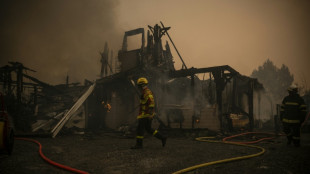
The study does not address the direct causes of the wildfires, which erupted around Los Angeles on January 7, killing at least 29 people and destroying more than 10,000 homes, the most destructive in the city's history.

Investigators are probing the role of power company Southern California Edison in one of the blazes, the Eaton Fire.

Instead, researchers analyzed weather data and climate models to assess how such events have evolved under today's climate, which has warmed approximately 2.3 degrees Fahrenheit (1.3 degrees Celsius) above pre-industrial levels.

Using peer-reviewed methods, they found that the hot, dry, and windy conditions were 1.35 times more likely due to climate change.

Looking ahead, the study warns that under current scenarios, where global warming reaches 4.7F (2.6C) by 2100, similar fire-weather events in January will become a further 35 percent more likely.

Historically, October through December rainfall has marked the end of wildfire season.

However, these rains have decreased in recent decades.

The study found that low rainfall across these months is now 2.4 times more likely during neutral El Nino conditions, leading to drier, flammable conditions persisting into the peak of the Santa Ana wind season in December and January.

- Areas of Uncertainty -

The relationship between climate change and Santa Ana winds -- which form in western deserts, then heat up and dry out as they flow down California's mountains -- remains unclear.

While most studies predict a decline in these winds as the climate warms, some suggest hot Santa Ana wind events and particularly strong years will persist.

This year's fires followed two wet winters in 2022–2023 and 2023–2024, which spurred the growth of grass and brush. However, almost no rain this winter left the vegetation dry and highly flammable.

Globally, extreme shifts between very wet and very dry conditions, known as "precipitation whiplash," are becoming more common. These swings are driven by a warmer atmosphere that can hold and release greater amounts of moisture, exacerbating weather extremes.

D.Farook--DT