Dubai Telegraph - Warmest Arctic summer caused by accelerating climate change

EUR -
AED 4.359312
AFN 78.343327
ALL 96.027945
AMD 449.451262
ANG 2.124849
AOA 1088.491795
ARS 1717.340716
AUD 1.703709
AWG 2.136624
AZN 2.022635
BAM 1.943176
BBD 2.391206
BDT 145.078707
BGN 1.993435
BHD 0.447513
BIF 3517.2352
BMD 1.187013
BND 1.50352
BOB 8.203841
BRL 6.242865
BSD 1.187207
BTN 109.023557
BWP 15.531157
BYN 3.381404
BYR 23265.46415
BZD 2.387728
CAD 1.612742
CDF 2679.687577
CHF 0.916511
CLF 0.026023
CLP 1027.514946
CNY 8.247849
CNH 8.256296
COP 4350.9979
CRC 587.890629
CUC 1.187013
CUP 31.455857
CVE 109.554196
CZK 24.329563
DJF 210.956502
DKK 7.467728
DOP 74.744104
DZD 153.828685
EGP 55.701348
ERN 17.805202
ETB 184.429348
FJD 2.615233
FKP 0.860501
GBP 0.866188
GEL 3.199049
GGP 0.860501
GHS 13.005726
GIP 0.860501
GMD 87.250062
GNF 10417.410267
GTQ 9.105996
GYD 248.380562
HKD 9.27016
HNL 31.335952
HRK 7.533861
HTG 155.369973
HUF 381.142317
IDR 19906.21601
ILS 3.668351
IMP 0.860501
INR 108.897452
IQD 1555.289393
IRR 50002.942908
ISK 145.006024
JEP 0.860501
JMD 186.041368
JOD 0.84164
JPY 183.360944
KES 153.125155
KGS 103.804785
KHR 4773.945484
KMF 489.049968
KPW 1068.410471
KRW 1718.522957
KWD 0.364224
KYD 0.989186
KZT 597.100949
LAK 25549.446568
LBP 106315.059642
LKR 367.144816
LRD 213.988904
LSL 18.850653
LTL 3.504943
LVL 0.718013
LYD 7.449665
MAD 10.769128
MDL 19.964515
MGA 5305.621026
MKD 61.594706
MMK 2492.783053
MNT 4234.917227
MOP 9.546897
MRU 47.370055
MUR 53.926471
MVR 18.339807
MWK 2058.660443
MXN 20.675003
MYR 4.679253
MZN 75.672557
NAD 18.850653
NGN 1647.883777
NIO 43.686921
NOK 11.410464
NPR 174.434041
NZD 1.968893
OMR 0.456389
PAB 1.187207
PEN 3.96938
PGK 5.082027
PHP 69.967368
PKR 332.14877
PLN 4.211002
PYG 7952.33704
QAR 4.32848
RON 5.094073
RSD 117.393304
RUB 90.210804
RWF 1731.820826
SAR 4.452007
SBD 9.565075
SCR 16.377624
SDG 713.99297
SEK 10.543285
SGD 1.508861
SHP 0.890568
SLE 28.933499
SLL 24891.078237
SOS 678.489285
SRD 45.166461
STD 24568.782404
STN 24.342269
SVC 10.387604
SYP 13127.864451
SZL 18.844496
THB 37.423019
TJS 11.082502
TMT 4.166417
TND 3.41104
TOP 2.858043
TRY 51.618117
TTD 8.060768
TWD 37.458351
TZS 3056.560101
UAH 50.883858
UGX 4244.496821
USD 1.187013
UYU 46.071084
UZS 14513.832063
VES 435.452037
VND 30791.129595
VUV 141.976983
WST 3.222026
XAF 651.717577
XAG 0.013945
XAU 0.000245
XCD 3.207964
XCG 2.139636
XDR 0.812564
XOF 651.728487
XPF 119.331742
YER 282.988273
ZAR 19.142082
ZMK 10684.549964
ZMW 23.299029
ZWL 382.217855
  • SCS

    0.0200

    16.14

    +0.12%

  • RYCEF

    -0.4300

    16

    -2.69%

  • RBGPF

    1.3800

    83.78

    +1.65%

  • CMSC

    -0.0040

    23.691

    -0.02%

  • GSK

    0.9600

    51.615

    +1.86%

  • NGG

    0.0700

    85.12

    +0.08%

  • CMSD

    0.0150

    24.075

    +0.06%

  • BTI

    0.4350

    60.645

    +0.72%

  • BP

    -0.1850

    37.855

    -0.49%

  • RIO

    -3.4200

    91.71

    -3.73%

  • VOD

    -0.0450

    14.665

    -0.31%

  • RELX

    -0.3900

    35.775

    -1.09%

  • BCE

    0.2250

    25.71

    +0.88%

  • BCC

    0.4400

    80.61

    +0.55%

  • AZN

    0.7500

    93.34

    +0.8%

  • JRI

    0.0450

    13

    +0.35%

Warmest Arctic summer caused by accelerating climate change
Warmest Arctic summer caused by accelerating climate change / Photo: ANDREJ IVANOV - AFP/File

Warmest Arctic summer caused by accelerating climate change

Summer surface air temperatures in 2023 were the warmest ever observed in the Arctic as a result of accelerating human-caused climate change, an official report card published Tuesday said.

Text size:

The average temperature from the months of July-September was 43 degrees Fahrenheit (6.4 Celsius), the highest since record-keeping began in 1900.

"The overriding message from this year’s report card is that the time for action is now," National Oceanic and Atmospheric Administration administrator Rick Spinrad said in a statement.

"We as a nation and global community must dramatically reduce greenhouse gas emissions that are driving these changes."

Average summer temperatures have been rising 0.31 F (0.17 C) per decade.

Overall, it was the Arctic's sixth warmest year, at 20 degrees Fahrenheit (-7 C).

Now in its 18th year, the NOAA Arctic Report Card is the work of 82 authors across 13 countries.

Observations from this year's report emphasize an ongoing trend line of warming sea and air temperatures, decreasing snow cover, diminishing sea ice, and continued melting of the Greenland Ice Sheet.

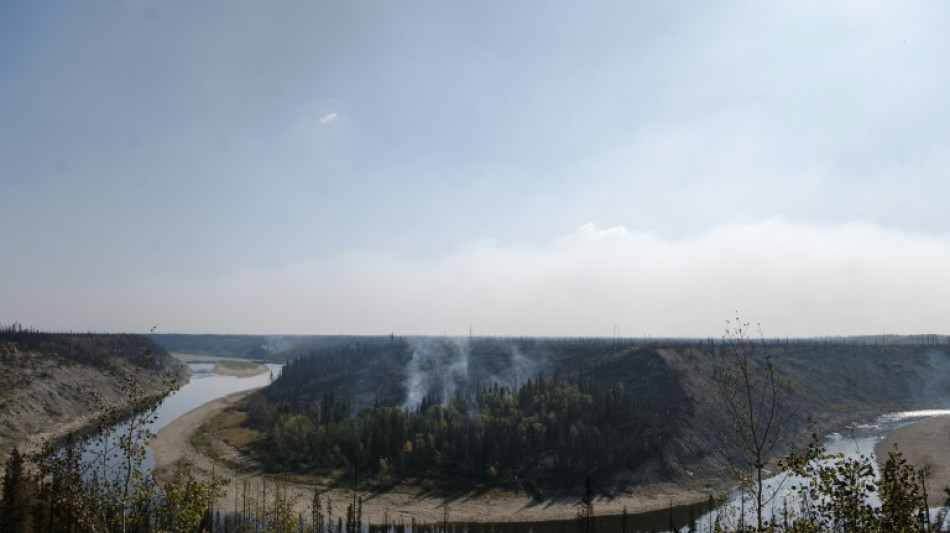
But the year also brought high impact events that had the "clear signature" of climate change, for example the Canadian Arctic experienced its worst wildfire season on record, causing the evacuation of 20,000 people from the town of Yellowknife in August.

Also in August, a glacial lake near Juneau, Alaska burst through its dam, causing massive flooding and property damage along the Mendenhall River, as a result of two decades of glacial thinning.

The long term warming trend has a variety of uneven impacts across ecosystems and food webs that people rely upon.

For example, sockeye salmon reached a record-high abundance in Bristol Bay, Alaska in the years 2021 and 2022.

The species, a staple of commercial fisheries, has thrived under warmer waters, which allow juveniles to grow faster in lakes and increase their odds of survival when they reach the ocean.

On the other hand, chinook and chum salmon have drastically declined following heat waves that negatively impact their growth rates, contributing to smaller adults.

Another chapter of the report examines subsea permafrost, a field that is relatively little known, even among scientists -- though potentially an important source of greenhouse gas emissions.

As the world emerged from the last ice age, rising ocean waters in the Arctic covered permafrost, transforming it into subsea permafrost over thousands of years.

"An estimated 2.5 million km2 of subsea permafrost remains today, but it continues to thaw due to the original ocean inundation event and more recent, rapid Arctic warming," the report said.

A.El-Sewedy--DT