Dubai Telegraph - CO2 pollution expected to hit new record in 2023: researchers

EUR -
AED 4.282286
AFN 72.889506
ALL 95.207603
AMD 430.01375
ANG 2.087753
AOA 1070.42764
ARS 1622.784305
AUD 1.615801
AWG 2.101792
AZN 1.980037
BAM 1.948086
BBD 2.348989
BDT 143.162498
BGN 1.947198
BHD 0.439945
BIF 3468.977203
BMD 1.166043
BND 1.484988
BOB 8.058985
BRL 5.837324
BSD 1.166277
BTN 111.748109
BWP 16.426743
BYN 3.258314
BYR 22854.438042
BZD 2.345552
CAD 1.600621
CDF 2617.765364
CHF 0.914545
CLF 0.02651
CLP 1043.367038
CNY 7.911775
CNH 7.916136
COP 4418.987218
CRC 529.980953
CUC 1.166043
CUP 30.900133
CVE 110.420738
CZK 24.310883
DJF 207.229054
DKK 7.473652
DOP 69.611585
DZD 154.439062
EGP 61.655687
ERN 17.490641
ETB 183.593618
FJD 2.556084
FKP 0.862511
GBP 0.870795
GEL 3.124803
GGP 0.862511
GHS 13.304314
GIP 0.862511
GMD 84.53284
GNF 10237.855419
GTQ 8.897767
GYD 243.990718
HKD 9.133322
HNL 31.040319
HRK 7.5352
HTG 152.719375
HUF 357.85873
IDR 20501.247154
ILS 3.384559
IMP 0.862511
INR 111.602244
IQD 1527.516012
IRR 1533346.225611
ISK 143.609809
JEP 0.862511
JMD 184.399822
JOD 0.82669
JPY 184.674396
KES 150.710561
KGS 101.97073
KHR 4678.163038
KMF 492.06927
KPW 1049.40427
KRW 1743.787798
KWD 0.359712
KYD 0.971947
KZT 552.061604
LAK 25600.468408
LBP 105018.290233
LKR 379.337915
LRD 213.677252
LSL 19.227736
LTL 3.443021
LVL 0.705327
LYD 7.380747
MAD 10.737796
MDL 20.047359
MGA 4871.140463
MKD 61.623214
MMK 2448.532445
MNT 4174.584911
MOP 9.409221
MRU 46.630148
MUR 54.687743
MVR 17.953612
MWK 2030.079949
MXN 20.097411
MYR 4.5843
MZN 74.521703
NAD 19.22769
NGN 1596.510503
NIO 42.811215
NOK 10.814812
NPR 178.792592
NZD 1.975224
OMR 0.448341
PAB 1.166257
PEN 4.019331
PGK 5.084821
PHP 71.905202
PKR 324.858355
PLN 4.243469
PYG 7106.858587
QAR 4.250809
RON 5.201602
RSD 117.404153
RUB 85.416661
RWF 1703.588468
SAR 4.323481
SBD 9.347158
SCR 15.925798
SDG 700.210747
SEK 10.964079
SGD 1.488553
SHP 0.870569
SLE 28.742478
SLL 24451.336053
SOS 666.396592
SRD 43.384983
STD 24134.730844
STN 24.778409
SVC 10.204331
SYP 128.881228
SZL 19.227966
THB 37.837714
TJS 10.898504
TMT 4.08115
TND 3.367544
TOP 2.807551
TRY 53.109051
TTD 7.918441
TWD 36.822696
TZS 3025.881057
UAH 51.26883
UGX 4361.616853
USD 1.166043
UYU 46.444895
UZS 14044.985317
VES 594.855331
VND 30719.39644
VUV 137.683599
WST 3.158251
XAF 653.355863
XAG 0.013988
XAU 0.000251
XCD 3.151288
XCG 2.101868
XDR 0.810364
XOF 650.065331
XPF 119.331742
YER 278.276306
ZAR 19.248742
ZMK 10495.787518
ZMW 21.954032
ZWL 375.465292
  • RBGPF

    -0.2100

    60.79

    -0.35%

  • RYCEF

    -0.0700

    15.93

    -0.44%

  • GSK

    -0.0300

    50.96

    -0.06%

  • RIO

    -2.4500

    109.59

    -2.24%

  • BCE

    -0.2000

    24.19

    -0.83%

  • CMSC

    0.0898

    23.14

    +0.39%

  • JRI

    0.0100

    13.14

    +0.08%

  • CMSD

    0.0400

    23.6

    +0.17%

  • RELX

    -0.1600

    31.46

    -0.51%

  • NGG

    0.4500

    87.43

    +0.51%

  • BCC

    2.4200

    69.4

    +3.49%

  • VOD

    -0.0300

    15.48

    -0.19%

  • AZN

    -2.7600

    184.96

    -1.49%

  • BTI

    1.3500

    66.7

    +2.02%

  • BP

    -0.0200

    44.12

    -0.05%

CO2 pollution expected to hit new record in 2023: researchers
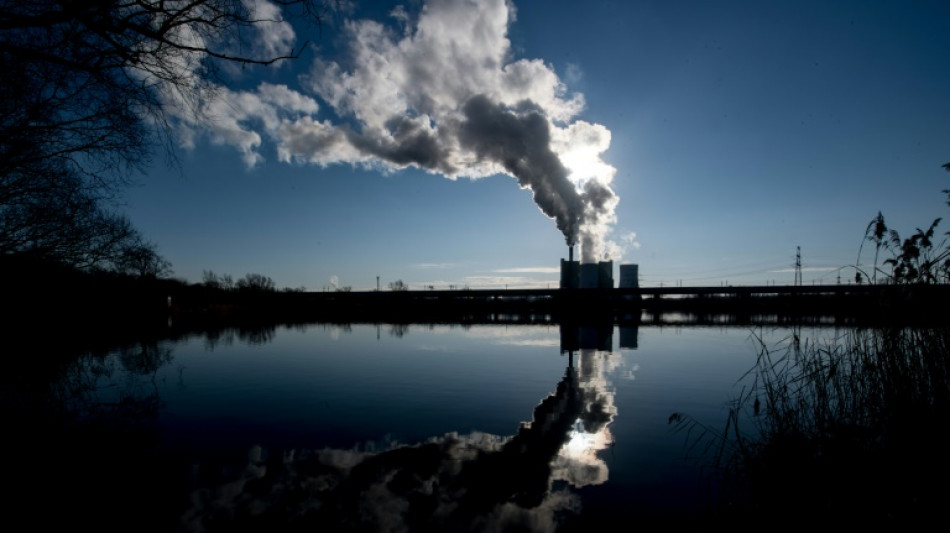
CO2 pollution expected to hit new record in 2023: researchers / Photo: Hendrik Schmidt - dpa/AFP/File

CO2 pollution expected to hit new record in 2023: researchers

Global emissions of planet-heating carbon dioxide are expected to rise around one percent to reach a new all-time high in 2023, the climate scientist behind the preliminary research said Tuesday.

Text size:

Scientists say carbon pollution will need to be cut almost in half this decade to meet the world's targets of limiting global warming and avoiding catastrophic climate impacts.

Global CO2 emissions should be falling by around five percent this year, said Glen Peters, research director at the CICERO climate research institute in Norway.

Instead they have continued to rise, according to his research, with current expectations that the year will see emissions up between 0.5 percent and 1.5 percent.

"It would be very unlikely that emissions decline in 2023," he told AFP.

The preliminary figures show just how dauntingly hard it will be to slash emissions fast enough to meet the Paris Agreement goal of capping global warming at 1.5 degrees Celsius above pre-industrial levels.

Heating beyond that threshold risks triggering dangerous tipping points in the climate system, scientists warn.

"Each year emissions keep rising makes it all the harder to reach pathways consistent with Paris," said Peters.

The final analysis will be published in December, as world leaders meet in the United Arab Emirates for crunch UN climate talks set to be dominated by international tussling over the future of fossil fuels, the main source of CO2 pollution.

Earlier this year, the International Energy Agency (IEA) said that for the first time world demand for oil, gas and coal is forecast to peak this decade due to the "spectacular" growth of cleaner energy technologies and electric cars.

But the energy watchdog has also warned of the negative impact of increased fossil fuel investments and "stubbornly high emissions" during the post-pandemic economic rebound and the energy crisis driven by Russia's invasion of Ukraine.

Peters said clean energy should be starting to displace demand for fossil fuels.

"This does not seem to be happening in any meaningful way yet, which is disappointing," he said.

- 'Doing half the job' -

Scientists had hoped back in 2015 that emissions might be peaking, he said, then again during the pandemic there were hopes that 2019 might mark the turning point.

"Yet, here we are again, with a new peak in 2022, and yet another peak expected again in 2023," Peters said.

"My concern is that we are doing half the job, growing clean energy, and not doing the other half of the job, transitioning away from fossil fuels."

The annual "Global Carbon Budget" report for the year will be published in December and show CO2 emissions from all sources.

The calculations are based on data from monthly and quarterly IEA reports.

I.Menon--DT