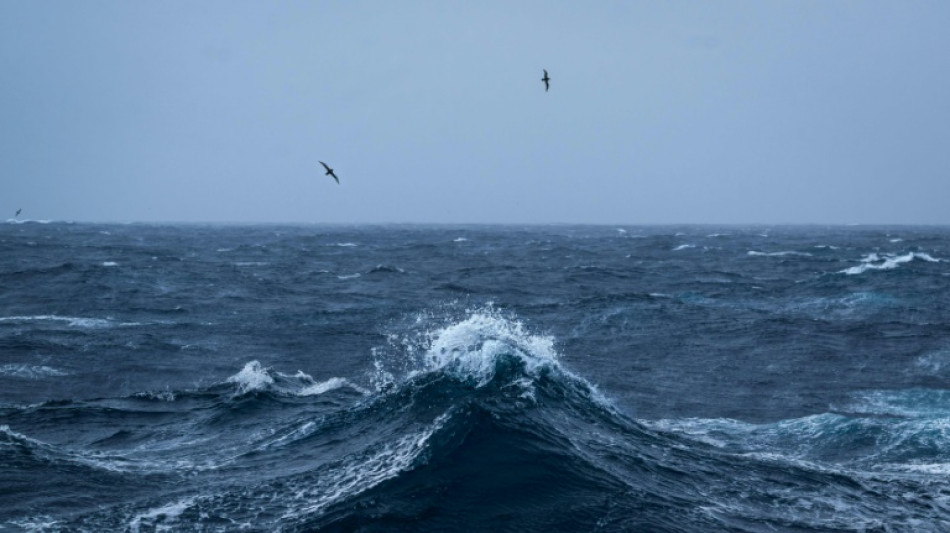
New treaty plots conservation course for high seas / Photo: Patrick HERTZOG - AFP/File
Protecting life in the vast expanse of ocean beyond national jurisdictions finally has an international roadmap after UN states agreed a landmark high seas treaty at the weekend.
More than a decade in the making, the first international treaty on the high seas aims to promote the conservation and sustainable use of marine biodiversity in international waters -- a vast expanse that covers almost half the planet.
It is seen as essential to conserving 30 percent of the world's land and ocean by 2030, as agreed by world governments in a historic accord signed in Montreal in December.
Ocean ecosystems create half the oxygen humans breathe and limit global warming by absorbing much of the carbon dioxide emitted by human activities.
But only about one percent of the high seas are currently protected.
"What happens on the high seas will no longer be 'out of sight, out of mind'," said Jessica Battle, Senior Global Ocean Governance and Policy Expert, who led WWF's team at the negotiations.
"The High Seas Treaty will allow for the kind of oversight and integration we need if we want the ocean to keep providing the social, economic and environmental benefits humanity currently enjoys."
The text, which has now been published, will be formally adopted at a later date once it has been vetted by lawyers and translated into the United Nations' six official languages.
Here are some key points:
- Ocean at threat -
The treaty begins by recognising "the need to address, in a coherent and cooperative manner, biodiversity loss and degradation of ecosystems of the ocean, due to, in particular, climate change impacts on marine ecosystems".
These impacts include the warming of ocean waters -- the world's seas have absorbed more than 90 percent of the excess heat caused by burning fossil fuels -- along with loss of oxygen, acidification, plastics and other pollutants and overfishing.
The text specifies that it will apply to ocean beyond countries' exclusive economic zones (EEZ), which extend to a maximum of 200 nautical miles (370 km) from the coasts.
It also covers what is known as "the Area", shorthand for seabed and subsoil beyond the limits of national jurisdiction. The Area comprises just over half the planet's seabed.
In principle these measures apply to fishing and mining, although the treaty's decision-making body -- the Conference of the Parties (COP) -- will have to navigate the authority of other regional and global organisations.
Chief among these are regional fisheries bodies and the International Seabed Authority, which currently oversees permits for deep sea mining exploration in some areas and may soon make the controversial move of allowing companies to begin mining.
The treaty will take effect once ratified by 60 countries.
- Marine protections -
Currently almost all protected marine areas are within national territorial waters.
The treaty, however, allows for these to be extended to the open ocean to create sanctuaries, particularly in areas that are fragile, unique or crucial for endangered species.
Most decisions would be taken by consensus, but a marine protected area can be voted into existence with a three-quarters majority, avoiding a situation where one country or small group of nations can block a decision.
One crucial shortcoming: the text does not say how these conservation measures will be monitored and enforced over remote swathes of ocean. Some experts say satellites can be used to spot infractions.
- Sharing the bounty? -
In the high seas, countries and entities under their jurisdiction will be allowed to collect animal, vegetable or microbial matter whose genetic material might prove useful, even commercially.
Scientists, for example, have discovered molecules with the potential to treat cancer or other diseases in microbes scooped up in sediment, or produced by sponges or marine molluscs.
Benefits sharing has been a key bone of contention between wealthy and poorer nations.
The treaty calls for the transfer of marine technologies to developing countries and a strengthening of their research capacities, as well as open access data.
But it left the COP to decide on exactly how any monetary benefits will eventually be shared, with options including a system based on specific details about commercialised products, or more generalised payment systems.
- Assessing impacts -
The treaty requires signatories to assess the environmental impacts of planned activities under their control in the high seas before they are authorised.
It also calls for countries to assess the potential impact on international waters of activities within national jurisdictions that may cause "substantial pollution" or harm the marine environment.
The treaty allows for this to be done under a nation's own environmental assessment protocols, but says this must be published and that the COP's scientific body may "provide comments" on the process.
Ultimately states are responsible for giving the green light to any potentially harmful activity.
R.Mehmood--DT