Dubai Telegraph - Calm or Chaos: Iran’s reach

EUR -
AED 4.281785
AFN 73.452334
ALL 95.429651
AMD 429.262728
ANG 2.087503
AOA 1070.299611
ARS 1646.071042
AUD 1.619085
AWG 2.098626
AZN 1.986664
BAM 1.958695
BBD 2.348401
BDT 143.127251
BGN 1.946965
BHD 0.439866
BIF 3469.728069
BMD 1.165903
BND 1.490102
BOB 8.056908
BRL 5.872776
BSD 1.165988
BTN 110.713639
BWP 15.645124
BYN 3.194922
BYR 22851.703681
BZD 2.345166
CAD 1.609005
CDF 2648.932604
CHF 0.910709
CLF 0.026367
CLP 1037.712648
CNY 7.88891
CNH 7.886595
COP 4305.843925
CRC 527.063197
CUC 1.165903
CUP 30.896436
CVE 110.615118
CZK 24.279007
DJF 207.204784
DKK 7.47393
DOP 68.019254
DZD 154.808958
EGP 61.006856
ERN 17.488549
ETB 184.21313
FJD 2.590409
FKP 0.865202
GBP 0.866681
GEL 3.113417
GGP 0.865202
GHS 13.688159
GIP 0.865202
GMD 84.532475
GNF 10236.630941
GTQ 8.894108
GYD 243.930539
HKD 9.137126
HNL 30.978502
HRK 7.532439
HTG 152.69569
HUF 353.842897
IDR 20780.651445
ILS 3.267036
IMP 0.865202
INR 110.773055
IQD 1527.333256
IRR 1575193.585016
ISK 143.359913
JEP 0.865202
JMD 183.645923
JOD 0.826672
JPY 185.738927
KES 150.879988
KGS 101.958687
KHR 4675.272437
KMF 492.011579
KPW 1049.144158
KRW 1757.506323
KWD 0.360778
KYD 0.971736
KZT 568.169776
LAK 25594.495481
LBP 104406.636357
LKR 384.788732
LRD 213.506078
LSL 18.934713
LTL 3.44261
LVL 0.705244
LYD 7.403929
MAD 10.707364
MDL 20.177824
MGA 4885.135018
MKD 61.616675
MMK 2448.448944
MNT 4174.360155
MOP 9.409465
MRU 46.636533
MUR 55.229278
MVR 17.959269
MWK 2025.174346
MXN 20.234022
MYR 4.629223
MZN 74.507092
NAD 18.934708
NGN 1599.273829
NIO 42.637521
NOK 10.78869
NPR 177.141822
NZD 1.949182
OMR 0.449196
PAB 1.166023
PEN 3.963493
PGK 5.077554
PHP 71.672781
PKR 324.762787
PLN 4.231005
PYG 7015.36898
QAR 4.245098
RON 5.251349
RSD 117.38435
RUB 82.95033
RWF 1705.133502
SAR 4.398141
SBD 9.365071
SCR 15.814297
SDG 700.129187
SEK 10.790487
SGD 1.48863
SHP 0.870465
SLE 28.685495
SLL 24448.410635
SOS 666.317977
SRD 43.337211
STD 24131.843306
STN 24.95033
SVC 10.202905
SYP 128.869732
SZL 18.934699
THB 37.979343
TJS 10.762507
TMT 4.080661
TND 3.374168
TOP 2.807215
TRY 53.459583
TTD 7.920707
TWD 36.640613
TZS 3065.839407
UAH 51.641442
UGX 4395.364568
USD 1.165903
UYU 46.767721
UZS 14017.076029
VES 639.713683
VND 30677.82924
VUV 137.641842
WST 3.165657
XAF 656.927964
XAG 0.015488
XAU 0.000257
XCD 3.150912
XCG 2.101443
XDR 0.815557
XOF 655.824767
XPF 119.331742
YER 278.188699
ZAR 19.000364
ZMK 10494.532504
ZMW 21.432678
ZWL 375.42037
  • CMSC

    -0.1000

    22.74

    -0.44%

  • CMSD

    0.0400

    22.93

    +0.17%

  • VOD

    0.0300

    14.96

    +0.2%

  • GSK

    -0.7000

    50.54

    -1.39%

  • BCE

    0.2000

    25.11

    +0.8%

  • RELX

    -0.3100

    32.79

    -0.95%

  • RIO

    -0.0800

    106.39

    -0.08%

  • NGG

    -1.1562

    81.53

    -1.42%

  • AZN

    0.3400

    185.67

    +0.18%

  • BCC

    -0.6300

    69.72

    -0.9%

  • BP

    0.2800

    41.87

    +0.67%

  • RBGPF

    -0.0100

    63.54

    -0.02%

  • RYCEF

    0.7000

    18

    +3.89%

  • BTI

    -1.1300

    61.79

    -1.83%

  • JRI

    0.0600

    12.92

    +0.46%


Calm or Chaos: Iran’s reach


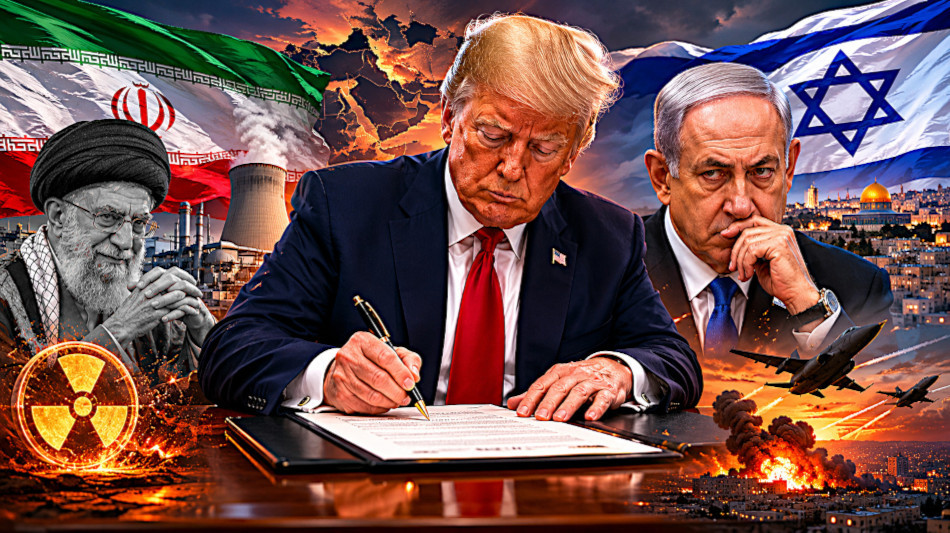
Over the past month, Iran’s ballistic missile programme has accelerated from regional nuisance to continental concern. Tehran’s attempt to strike the joint U.S.–British base on Diego Garcia in the Indian Ocean, roughly 4,000 kilometres from Iranian territory, demonstrated a range that could theoretically reach European cities. Although both projectiles failed—one suffered a mid‑flight malfunction and the other was intercepted—the episode thrust the continent into a debate about its readiness and reshaped financial markets. Investors, already jittery over artificial‑intelligence bubbles and trade tensions, watched the war footage and took fright. Redemption requests surged at private‑credit funds, prompting the biggest managers to gate withdrawals and igniting fears of a liquidity crunch.

Europe’s new security question
The Diego Garcia launches mark the first time Iran has tested ballistic missiles beyond 2,000 kilometres. European capitals such as Paris, Berlin and Rome lie within this theoretical reach, and officials admitted privately that air‑defence inventories are thin after years of supplying interceptors to Ukraine. Defence analysts caution that range does not equal capability: targeting, accuracy, survivability and the political willingness to withstand a NATO response all matter. Iran has yet to demonstrate precision at such distances, and any missile would need to cross several NATO members’ airspace. Nevertheless, the spectacle underscored Europe’s reliance on the U.S.-led ballistic missile defence network and highlighted a vulnerability at a time when allied resources are stretched.

Beyond ballistic missiles, experts warn that Tehran could opt for hybrid operations on European soil. Analysts cite cyber‑sabotage against energy networks, healthcare systems, shipping and finance; arson or attacks carried out through criminal proxies; and targeting of Israeli, Jewish, U.S. or Iranian dissident sites. Europe’s civil‑defence preparations, from public alert systems to shelter infrastructure, lag behind those of states accustomed to regular missile fire. Several governments have moved to reinforce maritime patrols in the Strait of Hormuz, a critical artery for oil and liquefied natural gas, but remain wary of escalating the conflict. The debate now centres on whether to bolster defences and accept higher costs or continue with a cautious risk‑management approach.

Voices from the public debate
The emerging conversation has been polarised. Hard‑line commentators argue that tolerating Tehran’s Islamic Revolutionary Guard Corps (IRGC) invites future threats; unless the IRGC is dismantled, they say, it will rebuild its arsenal, restart nuclear enrichment and hold the world hostage. Others question whether escalating rhetoric is justified, noting that the latest missiles failed and that mixing facts with speculative doom scenarios fuels unnecessary panic. One critic called the apocalyptic talk “horribly disturbing,” accusing pundits of using the spectre of a European attack to justify broader agendas. Amid these extremes, many Europeans simply worry that Iran will not stop once the current fighting ends and demand clear strategies rather than slogans.

Panic in the private‑credit market
The geopolitical shock coincided with a run on the $2 trillion global private‑credit industry. These funds, touted as higher‑yielding alternatives to bonds, allow investors to redeem only a small percentage of their holdings each quarter. When redemptions spiked in March, several giants—including funds backed by household names in asset management—capped or suspended withdrawals. One flagship business‑development company limited investors to 5 % of net assets after requests exceeded the quarterly cap. Other managers honoured only half of withdrawal requests as redemption queues reached double‑digit percentages.

Such gating is designed to prevent fire‑sale liquidations of illiquid loans, yet it exposed structural weaknesses in “semi‑liquid” funds marketed to retail investors. Traded business‑development companies, which make up about 20 % of the sector, offer an escape via stock exchanges but have tumbled to discounts near eight per cent below net asset value. Non‑traded vehicles, which hold roughly $270 billion, offer no daily exit and now face redemption queues that could extend into 2027. Analysts warn that if discounts widen to more than 10 %, markets will be pricing systemic credit problems rather than isolated stress.

The private‑credit boom flourished as banks retreated from middle‑market lending. Assets under management grew from about $200 billion in early 2022 to $500 billion by late 2025, spurred by yields approaching ten per cent. The liquidity mismatch became apparent when two software companies with heavy private‑credit backing went bankrupt last autumn. Fears that artificial intelligence could erode subscription‑software revenues spurred investors to withdraw, and some funds had replaced cash reserves with syndicated loans that were also exposed to software debt. A prominent chief executive likened the situation to seeing a cockroach in the kitchen—where one appears, more are likely.

The recent war shock intensified the scramble. Shares of major private‑credit managers have fallen between 20 % and 40 % this year. Some firms responded by selling assets to honour redemptions, while others injected their own capital. Industry leaders argue that withdrawal limits are a feature, not a bug; investors trade liquidity for higher returns. Yet regulators and critics worry about transparency and contagion. Banks have lent an estimated $300 billion to private‑credit firms, and U.S. bank stocks have fallen more than 11 % since January. While few see a 2008‑style collapse, confidence is a fragile commodity. If trust erodes, a liquidity squeeze could reverberate through private‑equity deals, middle‑market companies and, ultimately, the broader economy.

Geopolitics, markets and the road ahead
European stock indices slid after the missile launches as investors priced in war risk alongside AI‑driven volatility. Travel and hospitality stocks fell sharply on fears of airspace closures, while defence and energy companies rallied. Analysts note that the primary transmission channel from the conflict to macro‑economics is through energy prices; a prolonged disruption of the Strait of Hormuz could send oil past $100 per barrel and compress growth. In private credit, managers and investors will watch three metrics closely in coming months: earnings reports from business‑development companies to assess borrowers’ health; disclosure of redemption queues when the next withdrawal window opens in July; and the size of discounts on traded funds.

For Europe, the strategic question remains whether to treat Iran’s longer‑range missiles as a wake‑up call or a deterrent signal. Air‑defence architectures designed a decade ago to counter Iranian threats exist, but inventories of interceptors are limited. The continent’s reluctance to become embroiled in another Middle Eastern war has collided with a recognition that geography no longer guarantees safety. Hybrid threats, cyber‑attacks and proxy violence may prove more immediate than a long‑range missile. Preparing for these contingencies requires investment in resilience, intelligence sharing and civil‑defence education.

The private‑credit panic, meanwhile, underscores the fragility of financial innovations when tested by geopolitical shocks and technological uncertainty. The industry thrived on the assumption that capital would continue to flow in and redemptions would remain modest. In reality, fear is contagious—whether it is fear of Iranian missiles or fear of losing money to AI‑disrupted borrowers. Restoring confidence will require greater transparency, realistic marketing of liquidity features and better risk management. Geopolitics and finance have always been intertwined; the latest crisis reminds investors and policymakers alike that distant conflicts can have very local consequences.
Featured


Marhabaan, welcome to the UAE and Dubai!

Marhabaan, welcome to the UAE and Dubai! The "skyward striving" Dubai next to ancient desert cities. Mysterious Bedouins and magnificent mosques exist peacefully alongside futuristic cities. Discover wadis and oases, golden sandy deserts, paradisiacal beaches and Arabian hospitality. The modern and the ancient Orient united in a book for dreaming.On this journey to Dubai and Abu Dhabi in the United Arab Emirates, the fairy tales of 1001 Arabian Nights meet the modern Arab world. These cascading cities enchant with their sky-high skyscrapers, fragrant souks, huge shopping centres and the ancient cultural heritage of the sheikhs.You can choose to stay in 4- or 5-star hotels with breakfast and swimming pools. You also have more options to book excursions so you can feel the magic of the East even more. If you want to do something out of the ordinary, you can spend an extra night in an enchanting hotel in the middle of the emirate's desert. Experience your own fairytale from 1001 nights and look forward to a holiday with plenty of casual extravagance in two superlative desert cities!

Trade and business at the Dubai Gold Souk

If Naif Deira is associated with a specific context, organization, or field, providing more details could help me offer more relevant information. Keep in mind that privacy considerations and ethical guidelines limit the amount of information available about private individuals, especially those who are not public figures. The Dubai Gold Souk is one of the most famous gold markets in the world and is located in the heart of Dubai's commercial business district in Deira. It's a traditional market where you can find a wide variety of gold, silver, and precious stone jewelry. The Gold Souk is known for its extensive selection of jewelry, including rings, bracelets, necklaces, and earrings, often crafted with intricate designs.Variety: The Gold Souk offers a vast array of jewelry designs, with a focus on gold. You can find items ranging from traditional to modern styles.Competitive Pricing: The market is known for its competitive pricing, and bargaining is a common practice. Prices are typically based on the weight of the gold and the craftsmanship involved.Gold and More: While gold is the primary focus, the souk also offers other precious metals such as silver and platinum, as well as a selection of gemstones.Cultural Experience: Visiting the Gold Souk provides not only a shopping experience but also a glimpse into the traditional trading culture of Dubai. The vibrant market is a popular destination for both tourists and locals.Security: The market is generally safe, and there are numerous shops with security measures in place. However, as with any crowded area, it's advisable to take standard precautions regarding personal belongings.Gold Souk is just one part of the larger Deira Souk complex, which also includes the Spice Souk and the Textile Souk. It's a must-visit for those interested in jewelry, and it reflects the rich cultural and trading history of Dubai.

Dubai: Amazing City Center, Night Walking Tour

During this excursion, we leisurely explore Dubai Downtown and Burj Khalifa in the evening, giving you the chance to witness the captivating transformation of the district as it comes alive with the vibrant glow of thousands of lights. As the sun sets, the illuminated facade of Burj Khalifa and the enchanting Dubai Fountain collaborate to produce a genuinely magical atmosphere.Dubai Downtown, also known as Downtown Dubai, is a distinguished and iconic district situated in the heart of Dubai, United Arab Emirates. It is a renowned neighborhood celebrated for its striking architecture, luxurious living, and exceptional entertainment options. At the core of Downtown Dubai stands the Burj Khalifa, a towering skyscraper that holds the title of the world's tallest man-made structure and serves as an emblem of modern Dubai.Burj Khalifa: The focal point of Downtown Dubai, Burj Khalifa, is famous for its groundbreaking height, reaching an impressive 828 meters (2,722 feet). Designed by architect Adrian Smith, its distinctive Y-shaped design encompasses a mix of residential, commercial, and hotel spaces.Dubai Mall: Adjacent to Burj Khalifa is the Dubai Mall, one of the largest shopping malls globally, featuring an extensive array of retail outlets, from high-end boutiques to international brands. The mall also provides various dining options, and entertainment attractions like an indoor ice rink and an aquarium, and hosts the mesmerizing Dubai Fountain.Dubai Fountain: Located just outside the Dubai Mall, the Dubai Fountain is a captivating attraction that presents a nightly spectacle of water, music, and light, captivating visitors with its perfectly synchronized performances.Emaar Boulevard: Stretching through Downtown Dubai, this boulevard is adorned with restaurants, cafes, and shops, making it a popular spot for leisurely strolls, dining, and people-watching.Luxury Living: Downtown Dubai boasts numerous upscale residential buildings and hotels, making it an appealing locale for those seeking a sophisticated urban lifestyle.Cultural Attractions: The Dubai Opera, an iconic cultural venue within the district, hosts a diverse range of performances, including opera, ballet, concerts, and theater productions.Transportation: Downtown Dubai is well-connected through public transportation, including the Dubai Metro, facilitating easy access to other parts of the city.In summary, Downtown Dubai is a dynamic and vibrant district that stands as a testament to Dubai's modernity and grandeur. It seamlessly combines architectural wonders with shopping, entertainment, and cultural offerings, creating a truly extraordinary destination.