Dubai Telegraph - Drivers help study road-trip mystery: what became of bug splats?

EUR -
AED 4.186334
AFN 72.373386
ALL 91.819032
AMD 414.329313
ANG 2.040604
AOA 1046.308965
ARS 1736.438573
AUD 1.622565
AWG 2.052441
AZN 1.935038
BAM 1.954094
BBD 2.293688
BDT 140.13319
BGN 1.918735
BHD 0.429293
BIF 3430.040844
BMD 1.13977
BND 1.454987
BOB 13.956366
BRL 5.933183
BSD 1.138751
BTN 109.052098
BWP 15.506326
BYN 3.440732
BYR 22339.490623
BZD 2.290391
CAD 1.611464
CDF 2632.86865
CHF 0.944412
CLF 0.027869
CLP 1100.584154
CNY 7.649395
CNH 7.664498
COP 3771.430311
CRC 517.768407
CUC 1.13977
CUP 27.33014
CVE 110.173164
CZK 24.374949
DJF 202.790961
DKK 7.475814
DOP 67.723548
DZD 152.4335
EGP 59.007482
ERN 17.096549
ETB 184.742006
FJD 2.561348
FKP 0.862524
GBP 0.86109
GEL 2.980539
GGP 0.862524
GHS 13.226974
GIP 0.862524
GMD 83.771254
GNF 10015.651322
GTQ 8.696751
GYD 238.271386
HKD 8.940413
HNL 30.565522
HRK 7.532852
HTG 149.035769
HUF 365.880943
IDR 20451.347758
ILS 3.474087
IMP 0.862524
INR 109.244041
IQD 1491.856443
IRR 1566699.250831
ISK 137.194093
JEP 0.862524
JMD 180.16271
JOD 0.80806
JPY 179.359321
KES 147.634133
KGS 99.670824
KHR 4631.139653
KMF 493.520612
KPW 1025.793299
KRW 1547.043722
KWD 0.351778
KYD 0.948963
KZT 504.43199
LAK 25543.707706
LBP 101979.593567
LKR 375.995038
LRD 195.876724
LSL 18.579912
LTL 3.365444
LVL 0.689436
LYD 7.280644
MAD 10.928191
MDL 20.213176
MGA 5027.809004
MKD 61.521701
MMK 2392.945475
MNT 4101.841018
MOP 9.200287
MRU 45.812406
MUR 54.173732
MVR 17.610039
MWK 1974.654001
MXN 20.209238
MYR 4.643648
MZN 72.842889
NAD 18.579912
NGN 1511.072482
NIO 41.905069
NOK 10.826384
NPR 174.483557
NZD 2.014139
OMR 0.438243
PAB 1.138751
PEN 3.865977
PGK 5.073771
PHP 71.188322
PKR 315.551978
PLN 4.378101
PYG 6712.404787
QAR 4.15104
RON 5.274175
RSD 117.47723
RUB 95.91289
RWF 1683.015885
SAR 4.273917
SBD 9.118743
SCR 15.721688
SDG 685.570211
SEK 11.304968
SGD 1.456283
SHP 0.860528
SLE 28.095283
SLL 23900.396288
SOS 650.857469
SRD 42.932281
STD 23590.93636
STN 24.479595
SVC 9.964694
SYP 14819.288917
SZL 18.575516
THB 38.08598
TJS 10.505443
TMT 4.000592
TND 3.371157
TOP 2.744292
TRY 55.806899
TTD 7.745544
TWD 36.20588
TZS 3014.689163
UAH 50.994393
UGX 4460.282073
USD 1.13977
UYU 45.620571
UZS 13477.351914
VES 971.575734
VND 29606.663696
VUV 135.070044
WST 3.152014
XAF 655.957
XAG 0.017731
XAU 0.000266374203
XCD 3.080285
XCG 2.052155
XDR 0.805876
XOF 655.957
XPF 119.331742
YER 269.726859
ZAR 18.618062
ZMK 10259.293596
ZMW 22.214483
ZWL 367.005452
SSP 6511.040469
MXV 2.290148
  • NGG

    -0.2050

    75.025

    -0.27%

  • RIO

    0.0000

    94.47

    0%

  • BTI

    -0.6750

    55.345

    -1.22%

  • GSK

    -0.5100

    49.14

    -1.04%

  • BCC

    0.6400

    76.74

    +0.83%

  • BCE

    -0.1750

    21.125

    -0.83%

  • RYCEF

    0.0000

    19.67

    0%

  • CMSD

    -0.0500

    20.32

    -0.25%

  • AZN

    1.6650

    166.225

    +1%

  • JRI

    -0.1500

    11.02

    -1.36%

  • VOD

    0.1250

    16.615

    +0.75%

  • RELX

    0.0950

    33.605

    +0.28%

  • BP

    -0.3150

    44.095

    -0.71%

  • CMSC

    -0.0200

    20.49

    -0.1%

  • RBGPF

    -1.0100

    65.99

    -1.53%

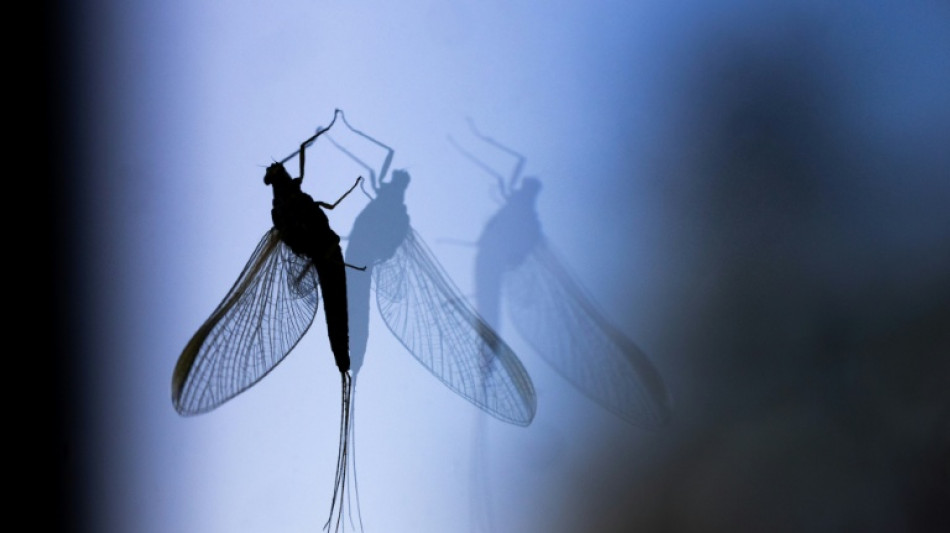
Drivers help study road-trip mystery: what became of bug splats?
Drivers help study road-trip mystery: what became of bug splats? / Photo: JOEL SAGET - AFP

Drivers help study road-trip mystery: what became of bug splats?

Long an emblem of the summer road trip, squashed bugs on the car have become less numerous over the years, many people say -- causing concern about the health of the world's insect populations.

Text size:

While drivers may be happy to have less yuckiness to clean from their windscreens, a perceived decline in flying insects hit by vehicles has some experts worried about the creatures, which play a vital role in the environment as pollinators, ecosystem balancers and food sources for other species.

But anecdotal evidence is one thing. Studying the so-called "windshield phenomenon" is another.

So scientists in France have launched an app-based study that enlists drivers as volunteer researchers.

Users download the free app, Bugs Matter, count the number of squished bugs on their number plates at the end of a trip, and send the results to be compiled as part of what the programme's creators hope will be a massive citizen science project.

The study is being run by the National Museum of Natural History (MNHN), the environmental groups OPIE and Noe and the French Biodiversity Office.

One app user, Marjorie, brought AFP on a car trip with her to Enghien-les-Bains, north of Paris, to take the app for a test drive before using it on a long road trip.

Step one: wipe the licence plate clean. Step two: enter geolocation data. Step three: drive.

"I'm 53, and I remember how as a kid, on long car trips when we stopped to fill the tank, there was always the obligatory clean-the-windscreen stage," said Marjorie.

"We hardly do that anymore."

- 'Pretty incredible' -

The study follows others around the world that have found declining insect numbers, including previous car-based studies in Denmark and the United Kingdom that both found sharp reductions in splats.

The two-decade-long Danish study, which ran until 2017, found reductions of 80 and 97 percent on two stretches of road in Denmark, while the UK study -- which also used the Bugs Matter app and is still ongoing -- found a decline of nearly 63 percent from 2021 to 2024.

A German study published in 2017 found a "dramatic decline" of more than 75 percent in the average biomass of flying insects in protected nature reserves.

"It's pretty incredible. Imagine going into the supermarket and finding only two out of every 10 products are in stock," said MNHN's Gregoire Lois.

Scientists say the decline is driven by human activity, including habitat loss, pesticide use, pollution and climate change.

But part of the study's goal is to understand the exact mechanisms behind the decline, and whether the results vary between urban areas, agricultural regions and forest land, Lois said.

Researchers hope to eventually expand the project to collect the insects' DNA and identify which species are being hit, he said.

Why use number plates as a reference?

"It's the only shared, standardised thing on every car, in both size and position: facing the road, perpendicular to the ground and travelling forward," said Lois.

After making her test trip, Marjorie parked her car, went to count her specimens and found a troubling data point.

"We just drove 22 kilometres" (14 miles), she said, "and there are absolutely no insects."

T.Jamil--DT