Dubai Telegraph - Greenland ice cap loses enough water in 20 years to cover US: study

EUR -
AED 4.323283
AFN 75.340706
ALL 95.210272
AMD 433.536083
ANG 2.107059
AOA 1080.672994
ARS 1645.738459
AUD 1.625854
AWG 2.12191
AZN 2.011203
BAM 1.95191
BBD 2.364688
BDT 144.062923
BGN 1.963697
BHD 0.443317
BIF 3494.536357
BMD 1.177204
BND 1.488733
BOB 8.112833
BRL 5.762884
BSD 1.17406
BTN 110.870067
BWP 15.76259
BYN 3.317888
BYR 23073.201501
BZD 2.361295
CAD 1.609191
CDF 2666.367401
CHF 0.916324
CLF 0.026701
CLP 1050.866424
CNY 8.005871
CNH 7.996942
COP 4413.361933
CRC 539.724479
CUC 1.177204
CUP 31.19591
CVE 110.045709
CZK 24.318798
DJF 209.073375
DKK 7.47268
DOP 69.820866
DZD 155.622213
EGP 62.086276
ERN 17.658062
ETB 183.32199
FJD 2.572072
FKP 0.863412
GBP 0.864862
GEL 3.149056
GGP 0.863412
GHS 13.225645
GIP 0.863412
GMD 86.522849
GNF 10301.47202
GTQ 8.964137
GYD 245.650487
HKD 9.216314
HNL 31.211804
HRK 7.533516
HTG 153.713691
HUF 355.183096
IDR 20492.769987
ILS 3.429013
IMP 0.863412
INR 112.093893
IQD 1538.035122
IRR 1543903.253763
ISK 143.80705
JEP 0.863412
JMD 185.041264
JOD 0.834645
JPY 184.92171
KES 152.035965
KGS 102.911769
KHR 4710.613053
KMF 492.07086
KPW 1059.483692
KRW 1730.06636
KWD 0.362403
KYD 0.97845
KZT 542.628691
LAK 25747.691983
LBP 105138.188717
LKR 377.996757
LRD 215.440686
LSL 19.261318
LTL 3.475978
LVL 0.712079
LYD 7.424206
MAD 10.737803
MDL 20.076992
MGA 4904.227234
MKD 61.596498
MMK 2471.57125
MNT 4210.514695
MOP 9.466436
MRU 46.927487
MUR 55.010549
MVR 18.125121
MWK 2035.443924
MXN 20.245589
MYR 4.61818
MZN 75.234847
NAD 19.261318
NGN 1602.198881
NIO 43.203907
NOK 10.838633
NPR 177.392506
NZD 1.978515
OMR 0.45263
PAB 1.17406
PEN 4.059311
PGK 5.184668
PHP 71.827104
PKR 327.214153
PLN 4.239289
PYG 7171.708771
QAR 4.291448
RON 5.216661
RSD 117.371914
RUB 87.177505
RWF 1721.170185
SAR 4.435101
SBD 9.440509
SCR 16.210064
SDG 706.914075
SEK 10.874895
SGD 1.493759
SHP 0.878902
SLE 29.018162
SLL 24685.378083
SOS 670.962957
SRD 44.026214
STD 24365.74931
STN 24.451275
SVC 10.273528
SYP 130.137489
SZL 19.248643
THB 38.159664
TJS 10.954072
TMT 4.120215
TND 3.410204
TOP 2.834425
TRY 53.423995
TTD 7.957144
TWD 36.960095
TZS 3057.787367
UAH 51.57253
UGX 4399.233546
USD 1.177204
UYU 46.826687
UZS 14241.620396
VES 587.702659
VND 30985.779251
VUV 139.590265
WST 3.186805
XAF 654.652459
XAG 0.014671
XAU 0.000252
XCD 3.181453
XCG 2.115983
XDR 0.814178
XOF 654.652459
XPF 119.331742
YER 280.91035
ZAR 19.332512
ZMK 10596.253521
ZMW 22.352458
ZWL 379.059259
  • RBGPF

    0.7000

    63.61

    +1.1%

  • RYCEF

    -0.4100

    16.37

    -2.5%

  • CMSC

    0.1400

    23.11

    +0.61%

  • CMSD

    0.1140

    23.534

    +0.48%

  • BCE

    -0.4300

    24.14

    -1.78%

  • VOD

    0.5100

    16.2

    +3.15%

  • GSK

    -0.0900

    50.41

    -0.18%

  • NGG

    0.9800

    86.89

    +1.13%

  • RELX

    0.0759

    33.58

    +0.23%

  • RIO

    2.2700

    105.38

    +2.15%

  • AZN

    0.3300

    182.85

    +0.18%

  • BCC

    -2.0900

    70.67

    -2.96%

  • BTI

    0.2000

    58.28

    +0.34%

  • JRI

    0.0000

    13.15

    0%

  • BP

    -0.4700

    43.34

    -1.08%

Greenland ice cap loses enough water in 20 years to cover US: study

Greenland ice cap loses enough water in 20 years to cover US: study

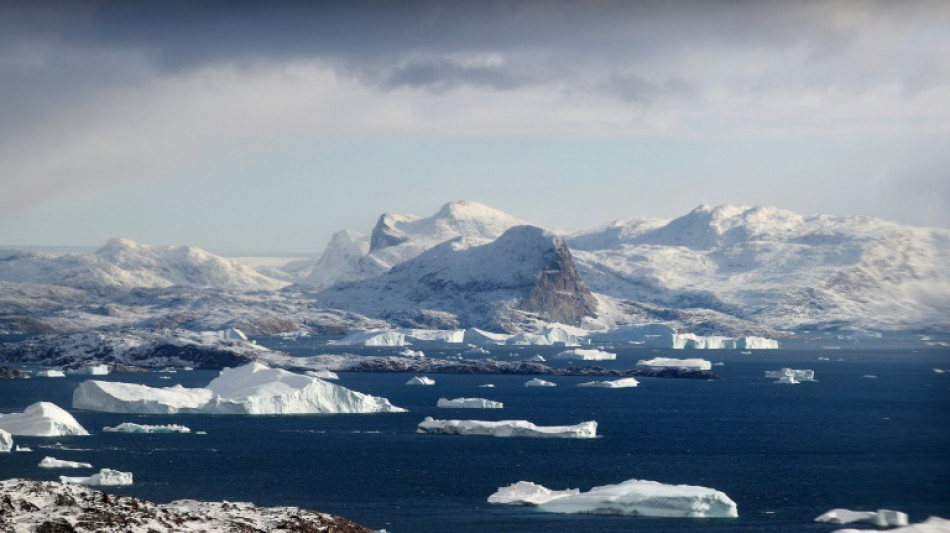
Greenland's immense ice sheet has lost enough ice in the past 20 years to submerge the entire United States in half a metre of water, according to data released this week by Danish researchers.

Text size:

The climate is warming faster in the Arctic than anywhere else on the planet and melting ice from Greenland is now the main factor in the rise in the Earth's oceans, according to NASA.

Since measurements began in 2002, the Greenland ice sheet has lost about 4,700 billion tonnes of ice, said Polar Portal, a joint project involving several Danish Arctic research institutes.

This represents 4,700 cubic kilometres of melted water -- "enough to cover the entire US by half a meter" -- and has contributed 1.2 centimetres to sea level rise, the Arctic monitoring website added.

Polar Portal's findings are based on satellite imagery from the US-German GRACE programme (Gravity Recovery and Climate Experiment), which showed the ice melt to be most severe near the coasts of the Arctic territory, at the edge of the ice sheet.

In these peripheral zones, "independent observations also indicate that the ice is thinning, that the glacier fronts are retreating in fjords and on land, and that there is a greater degree of melting from the surface of the ice", the website said.

The west coast of Greenland is particularly affected, according to the data.

Climate change is particularly alarming in the Arctic, which scientists say is warming at a rate three to four times the global average.

According to a study published by NASA in late January, the accelerated melting near Greenland's coasts can be explained by the warming of the Arctic Ocean.

The phenomenon "is melting Greenland's glaciers at least as much as warm air is melting them from above".

Melting ice from Greenland is currently the main factor in the rise in the Earth's oceans and the territory's glaciers are now retreating six to seven times faster than they were 25 years ago, the US agency added.

According to climate scientists, the Greenland ice sheet contains enough water to raise the oceans by more than seven metres, and the ice sheet in Antarctica contains enough for a rise of almost 50 metres.

Arctic sea ice cover, although its melting has no effect on sea levels, has also shrunk considerably, losing almost 13 percent of its average surface area every 10 years.

F.El-Yamahy--DT