Dubai Telegraph - Global warming: even cacti can't take the heat

EUR -
AED 4.391885
AFN 77.73245
ALL 96.680737
AMD 453.362804
ANG 2.140727
AOA 1096.625236
ARS 1729.226144
AUD 1.698812
AWG 2.154085
AZN 2.028889
BAM 1.957435
BBD 2.408311
BDT 146.112017
BGN 2.008331
BHD 0.450835
BIF 3542.258106
BMD 1.195884
BND 1.512663
BOB 8.261899
BRL 6.222752
BSD 1.195699
BTN 110.012871
BWP 15.593022
BYN 3.377721
BYR 23439.31995
BZD 2.404808
CAD 1.616404
CDF 2678.779488
CHF 0.916645
CLF 0.02601
CLP 1027.371699
CNY 8.316952
CNH 8.30659
COP 4383.248501
CRC 591.594034
CUC 1.195884
CUP 31.690917
CVE 110.357158
CZK 24.337307
DJF 212.927814
DKK 7.465781
DOP 75.122734
DZD 154.53088
EGP 55.993597
ERN 17.938255
ETB 186.006132
FJD 2.620901
FKP 0.867735
GBP 0.86622
GEL 3.22287
GGP 0.867735
GHS 13.062909
GIP 0.867735
GMD 87.299208
GNF 10492.762405
GTQ 9.174662
GYD 250.158905
HKD 9.333932
HNL 31.555352
HRK 7.530596
HTG 156.730884
HUF 381.486376
IDR 20081.278602
ILS 3.694441
IMP 0.867735
INR 110.038016
IQD 1566.408092
IRR 50376.599827
ISK 145.000561
JEP 0.867735
JMD 187.616677
JOD 0.847875
JPY 183.172901
KES 154.269291
KGS 104.579962
KHR 4809.015963
KMF 492.703782
KPW 1076.375603
KRW 1714.681599
KWD 0.366466
KYD 0.996432
KZT 600.661607
LAK 25720.478924
LBP 107075.918068
LKR 369.948941
LRD 221.204726
LSL 18.865955
LTL 3.531133
LVL 0.723378
LYD 7.511273
MAD 10.828142
MDL 20.111795
MGA 5344.46311
MKD 61.626944
MMK 2511.849432
MNT 4265.588281
MOP 9.613128
MRU 47.696831
MUR 53.99394
MVR 18.48828
MWK 2073.331419
MXN 20.609949
MYR 4.696829
MZN 76.249441
NAD 18.865955
NGN 1660.173487
NIO 44.00675
NOK 11.406572
NPR 176.020993
NZD 1.972706
OMR 0.459806
PAB 1.195699
PEN 3.998739
PGK 5.196339
PHP 70.554756
PKR 334.470313
PLN 4.210192
PYG 8023.700515
QAR 4.35884
RON 5.096258
RSD 117.415452
RUB 89.975943
RWF 1744.556863
SAR 4.485257
SBD 9.659961
SCR 16.576912
SDG 719.323943
SEK 10.557477
SGD 1.512865
SHP 0.897222
SLE 29.059164
SLL 25077.081761
SOS 682.169673
SRD 45.447765
STD 24752.377509
STN 24.520477
SVC 10.462737
SYP 13225.965024
SZL 18.85975
THB 37.468206
TJS 11.167926
TMT 4.185593
TND 3.42426
TOP 2.879401
TRY 51.931491
TTD 8.115777
TWD 37.562108
TZS 3067.441821
UAH 51.173434
UGX 4253.5521
USD 1.195884
UYU 45.247786
UZS 14550.150691
VES 428.695774
VND 31092.975444
VUV 142.990644
WST 3.24899
XAF 656.505241
XAG 0.010167
XAU 0.00022
XCD 3.231936
XCG 2.155
XDR 0.815622
XOF 656.505241
XPF 119.331742
YER 285.109995
ZAR 18.86427
ZMK 10764.390235
ZMW 23.644745
ZWL 385.074054
  • RYCEF

    0.0600

    16.66

    +0.36%

  • SCS

    0.0200

    16.14

    +0.12%

  • CMSC

    0.0260

    23.726

    +0.11%

  • RELX

    -1.3100

    36.07

    -3.63%

  • NGG

    -0.0300

    84.65

    -0.04%

  • VOD

    0.0350

    14.605

    +0.24%

  • GSK

    0.9250

    51.025

    +1.81%

  • BTI

    -0.3900

    59.77

    -0.65%

  • RBGPF

    0.0000

    82.4

    0%

  • AZN

    -0.2750

    92.945

    -0.3%

  • RIO

    0.8450

    94.215

    +0.9%

  • BCC

    -0.6400

    80.21

    -0.8%

  • CMSD

    0.0242

    24.075

    +0.1%

  • BP

    0.4600

    38.16

    +1.21%

  • JRI

    0.0900

    13.08

    +0.69%

  • BCE

    0.1800

    25.45

    +0.71%

Global warming: even cacti can't take the heat
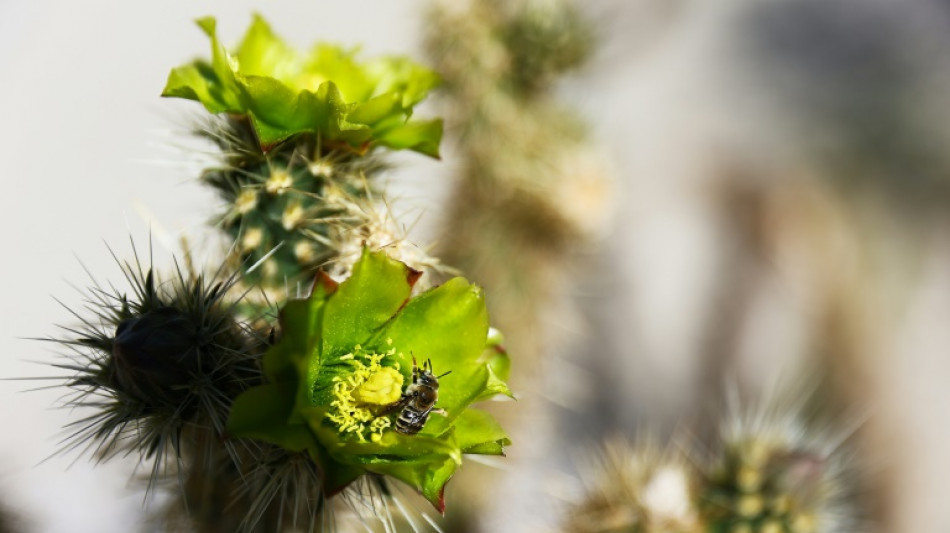
Global warming: even cacti can't take the heat / Photo: MARIO TAMA - GETTY IMAGES NORTH AMERICA/AFP/File

Global warming: even cacti can't take the heat

Sixty percent of cactus species will wind up in less hospitable climates over the coming decades as global warming sets in, according to new research challenging the long-held assumption the iconic desert plants will thrive with more heat.

Text size:

By 2070, up to 90 percent could be threatened with extinction due to climate change, habitat loss and other stressors, triple the current percentage, scientists reported in Nature Plants.

Some 1,500 species of cacti spread across the Americas live in varying climes, ranging from sea-level deserts to the high Andes mountains, from bone-dry ecosystems to humid tropical forests.

Biodiversity hotspots rich in species and numbers include central Mexico and the Brazilian Atlantic Forest.

To test the notion that cacti will benefit from a warmer and more drought-prone world, researchers led by Michiel Pillet from the University of Arizona examined data on more than 400 species and ran models projecting how they would fare at mid-century and beyond under different greenhouse gas emissions scenarios.

The findings "paint a more pessimistic future," according to the study, published Thursday.

Currently, the main threat to cacti is expanding agriculture, along with land degradation, biodiversity loss and harvesting for various uses.

Even without climate change, cacti "is one of the most endangered groups of organisms on the planet," with more than 30 percent classified as at risk of extinction, the authors note.

Under a moderate emissions scenario in line with current policies, global warming will soon be a significant threat as well.

"Our results suggest that climate change will become a primary driver of cactus extinction risk, with 60 to 90 percent of species assessed negatively impacted" by global warming, the researchers reported.

Within four or five decades, some 25 percent of cacti species could experience unfamiliar climates over a quarter of their current range.

Earlier studies have shown impaired photosynthesis -- the process by which plants use sunlight to make foods from CO2 and water -- with only two degrees Celsius of global warming.

Earth's average surface temperature, including oceans, is already 1.1C warmer than preindustrial times, and about 1.7C warmer over land only.

A.El-Nayady--DT