Dubai Telegraph - 'Snowball Earth' might have been rather slushy: study

EUR -
AED 4.313468
AFN 77.598705
ALL 96.698386
AMD 447.792527
ANG 2.102883
AOA 1077.044807
ARS 1692.205144
AUD 1.764354
AWG 2.114155
AZN 2.001365
BAM 1.955767
BBD 2.361861
BDT 143.307608
BGN 1.957508
BHD 0.440693
BIF 3466.042156
BMD 1.17453
BND 1.514475
BOB 8.102865
BRL 6.365607
BSD 1.17268
BTN 106.04923
BWP 15.537741
BYN 3.457042
BYR 23020.795811
BZD 2.358461
CAD 1.618445
CDF 2630.948518
CHF 0.936843
CLF 0.027253
CLP 1069.11676
CNY 8.28573
CNH 8.284609
COP 4466.125466
CRC 586.590211
CUC 1.17453
CUP 31.125056
CVE 110.26316
CZK 24.276491
DJF 208.826515
DKK 7.472132
DOP 74.548756
DZD 151.60847
EGP 55.571073
ERN 17.617956
ETB 183.229742
FJD 2.668303
FKP 0.879936
GBP 0.880161
GEL 3.175767
GGP 0.879936
GHS 13.461775
GIP 0.879936
GMD 85.741137
GNF 10198.829794
GTQ 8.98185
GYD 245.335906
HKD 9.138141
HNL 30.873485
HRK 7.537789
HTG 153.707435
HUF 385.234681
IDR 19536.845016
ILS 3.785271
IMP 0.879936
INR 106.37734
IQD 1536.174363
IRR 49474.161194
ISK 148.465122
JEP 0.879936
JMD 187.756867
JOD 0.832789
JPY 182.950774
KES 151.217476
KGS 102.713135
KHR 4694.921647
KMF 492.719958
KPW 1057.060817
KRW 1731.880759
KWD 0.360233
KYD 0.977284
KZT 611.589793
LAK 25422.575728
LBP 105012.44747
LKR 362.353953
LRD 206.976546
LSL 19.78457
LTL 3.468083
LVL 0.710462
LYD 6.369894
MAD 10.78842
MDL 19.823669
MGA 5194.913303
MKD 61.548973
MMK 2466.385496
MNT 4167.553805
MOP 9.403343
MRU 46.930217
MUR 53.93488
MVR 18.092159
MWK 2033.466064
MXN 21.157878
MYR 4.812408
MZN 75.064681
NAD 19.78457
NGN 1706.088063
NIO 43.15928
NOK 11.906572
NPR 169.679168
NZD 1.992587
OMR 0.449462
PAB 1.17268
PEN 3.948134
PGK 5.054916
PHP 69.43241
PKR 328.640215
PLN 4.225315
PYG 7876.868545
QAR 4.273829
RON 5.092651
RSD 117.378041
RUB 93.298443
RWF 1706.771516
SAR 4.407079
SBD 9.603843
SCR 17.649713
SDG 706.484352
SEK 10.887784
SGD 1.517615
SHP 0.881202
SLE 28.335591
SLL 24629.319496
SOS 668.988835
SRD 45.275842
STD 24310.407882
STN 24.499591
SVC 10.260829
SYP 12986.886804
SZL 19.77767
THB 37.109332
TJS 10.77682
TMT 4.122602
TND 3.428143
TOP 2.827988
TRY 50.011936
TTD 7.957867
TWD 36.804032
TZS 2902.351563
UAH 49.548473
UGX 4167.930442
USD 1.17453
UYU 46.019232
UZS 14127.764225
VES 314.116117
VND 30897.196663
VUV 142.580188
WST 3.259869
XAF 655.946053
XAG 0.018954
XAU 0.000273
XCD 3.174228
XCG 2.113465
XDR 0.815786
XOF 655.946053
XPF 119.331742
YER 280.129715
ZAR 19.820741
ZMK 10572.187233
ZMW 27.059548
ZWL 378.198309
  • SCS

    0.0200

    16.14

    +0.12%

  • RBGPF

    0.0000

    81.17

    0%

  • JRI

    -0.0200

    13.7

    -0.15%

  • NGG

    0.2400

    74.93

    +0.32%

  • CMSD

    -0.1500

    23.25

    -0.65%

  • RIO

    -1.0800

    75.66

    -1.43%

  • CMSC

    -0.1300

    23.3

    -0.56%

  • BCC

    0.2500

    76.51

    +0.33%

  • GSK

    -0.0700

    48.81

    -0.14%

  • RELX

    0.1000

    40.38

    +0.25%

  • BCE

    0.3100

    23.71

    +1.31%

  • AZN

    -0.4600

    89.83

    -0.51%

  • VOD

    0.0500

    12.59

    +0.4%

  • BTI

    -1.2700

    57.1

    -2.22%

  • RYCEF

    -0.2500

    14.6

    -1.71%

  • BP

    -0.2700

    35.26

    -0.77%

'Snowball Earth' might have been rather slushy: study
'Snowball Earth' might have been rather slushy: study / Photo: Kerem Yücel - AFP/File

'Snowball Earth' might have been rather slushy: study

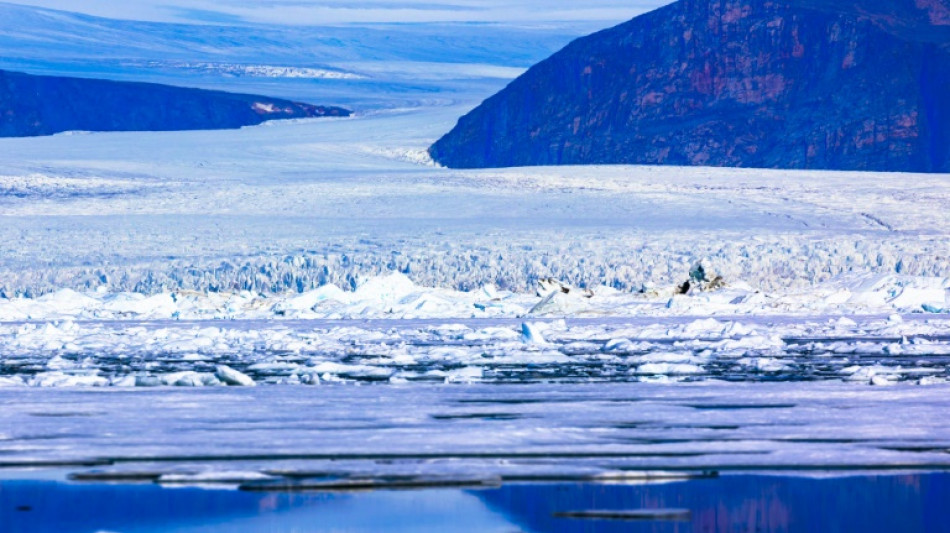
Millions of years ago, the Earth was so cold that most of its surface was covered in ice. But that hard freeze might have been slushier than once thought.

Text size:

The longstanding "Snowball Earth" theory imagines our world as seen from space, a perfect sphere with ice covering land and sea alike.

It draws on clues including deposits made by glaciers near the Equator. For ice to have extended that far from the poles suggests much of our planet was once frozen.

But there has long been speculation about just how complete the cover was, with some convinced that areas of slush or open ocean remained, allowing oxygen to penetrate and creating incubators for life.

New research published Tuesday in the journal Nature Communications adds weight to that theory, and suggests these oases in the tundra might have existed much further north than previously suspected.

The evidence comes from a thin layer of black shale that would have been under the sea during the Marinoan ice age, which began around 650 million years ago.

The shale in the Nantuo Formation in southern China acts as a sort of archive for the conditions in oceans at the time.

By analysing levels of elements such as iron, and the presence of nitrogen, scientists can infer whether oxygen was penetrating the ocean and nitrogen was being produced by lifeforms.

"We found evidence of ice-free conditions at mid-northern paleolatitudes (locations before continental drift)," Huyue Song, who helped lead the research, told AFP.

"Until now, ice-free areas had been identified only in peri-equatorial regions."

Instead of a "narrow ice-free belt" across the middle of the Earth, "patchy ice-free areas may have existed much more widely," added Song, a professor at the China University of Geosciences, Wuhan.

The findings build on other research at sites ranging from Australia to Brazil that suggest life was able to cling on in pockets while most of Earth was in deep freeze.

These incubators may even have helped spur "a rapid rebound of the biosphere" at the end of the ice age, the research published Tuesday argues.

The work took four years in total, and involved collecting samples at a remote site in the Shennongjia region of Hubei province, some 500 kilometres from Song's base in Wuhan.

Song believes the findings will help scientists better understand both how our planet's climate works, and how life evolved and survived on Earth through the ages.

And while Earth's ice ages might seem like ancient history, Song argues they could have useful lessons for a planet now experiencing new severe climate change.

"It provides insight into how life survived extreme climate events -- a topic that will become of increasing relevance as modern climate change intensifies," he said.

H.El-Hassany--DT