Dubai Telegraph - Norway study highlights whale excrement's role in ecosystem

EUR -
AED 4.277861
AFN 77.136147
ALL 96.657949
AMD 444.757798
ANG 2.08512
AOA 1068.154478
ARS 1678.808333
AUD 1.754654
AWG 2.098161
AZN 1.978573
BAM 1.957987
BBD 2.34611
BDT 142.338967
BGN 1.95787
BHD 0.439079
BIF 3444.346704
BMD 1.164836
BND 1.509986
BOB 8.048989
BRL 6.361141
BSD 1.164796
BTN 104.721505
BWP 15.516329
BYN 3.383779
BYR 22830.783798
BZD 2.342716
CAD 1.614131
CDF 2597.583856
CHF 0.93502
CLF 0.027447
CLP 1076.809445
CNY 8.227936
CNH 8.229012
COP 4473.855162
CRC 573.54054
CUC 1.164836
CUP 30.868152
CVE 110.388283
CZK 24.251359
DJF 207.420761
DKK 7.469021
DOP 75.023788
DZD 151.614484
EGP 55.494063
ERN 17.472539
ETB 181.440736
FJD 2.646272
FKP 0.874683
GBP 0.873732
GEL 3.133595
GGP 0.874683
GHS 13.371934
GIP 0.874683
GMD 85.623095
GNF 10132.315939
GTQ 8.916959
GYD 243.702171
HKD 9.064602
HNL 30.680264
HRK 7.535437
HTG 152.529693
HUF 383.333535
IDR 19401.623369
ILS 3.766054
IMP 0.874683
INR 104.64758
IQD 1525.904155
IRR 49039.591876
ISK 148.598106
JEP 0.874683
JMD 186.788609
JOD 0.825897
JPY 182.17102
KES 150.554416
KGS 101.864659
KHR 4667.21242
KMF 493.89021
KPW 1048.348457
KRW 1712.185734
KWD 0.357663
KYD 0.970684
KZT 603.901855
LAK 25261.212141
LBP 104310.195358
LKR 359.701721
LRD 205.589606
LSL 19.799512
LTL 3.439457
LVL 0.704598
LYD 6.33908
MAD 10.766024
MDL 19.831148
MGA 5200.808349
MKD 61.603703
MMK 2446.793693
MNT 4134.417229
MOP 9.336327
MRU 46.452879
MUR 53.873448
MVR 17.930198
MWK 2019.847129
MXN 21.189629
MYR 4.796816
MZN 74.44481
NAD 19.799512
NGN 1694.777782
NIO 42.867876
NOK 11.824879
NPR 167.555128
NZD 2.014054
OMR 0.447884
PAB 1.164801
PEN 3.916174
PGK 4.94252
PHP 68.955374
PKR 329.267131
PLN 4.223987
PYG 7936.864021
QAR 4.246142
RON 5.088581
RSD 117.437603
RUB 91.00593
RWF 1695.393444
SAR 4.371075
SBD 9.587289
SCR 15.685695
SDG 700.645729
SEK 10.860272
SGD 1.509051
SHP 0.873929
SLE 28.068787
SLL 24426.024407
SOS 664.542172
SRD 44.982457
STD 24109.751503
STN 24.527287
SVC 10.192383
SYP 12879.402776
SZL 19.792104
THB 37.088773
TJS 10.774633
TMT 4.088574
TND 3.423824
TOP 2.804645
TRY 49.625766
TTD 7.898822
TWD 36.333543
TZS 2855.727986
UAH 49.312873
UGX 4158.626572
USD 1.164836
UYU 45.650984
UZS 13981.6149
VES 300.069051
VND 30701.580029
VUV 142.017642
WST 3.24734
XAF 656.690403
XAG 0.019252
XAU 0.000277
XCD 3.148027
XCG 2.099336
XDR 0.817204
XOF 656.690403
XPF 119.331742
YER 277.842465
ZAR 19.791901
ZMK 10484.906002
ZMW 27.088253
ZWL 375.076687
  • NGG

    -0.4250

    74.465

    -0.57%

  • RBGPF

    -1.5200

    77.68

    -1.96%

  • CMSC

    -0.0810

    23.159

    -0.35%

  • RYCEF

    -0.2300

    14.6

    -1.58%

  • GSK

    0.7690

    48.039

    +1.6%

  • RIO

    0.7910

    75.191

    +1.05%

  • BP

    -0.0050

    35.545

    -0.01%

  • RELX

    0.4250

    39.965

    +1.06%

  • BTI

    1.2300

    58.52

    +2.1%

  • VOD

    0.0500

    12.55

    +0.4%

  • JRI

    -0.0080

    13.693

    -0.06%

  • BCC

    2.5300

    74.53

    +3.39%

  • CMSD

    -0.0900

    23.13

    -0.39%

  • BCE

    0.0800

    23.23

    +0.34%

  • AZN

    0.6400

    90.46

    +0.71%

  • SCS

    0.0200

    16.14

    +0.12%

Norway study highlights whale excrement's role in ecosystem
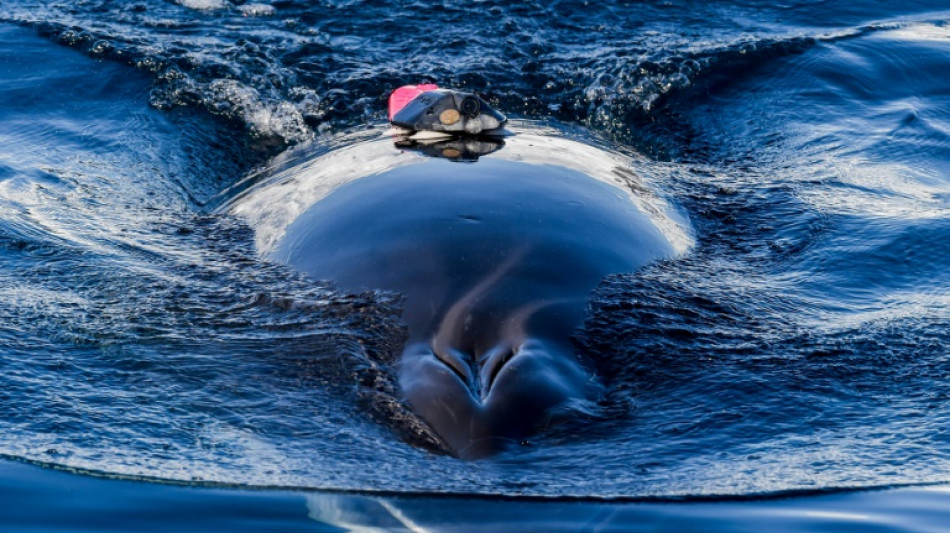
Norway study highlights whale excrement's role in ecosystem / Photo: Ari Friedlaender - Stanford University/Goldbogen Laboratory/AFP/File

Norway study highlights whale excrement's role in ecosystem

Minke whale excrement is "worth its weight in gold" as it plays an important role in fertilizing phytoplankton and thereby reducing the cetacean's carbon footprint, according to a Norwegian study.

Text size:

For the first time, researchers from the Norwegian Institute for Marine Research have studied the concentration of nutrients in whale excrement before it is dissolved in seawater.

"It can sound disgusting, but for the ecosystem it's worth its weight in gold," researchers said in a statement Thursday.

"The idea is simply that the faeces fertilize the sea in the same way that cows and sheep do on land," they continued.

The researchers analysed the excrement of minke whales harpooned by whalers -- as Norway is one of few countries allowing the commercial hunting of these cetaceans.

The some 15,000 whales that migrate each summer to the Norwegian archipelago of Svalbard in the Arctic release some 600 tonnes of excrement on the surface of the water each day, at a rate of about 40 kilograms (88 pounds) per animal.

According to the study, the daily excrement releases about 10 tonnes of phosphorus and 7 tonnes of nitrogen into the oceans, nutrients that are essential for the growth of phytoplankton -- microscopic algae that absorb carbon dioxide through photosynthesis and convert it into oxygen.

The scientists concluded that the minke whale excrement contributed to between 0.2 and 4 percent of daily phytoplankton production in the Arctic Svalbard region.

"The real contribution of whales is probably higher because these estimates do not include urine, which is very rich in nitrogen," research leader Kjell Gundersen told AFP.

Each minke whale -- an animal weighing 40-50 tonnes as an adult that feeds by filtering large quantities of water -- releases "several hundred litres of urine" per day.

"If there are fewer whales, there is a risk that there will be less fertilisation of the ocean," Gundersen said.

"More phytoplankton production also means more CO2 is absorbed," he added.

"This is positive for the climate," he noted, "but we don't know the net balance of whales in terms of greenhouse gases" because cetaceans also emit methane when they breathe.

This question, which is still largely unexplored, will be the subject of a European study that will start in June and last four years.

D.Farook--DT