Dubai Telegraph - Rich nations oppose new biodiversity fund

EUR -
AED 4.183845
AFN 72.900796
ALL 91.762516
AMD 414.074598
ANG 2.039348
AOA 1045.665194
ARS 1741.635676
AUD 1.619646
AWG 2.050323
AZN 1.940938
BAM 1.952891
BBD 2.292276
BDT 140.046936
BGN 1.917554
BHD 0.429476
BIF 3413.787943
BMD 1.139068
BND 1.454092
BOB 13.947776
BRL 5.909605
BSD 1.13805
BTN 108.984975
BWP 15.496782
BYN 3.438614
BYR 22325.7403
BZD 2.288981
CAD 1.611384
CDF 2665.420428
CHF 0.943279
CLF 0.027745
CLP 1095.522249
CNY 7.646851
CNH 7.661158
COP 3764.324847
CRC 517.449712
CUC 1.139068
CUP 27.313317
CVE 110.632063
CZK 24.358299
DJF 202.435681
DKK 7.475483
DOP 67.778993
DZD 152.391449
EGP 59.13438
ERN 17.086026
ETB 184.628294
FJD 2.559772
FKP 0.861993
GBP 0.85948
GEL 2.97871
GGP 0.861993
GHS 13.218833
GIP 0.861993
GMD 83.725913
GNF 10009.486524
GTQ 8.691398
GYD 238.124726
HKD 8.934226
HNL 30.546708
HRK 7.533575
HTG 148.944035
HUF 365.202455
IDR 20405.384913
ILS 3.471949
IMP 0.861993
INR 109.142856
IQD 1490.938181
IRR 1565734.922454
ISK 136.984803
JEP 0.861993
JMD 180.051817
JOD 0.807645
JPY 179.147025
KES 147.555356
KGS 99.609484
KHR 4628.28911
KMF 493.217009
KPW 1025.161906
KRW 1543.153328
KWD 0.351563
KYD 0.948379
KZT 504.121503
LAK 25527.985134
LBP 101916.82345
LKR 375.763607
LRD 195.756159
LSL 18.568476
LTL 3.363373
LVL 0.689012
LYD 7.276162
MAD 10.921464
MDL 20.200734
MGA 5024.714304
MKD 61.483833
MMK 2391.472577
MNT 4099.316268
MOP 9.194624
MRU 45.784207
MUR 54.140351
MVR 17.599037
MWK 1973.438569
MXN 20.143343
MYR 4.640683
MZN 72.79829
NAD 18.568476
NGN 1510.837951
NIO 41.879276
NOK 10.830092
NPR 174.376159
NZD 2.011068
OMR 0.439307
PAB 1.13805
PEN 3.863598
PGK 5.070648
PHP 71.01754
PKR 315.35775
PLN 4.37146
PYG 6708.273191
QAR 4.148485
RON 5.27298
RSD 117.171452
RUB 96.123035
RWF 1681.979961
SAR 4.271287
SBD 9.11313
SCR 15.840256
SDG 685.153819
SEK 11.296996
SGD 1.455773
SHP 0.859999
SLE 28.078458
SLL 23885.685201
SOS 650.456856
SRD 42.905863
STD 23576.41575
STN 24.464527
SVC 9.95856
SYP 14810.167401
SZL 18.564083
THB 38.01645
TJS 10.498977
TMT 3.99813
TND 3.369082
TOP 2.742603
TRY 55.748859
TTD 7.740776
TWD 36.141163
TZS 3012.833637
UAH 50.963005
UGX 4457.536696
USD 1.139068
UYU 45.592491
UZS 13469.056382
VES 970.977713
VND 29588.440307
VUV 134.986906
WST 3.150074
XAF 655.957
XAG 0.017716
XAU 0.000265798393
XCD 3.07839
XCG 2.050892
XDR 0.80538
XOF 655.957
XPF 119.331742
YER 269.560946
ZAR 18.558659
ZMK 10252.986409
ZMW 22.200809
ZWL 366.779554
SSP 6507.032816
MXV 2.282681
  • BCC

    1.0400

    77.14

    +1.35%

  • BTI

    -0.3900

    55.63

    -0.7%

  • NGG

    0.2600

    75.49

    +0.34%

  • BCE

    -0.3300

    20.97

    -1.57%

  • GSK

    -0.4100

    49.24

    -0.83%

  • BP

    -0.2600

    44.15

    -0.59%

  • RBGPF

    -0.5900

    65.4

    -0.9%

  • RIO

    0.0900

    94.56

    +0.1%

  • CMSC

    -0.1100

    20.4

    -0.54%

  • CMSD

    -0.0700

    20.3

    -0.34%

  • RELX

    0.0100

    33.52

    +0.03%

  • VOD

    0.1300

    16.62

    +0.78%

  • RYCEF

    -0.3600

    19.31

    -1.86%

  • JRI

    -0.1500

    11.02

    -1.36%

  • AZN

    2.0200

    166.58

    +1.21%

Rich nations oppose new biodiversity fund
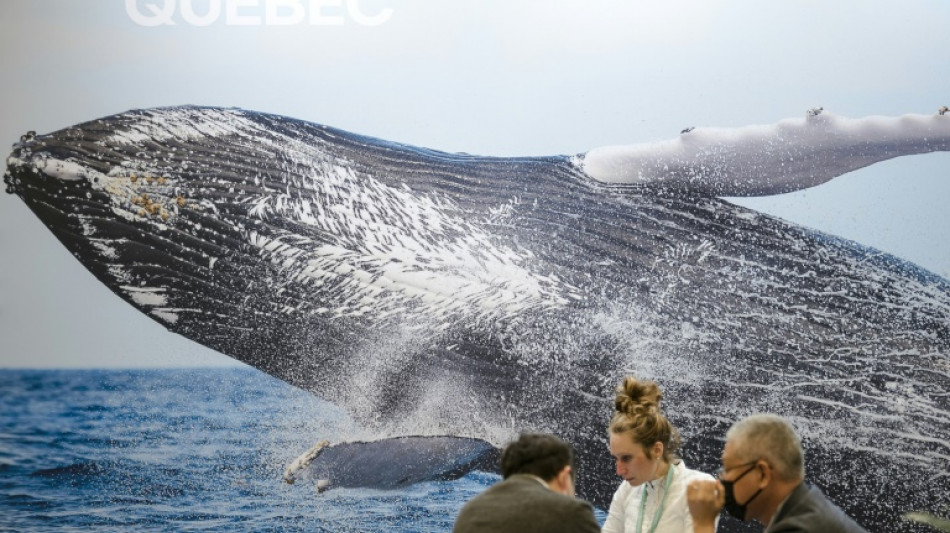
Rich nations oppose new biodiversity fund / Photo: ANDREJ IVANOV - AFP

Rich nations oppose new biodiversity fund

Creating a new global fund for biodiversity -- a core demand of developing countries at UN talks in Montreal -- "would take years" and be less effective than reforming existing financial mechanisms, Canada's environment minister said Tuesday.

Text size:

Ottawa's position reflects the consensus among developed nations on the thorny issue, which has emerged as a key sticking point in negotiations to hammer out a new global pact for nature at the meeting, known as COP15.

Delegates from around the world have gathered for the December 7-19 summit aiming to secure a new deal: a 10-year framework aimed at saving Earth's forests, oceans and species before it's too late.

Draft targets include a cornerstone pledge to protect 30 percent of the world's land and seas by 2030, eliminating harmful fishing and agriculture subsidies and tackling invasive species and reducing pesticides.

Dozens of countries, led by Brazil, India, Indonesia and African nations, are demanding financial subsidies of at least $100 billion a year until 2030, or one percent of global GDP, to protect ecosystems. The current figure is around $10 billion annually.

"The countries of the North understand that ambition must be accompanied by financial resources," Canadian Minister of Environment and Climate Change Steven Guilbeault said at a press conference held halfway through the talks.

But "my concern is that the creation of new funding could take years, and during those years, countries in the South wouldn't be receiving any money from that fund," he added.

He recalled the Global Environment Facility, currently the main multilateral mechanism for biodiversity, took seven years to create. Donors have pledged $5.3 billion to this fund for its current cycle, 2022-2026.

"So I think it would be better to use existing funds" while pursuing reforms that would make money more accessible, he said.

"On the other hand, we have to agree on the fact that it cannot only be public money," said Guilbeault, stressing that private and philanthropic contributions must come into play, as well as multilateral lenders such as the World Bank and IMF.

"We all need to push harder this week," he concluded, after the first week of talks ended in stalemate.

- Yawning funding gap -

The divide between developed and developing nations on the issue of creating a new biodiversity fund mirrors a similar debate during recent UN climate talks in Egypt on creating a "loss and damages" fund for the most climate-vulnerable nations -- though that demand was eventually met.

Given this precedent, Basile van Havre, co-chair of one of COP15's working groups, did not rule out a similar decision for biodiversity.

"The landscape or the context now is a lot more favorable," he told AFP, acknowledging growing political momentum for such a move.

Whatever the final mechanism, the gap in expectations over resource mobilization that would allow lower income nations to hold up their side of the biodiversity deal remains a sore spot.

"The EU says it hears the needs of the Global South and the Africa Group, and recognizes that current finances are not enough. So what is the hold up?" said Greenpeace policy advisory Anna Ogniewska.

F.Damodaran--DT