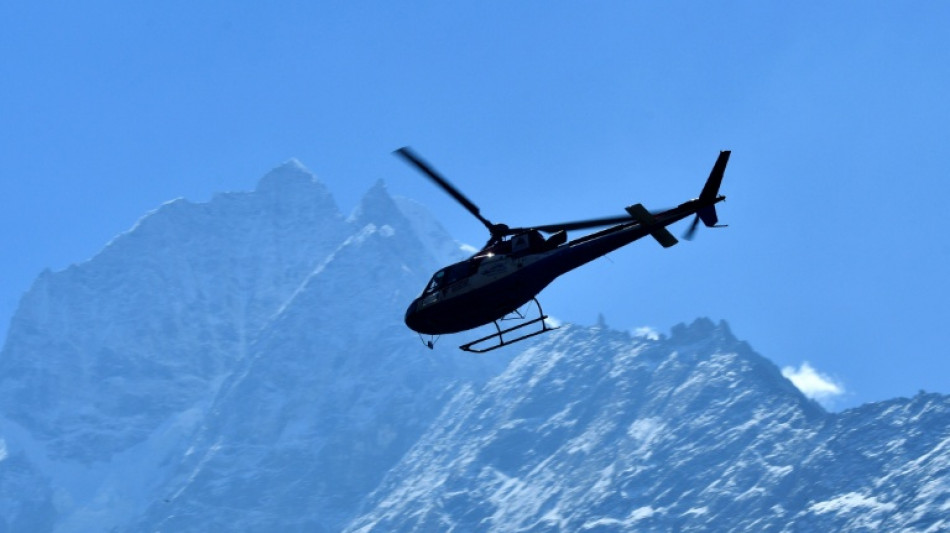
Nepal vows action against trekker rescue scam / Photo: PRAKASH MATHEMA - AFP/File
Nepal's government has developed tough measures to stamp out insurance scams involving unnecessary helicopter rescues of trekkers, an official said Tuesday, a long-running racket threatening the country's vital tourism industry.
The Himalayan nation, home to eight of the world's 10 highest peaks including Everest, attracts thousands of trekkers each year, many walking remote high-altitude trails where emergency airlifts are costly.
But police say some operators have for years orchestrated fraudulent evacuations for insurance payouts, and 32 people have been charged after an investigation in an alleged $19.69 million scam.
"The government is taking several steps to ensure that there is investigation and immediate action against any fraudulent practices," Jaya Narayan Acharya, spokesman at the Ministry of Culture, Tourism and Civil Aviation, told AFP.
"Tourism is an important industry. We must take corrective action against any malpractice."
Police say the scam worked by filing multiple insurance claims for a single rescue, meaning charter flight companies were paid several times for the same unnecessary flight.
Investigators said some trekkers were even intentionally made sick -- by serving contaminated meals or even adding baking soda -- to justify a helicopter ride out.
Trekkers were also pressured into airlifts even for minor illnesses, according to the chargesheet.
The ministry has said a "zero-tolerance policy" will be implemented to stamp out fraud, including investigations, and publicising those guilty of fraud.
It said a task force involving the police, tourist board and aviation officials would "strengthen oversight and conduct regular audits", as well as to ensure guides and trekking agencies were licensed.
A 2018 government probe identified 15 companies involved in similar scams, but no action was taken, allowing them to persist despite new guidelines introduced after warnings from insurers.
The investigation comes ahead of Nepal's lucrative climbing and trekking season, when mountaineers can pay tens of thousands of dollars, trusting their guides to lead them into highly dangerous peaks, where acute mountain sickness can be deadly.
Police said that there was "no evidence" to suggest Everest guides were involved in the scam.
The Nepal Mountaineering Association has also said there were "no verified cases of food poisoning or the alleged overdosing of Diamox (a drug used for altitude sickness) involving climbers in Nepal".
H.Hajar--DT