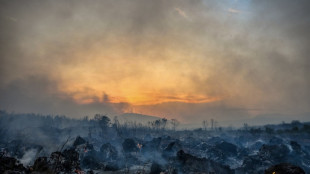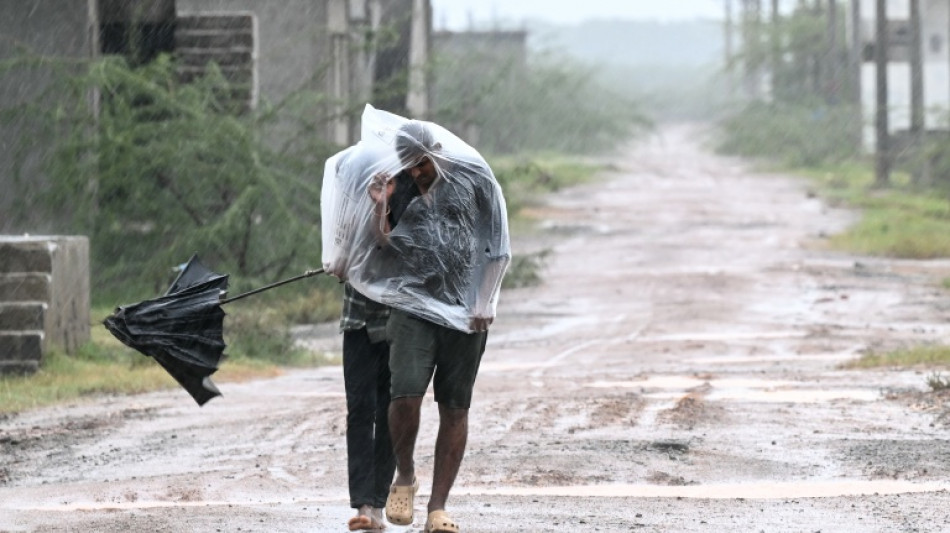
India evacuates tens of thousands as Cyclone Arnab makes landfall / Photo: Noah SEELAM - AFP
Ferocious winds and torrential rain lashed India's southeastern coast as Cyclone Arnab made landfall on Wednesday, forcing nearly 100,000 people to evacuate their homes in two states, authorities said.
Arnab hit Andhra Pradesh as a "very severe cyclonic storm", with winds of 125-135 kilometres (78-84 miles) per hour and gusts reaching 150 kph, the India Meteorological Department (IMD) said.
"Very severe cyclonic storm Arnab is continuing to interact with the land surface," the IMD said in a statement, along the coasts between Bapatla and Visakhapatnam.
Authorities ordered thousands to move inland or take shelter in the states of Andhra Pradesh and Odisha ahead of the storm, while neighbouring Sri Lanka and Nepal also issued weather warnings.
"Protecting every life is our foremost priority," Andhra Pradesh Chief Minister Nara Chandrababu Naidu said as the storm approached the coast.
Gales rocked trees and rain poured down in the port city of Kakinada, close to the heart of the storm, as heavy waves crashed ashore.
Kotesh Kumar, 35, said he had "never seen anything like this before", adding that the government had warned residents to stock up on groceries.
"There was a cyclone here three years ago, but the water didn't rise this much."
As many as 50,000 people have been told to move to safe areas in Andhra Pradesh, and 48,000 in Odisha.
"Our homes get flooded, and we have to stay in the water," said Rajeshwari, 65, who gave only one name and had been taken to a government-run shelter near Kakinada.
"So the government provided us with a bus, and we came here to shelter," she told AFP.
Cyclones, called hurricanes in the North Atlantic and typhoons in the Pacific, are a regular menace in the Bay of Bengal and northern Indian Ocean.
The storm season, however, has been turbocharged by the El Nino weather phenomenon that has contributed to unprecedented warming.
India's weather bureau warned of "total destruction" of thatched houses, localised flooding, the uprooting of power and communications poles, and "widespread damage" to standing crops.
The Ministry of Civil Aviation said flights to Andhra Pradesh and Odisha were expected to be among the most affected.
Neighbouring Sri Lanka closed schools as its Department of Meteorology warned that storms could trigger flash floods and mudslides.
Nepal's disaster authority warned that the storm would move inland towards the Himalayas, bringing heavy rainfall and "a high risk of heavy snowfall, snowstorms and avalanches".
It urged tourists to avoid travelling to high mountain areas and advised those already there to remain in safe locations.
Nepal is still recovering from a catastrophic August 26 flood triggered by a glacial mountain collapse, which killed more than 1,400 people and left over 5,000 missing.
R.El-Zarouni--DT