Dubai Telegraph - Belgium delays nuclear energy exit 10 years due to Ukraine war

EUR -
AED 4.218957
AFN 74.661225
ALL 91.582971
AMD 417.457719
ANG 2.056463
AOA 1054.440663
ARS 1743.614232
AUD 1.610725
AWG 2.06753
AZN 1.957227
BAM 1.958584
BBD 2.314189
BDT 141.100567
BGN 1.933647
BHD 0.43308
BIF 3445.883141
BMD 1.148628
BND 1.468274
BOB 11.289342
BRL 5.906291
BSD 1.149053
BTN 110.098541
BWP 15.582625
BYN 3.475741
BYR 22513.103189
BZD 2.310945
CAD 1.607792
CDF 2654.479062
CHF 0.944284
CLF 0.027911
CLP 1102.062801
CNY 7.693107
CNH 7.700293
COP 3657.609688
CRC 514.039631
CUC 1.148628
CUP 30.438634
CVE 110.55587
CZK 24.347696
DJF 204.134569
DKK 7.475389
DOP 67.81758
DZD 153.643935
EGP 60.011386
ERN 17.229416
ETB 187.686889
FJD 2.545249
FKP 0.860671
GBP 0.857505
GEL 2.990867
GGP 0.860671
GHS 13.237162
GIP 0.860671
GMD 84.42856
GNF 10101.666796
GTQ 8.768617
GYD 240.39904
HKD 9.011042
HNL 30.845651
HRK 7.534658
HTG 150.176082
HUF 364.287725
IDR 20459.4717
ILS 3.487958
IMP 0.860671
INR 110.252582
IQD 1505.265866
IRR 1578903.655694
ISK 139.202636
JEP 0.860671
JMD 181.437904
JOD 0.814422
JPY 180.197158
KES 148.759217
KGS 100.447935
KHR 4656.761237
KMF 491.613064
KPW 1033.765308
KRW 1592.044397
KWD 0.353962
KYD 0.95759
KZT 513.710212
LAK 25757.976881
LBP 102859.612165
LKR 380.330553
LRD 198.788625
LSL 18.680779
LTL 3.391599
LVL 0.694794
LYD 7.294223
MAD 10.886907
MDL 20.194321
MGA 4981.210628
MKD 61.619198
MMK 2411.765202
MNT 4134.326493
MOP 9.2846
MRU 46.225512
MUR 54.640655
MVR 17.746733
MWK 1992.492937
MXN 19.78965
MYR 4.690656
MZN 73.40923
NAD 18.680942
NGN 1529.662418
NIO 42.280099
NOK 10.809019
NPR 176.162473
NZD 2.008793
OMR 0.442789
PAB 1.149063
PEN 3.877412
PGK 5.114426
PHP 72.2606
PKR 318.484727
PLN 4.363465
PYG 6811.860614
QAR 4.19998
RON 5.263476
RSD 117.119869
RUB 96.935341
RWF 1687.950767
SAR 4.280492
SBD 9.18961
SCR 16.157873
SDG 690.903792
SEK 11.290555
SGD 1.465768
SHP 0.858627
SLE 28.314099
SLL 24086.139517
SOS 656.64482
SRD 43.585257
STD 23774.274604
STN 24.535303
SVC 10.054598
SYP 14934.457826
SZL 18.674871
THB 38.295672
TJS 10.59989
TMT 4.031683
TND 3.380004
TOP 2.76562
TRY 56.015171
TTD 7.800223
TWD 36.503811
TZS 3043.85889
UAH 51.337638
UGX 4532.442628
USD 1.148628
UYU 46.207089
UZS 13604.57507
VES 973.444877
VND 29889.590367
VUV 135.872884
WST 3.164265
XAF 655.957
XAG 0.01734
XAU 0.000262
XCD 3.104224
XCG 2.070844
XDR 0.812139
XOF 655.957
XPF 119.331742
YER 271.708303
ZAR 18.687948
ZMK 10339.031894
ZMW 22.584693
ZWL 369.857655
SSP 6505.853316
MXV 2.243593
  • RYCEF

    0.7100

    20

    +3.55%

  • RBGPF

    -1.6900

    68.3

    -2.47%

  • CMSC

    0.0400

    20.71

    +0.19%

  • BTI

    -0.1900

    55.83

    -0.34%

  • AZN

    -0.0600

    166.08

    -0.04%

  • GSK

    -0.8400

    50.22

    -1.67%

  • BP

    -0.8400

    44.58

    -1.88%

  • RIO

    -0.6700

    97.37

    -0.69%

  • NGG

    -0.8000

    76.8

    -1.04%

  • RELX

    -0.9700

    33.41

    -2.9%

  • VOD

    -0.5700

    16.95

    -3.36%

  • JRI

    -0.0600

    11.55

    -0.52%

  • BCE

    -0.2200

    22.06

    -1%

  • CMSD

    0.0000

    20.45

    0%

  • BCC

    0.1600

    75.69

    +0.21%

Belgium delays nuclear energy exit 10 years due to Ukraine war

Belgium delays nuclear energy exit 10 years due to Ukraine war

Belgium on Friday delayed by a decade a plan to scrap nuclear energy in 2025, spooked by the huge rise in energy prices due to the Russian invasion of Ukraine.

Text size:

"The federal government has decided to take the necessary steps to extend the life of two nuclear reactors by ten years," Prime Minister Alexander De Croo said in a statement.

"This extension will strengthen our country's independence from fossil fuels in a turbulent geopolitical environment," he added.

The push to 2035 comes as calls are rising that neighbouring Germany, Europe's biggest economy, should also rethink its nuclear energy exit, but ministers in Berlin last week doubled down on their country's no atom pledge despite the price shock.

Europe is scrambling to find ways to wean itself off its energy dependency on Russia, which provides 40 percent of Europe's gas needs, mainly to Germany, Italy and several central European countries.

Prices have skyrocketed for Europeans since the invasion by Russia of Ukraine and EU leaders will meet next week to agree on fresh emergency measures to soften the blow for consumers and businesses.

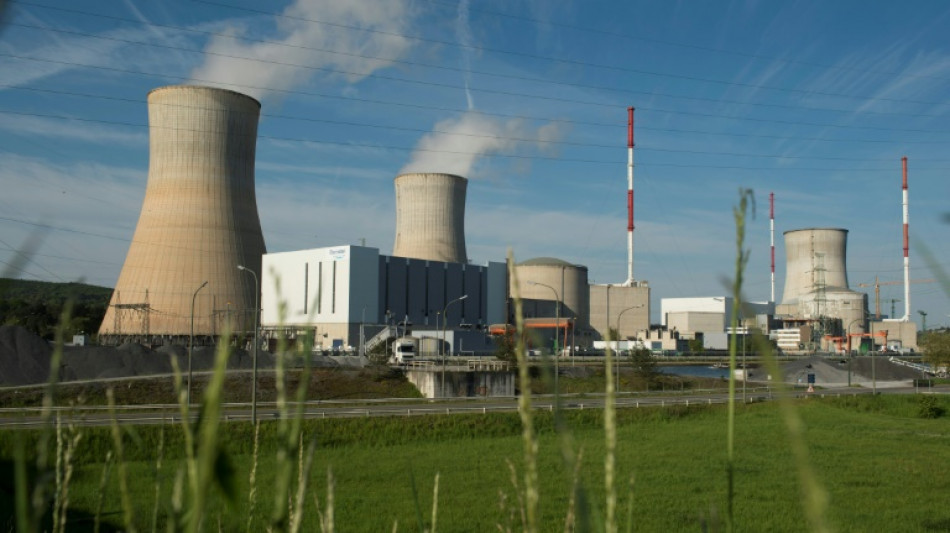
Belgium currently, operates two nuclear power plants with a total of seven reactors.

The promise of a gradual phase-out of nuclear power has been enshrined in Belgian law since 2003 and the decision to again delay the moratorium was fiercely resisted by the Greens party.

In Friday's plan, which was negotiated during a marathon cabinet session, the government agreed to extend the operating lives of the Doel 4 reactor near the port city of Antwerp and Tihange 3 near Liege until 2035.

De Croo insisted that the decision would give the country certainty after years of quarrelling over the wisdom of the nuclear exit.

"For too long our country has lacked vision," De Croo told a news conference. "This has caused a lot of uncertainty. The plan we have on the table today responds to that lack of vision."

The government must negotiate with French energy giant Engie, owner of the nuclear power plants in Belgium, on the costs and delivery of the new plan.

Engie had previously indicated that it was too late for the De Croo government to change its mind.

The government also warned that the two reactors in any case will not be available for the winter of 2025.

The Greens had made an exit from nuclear power in 2025 a condition to join a politically fragile seven-party coalition that was painfully cobbled together in 2020, more than a year after inconclusive elections.

But since the February 24 invasion, with the surge in energy prices, the party signalled it would agree to consider an alternative scenario.

There have been massive protests against two older reactors - Tihange 2 and Doel 3 - in Germany and other neighbouring countries since experts found thousands of hairline cracks in the reactor pressure vessels in 2012.

G.Gopinath--DT



