
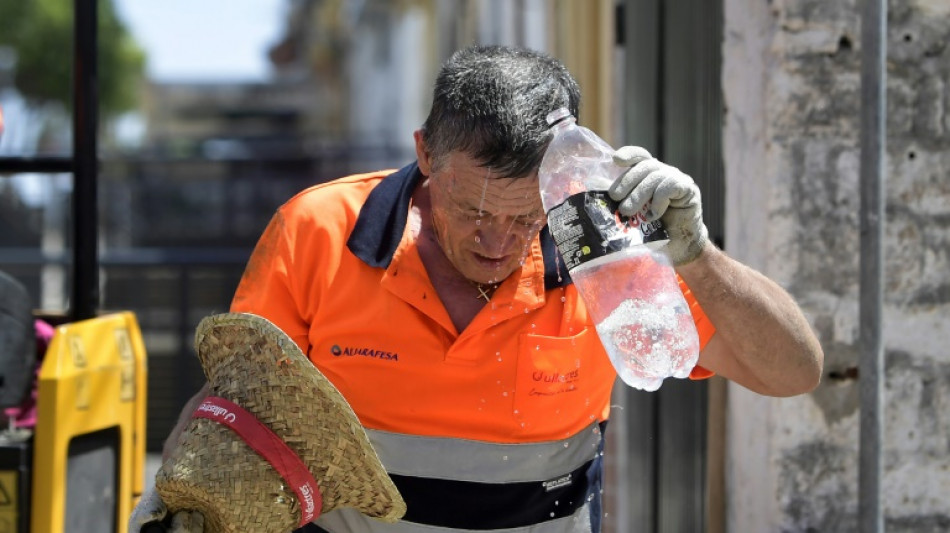
What is making 2023 likely the hottest year recorded / Photo: CRISTINA QUICLER - AFP
Human-made climate change is supercharging natural weather phenomena to drive heatwaves roasting Asia, Europe and North America that could make 2023 the hottest year since records began, scientists say.
Here experts explain how 2023 has got so hot, warning these record temperatures will get worse even if humanity sharply cuts its planet-warming gas emissions.
- El Nino and more -
After a record hot summer in 2022, this year the Pacific warming phenomenon known as El Nino has returned, heating up the oceans.
"This may have provided some additional warmth to the North Atlantic, though because the El Nino event is only just beginning, this is likely only a small portion of the effect," Robert Rohde of US temperature monitoring group Berkeley Earth wrote in an analysis.
The group calculated that there was an 81-percent chance that 2023 would become the warmest year since thermometer records began in the mid-19th century.
- Dust and sulphur -
The warming of the Atlantic may also have been sharpened by a decrease of two substances that typically reflect sunlight away from the ocean: dust blowing off the Sahara desert and sulphur aerosols from shipping fuel.
Rohde's analysis of temperatures in the North Atlantic region noted "exceptionally low levels of dust coming off the Sahara in recent months."
This was due to unusually weak Atlantic trade winds, said Karsten Haustein of Germany's federal Climate Service Centre.
Meanwhile new shipping restrictions in 2020 slashed toxic sulphur emissions. "This would not explain all of the present North Atlantic spike, but may have added to its severity," Rohde noted.
- 'Stagnant' anticyclones –
Warming oceans affect land weather patterns, prompting heatwaves and droughts in some places and storms in others. The hotter atmosphere sucks up moisture and dumps it elsewhere, said Richard Allan, professor of climate science at the University of Reading.
Scientists highlighted the length and intensity of the lingering anticyclone systems bringing the heatwaves.
"Where stagnant high-pressure areas persist over continents, the air sinks and warms, melting away clouds, causing intense summer sunshine to parch the soils, heating the ground and air above," with heatwaves "lodged in place" for weeks, Allan said.
In Europe, "the hot air which pushed in from Africa is now staying put, with settled high pressure conditions meaning that heat in warm sea, land and air continues to build," added Hannah Cloke, a climate scientist at the University of Reading.
- Climate change's role –
Scientists at the Intergovernmental Panel on Climate Change (IPCC) said in their global summary report this year that climate change had made deadly heatwaves "more frequent and more intense across most land regions since the 1950s".
This month's heatwaves are "not one single phenomenon but several acting at the same time," said Robert Vautard, director of France's Pierre-Simon Laplace climate institute. "But they are all strengthened by one factor: climate change."
Higher global temperatures make heatwaves longer and more intense. Despite being the main driver, climate change is one variable that humans can influence by reducing emissions from fossil fuels.
"We are moving out of the usual and well-known natural oscillations of the climate to unchartered and more extreme territory," said Melissa Lazenby, senior lecturer in climate change at the University of Sussex.
"However, we have the ability to reduce our human influence on the climate and weather and to not create more extreme and long-lasting heatwaves."
- Heat forecast -
Berkeley Earth warned the current El Nino could make Earth even hotter in 2024.
The IPCC has said heatwaves risk getting more frequent and intense, though governments can limit climate change by reducing countries' greenhouse gas emissions.
"This is just the beginning," said Simon Lewis, chair of global change science at University College London.
"Deep, rapid and sustained cuts in carbon emissions to net zero can halt the warming, but humanity will have to adapt to even more severe heatwaves in the future."
K.Javed--DT



