Preventative cholera vaccination resumes as global supply swells: WHO / Photo: - - AFP
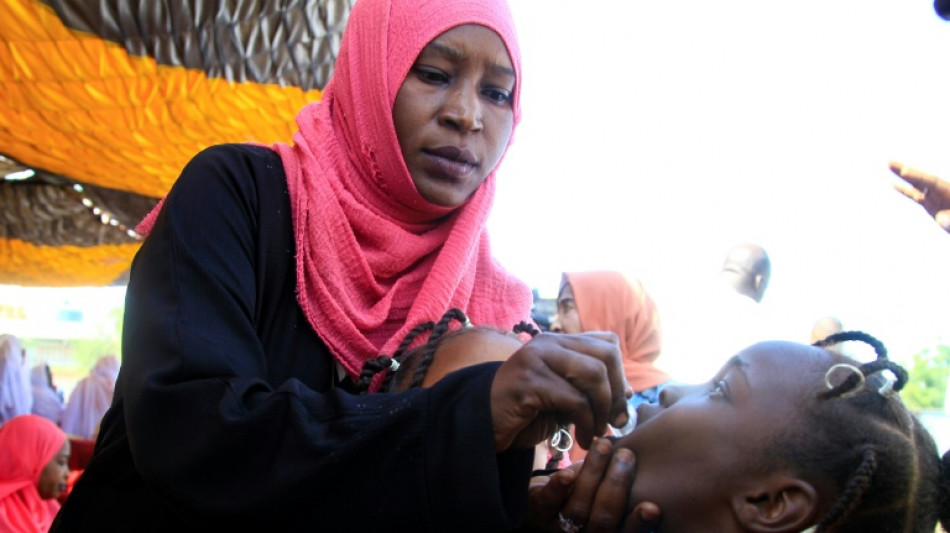
The global cholera vaccine supply is finally high enough to allow regular vaccination campaigns to resume after a three-year halt, the World Health Organization and partners said Wednesday.
Dire vaccine shortages amid a surge in cholera cases forced a halt to preventative immunisation efforts in 2022, and a move to a one-dose strategy from the usual two in outbreak emergency responses.
But the WHO, along with the UN children's agency UNICEF and the Gavi vaccine alliance, announced Wednesday that the global supply had now increased "to a level sufficient to allow the resumption of life-saving preventative campaigns".
"Global vaccine shortages forced us into a cycle of reacting to cholera outbreaks instead of preventing them. We are now in a stronger position," said WHO chief Tedros Adhanom Ghebreyesus.
They groups said Mozambique was the first country to restart, with the country facing an ongoing cholera outbreak and reeling from floods that affected more than 700,000 people.
The flooding damaged water systems, further increasing the cholera risk.
A first allocation of 20 million doses is being deployed for preventive campaigns in three countries, with some 3.6 million doses delivered to Mozambique, 6.1 million going to the Democratic Republic of Congo, and the remaining 10.3 million doses intended for Bangladesh.
As the supply pipeline improves, one dose will remain the standard for outbreak responses, for now.
The doses are financed by Gavi, but procured and delivered to countries by UNICEF.
- 33 countries hit in 2025 -
Cholera is an acute intestinal infection that spreads through food and water contaminated with the bacterium vibrio cholerae, often from faeces.
It causes severe diarrhoea, vomiting and muscle cramps.
Cholera can kill within hours when not treated, though it can be treated with simple oral rehydration, and antibiotics for more severe cases.
UNICEF chief Catherine Russell said resuming preventive cholera vaccination would protect children, but "must go hand in hand with other efforts, including better access to safe water and basic sanitation".
More than 600,000 cases of cholera or acute watery diarrhoea and nearly 7,600 deaths were reported to the WHO from 33 countries last year, though the true numbers will be higher.
Global cholera cases rose every year from 2021 onwards then declined in 2025. However, the number of cholera deaths continued to increase.
Since October 2022, requests from 27 countries have been approved for emergency campaigns, with doses reaching almost 139 million people.
Annual global supply of oral cholera vaccine doubled from 35 million doses in 2022 to nearly 70 million doses in 2025.
"I thank EUBiologics, currently the only manufacturer producing cholera vaccines at the scale needed for mass vaccination campaigns, for its efforts, and urge others to enter this vital space," said Tedros.
F.A.Dsouza--DT