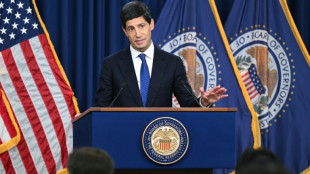
US registers strong job growth in March in boost to Trump / Photo: Frederic J. BROWN - AFP
The US economy posted unexpectedly strong job gains in March, government data showed Friday, in a shift that could ease labor market concerns and boost President Donald Trump's economic agenda.
The world's largest economy gained 178,000 jobs in March, after losing 133,000 in February, and the unemployment rate dropped by 0.1 percentage-point to 4.3 percent, the Labor Department said.
Friday's data significantly beat analyst expectations, with economists polled by Dow Jones Newswires and the Wall Street Journal expecting an increase of 59,000 jobs.
Much of the recovery was fueled by jobs in the health care sector, which has remained resilient even as labor demand has dropped across many sectors of the US economy.
Health care added 76,000 jobs in March, after having lost jobs the month before, in part due to strike actions.
Employment in construction also grew by 26,000 in March, although the Labor Department flagged that it had changed little over its level from a year ago.
Federal government employment continued to decline.
Trump has taken a hatchet to the sector in a drive aimed at cost-cutting and reducing the size of government. Employment in the sector was down 11.8 percent since October 2024, the data showed.
The new data reflected a revision in the figures for January and February, showing employment for those two months combined was 7,000 lower than previously reported.
The White House on Friday touted the numbers as a major success.
"Americans can rest assured that after the short-term disruptions of Operation Epic Fury are behind us, America's economic resurgence is set to only accelerate," said deputy press secretary Kush Desai, referring to the US-Israel war on Iran.
- Low-hire, low-fire -
The war has engulfed the Middle East, sent oil prices surging and snarled supply chains, leading to fears of economic slowdown around the world, including in the United States.
Analysts hailed the strong jobs figures, but signaled caution as the economic impact of the war begins to hit Americans.
Nationwide Chief Economist Kathy Bostjancic said the March report showed the US labor market was in "good standing," with "broad-based gains in the private sector."
"Looking ahead, we expect the spike in gasoline prices will dampen consumers' spending on discretionary items," which would slow second-quarter economic growth to below one percent (annualized), "and raise the cost of energy and some commodity inputs for businesses."
Higher production costs are expected to mean that businesses will continue the current "low-hire, low-fire" trend.
- Fed fallout -
Uncertainty about the duration and intensity of the war's economic shock has so far led policymakers at the Federal Reserve to adopt a wait-and-see approach on interest rate moves, as they balance managing stubbornly high inflation with managing unemployment.
Unemployment rates have remained relatively steady in the United States -- but the figure has hidden churn under the surface, analysts warn, as weak jobs growth has been matched by a drop in labor supply.
That drop in supply is largely attributed to Trump's crackdown on immigration and widespread deportation efforts.
For Fed policymakers, however, inflation currently appears to be a bigger risk than unemployment.
"The labor market is roughly in balance but susceptible to adverse shocks," said Fed Governor Philip Jefferson last week.
With labor supply decreasing, the break-even rate for jobs growth -- the rate at which the unemployment rate remains steady -- is roughly zero, a situation that policymakers have flagged as particularly unusual for the US economy.
Y.I.Hashem--DT