China's fireworks heartland faces fizzling Lunar New Year sales / Photo: Adek BERRY - AFP
A fiery crack of red and gold explodes above a village in China's pyrotechnics hub of Liuyang, where residents are accustomed to ear-splitting fireworks tests year-round.
But factories and businesses in the mountainous district say the age-old tradition is struggling against weak consumerism, with even the approaching Lunar New Year failing to boost sales.
Liuyang, where the pyrotechnics trade dates back more than 1,000 years, produces around 60 percent of the fireworks sold in China and 70 percent of those exported.
"The fireworks industry has been passed down from generation to generation," said Li Shijie, a fifth-generation manager of Zhongzhou Fireworks in the southern city.
"It's a cultural heritage I cherish very much."
Fireworks feature at every major milestone, including birthdays, weddings and funerals, said Zhu Ting, a quality manager at a Zhongzhou warehouse.
Outside of major cities, rural communities still light sparklers and screeching "missile" fireworks to celebrate the Lunar New Year, which falls next week.
Working in the local industry brings "a lot of pride", Zhu told AFP.
But despite relaxed restrictions on fireworks nationwide in a bid to encourage domestic spending, sales have softened since a post-pandemic boom.
Shop owners at a Liuyang trading centre told AFP business has slowed. Dozens of stores selling fireworks resembling flamethrowers and packaged in garish boxes saw little foot traffic on a weekday morning.
The last year was "a relatively 'cold' year for China", said Melissa Cai, the US sales manager for Pyroshine, an export-focused company in Liuyang.
"Domestic orders have decreased significantly in the past two years."
- Turning abroad -
In the mountains surrounding the city, more than 400 firework manufacturers occupy strictly regulated factories, where workshops are topped with lightning rods.
Flashy billboards advertising dozens of brands hang above the highway linking Liuyang to its nearest airport.
The noisy blasts that pepper towns across China in the weeks surrounding the Lunar New Year holiday were stymied after provinces began imposing strict bans on fireworks in the 2010s over safety and pollution concerns.
But looking to revitalise weak spending, China discouraged "one-size-fits-all" bans in 2024, contributing to a resurgence of the ancient fireworks trade.
"Of course the loosening of this policy is good for industry," said Li.
Liuyang's fireworks industry saw a huge boom in 2023 after pandemic restrictions were lifted, with total output value jumping more than 60 percent year-on-year to 50.8 billion yuan ($7.3 billion).
The city's fireworks industry recorded 50.2 billion yuan in output value in 2024 and 50.6 billion yuan a year later.
"Folks were happy, so sales performed very well both domestically and outside China," said Pyroshine's Cai.
While around 10 percent of the company's clients were domestic during the post-lockdown boom, now all are based overseas.
Unlike in China, sales abroad have remained comparatively stable, Cai said, despite steep US tariffs imposed last year, which forced the company to haul back truckloads of orders from ports.
- 'Keep up with the pace' -
Workers at the Pyroshine factory were now busy pasting wolf-themed packaging onto boxes to be shipped to the United States.
But domestically, factories and shopkeepers have to contend with a concoction of issues, including persistently weak consumer spending and tighter safety regulations.
Cold snaps in the area of Liuyang can also halt production lines, and fatal accidents remain a risk.
Last year, an explosion at a fireworks factory in Hunan province killed nine people, and in 2023, three people were killed after blasts struck residential buildings in the northern city of Tianjin.
The fireworks business "is indeed an older industry", Li, the fifth-generation manager, told AFP.
People's aesthetic preferences inevitably evolve, requiring upgrades in technology and branding, he said.
In a showroom targeting the US market, images of cowboy hats, military tanks and whiskey adorned display shelves.
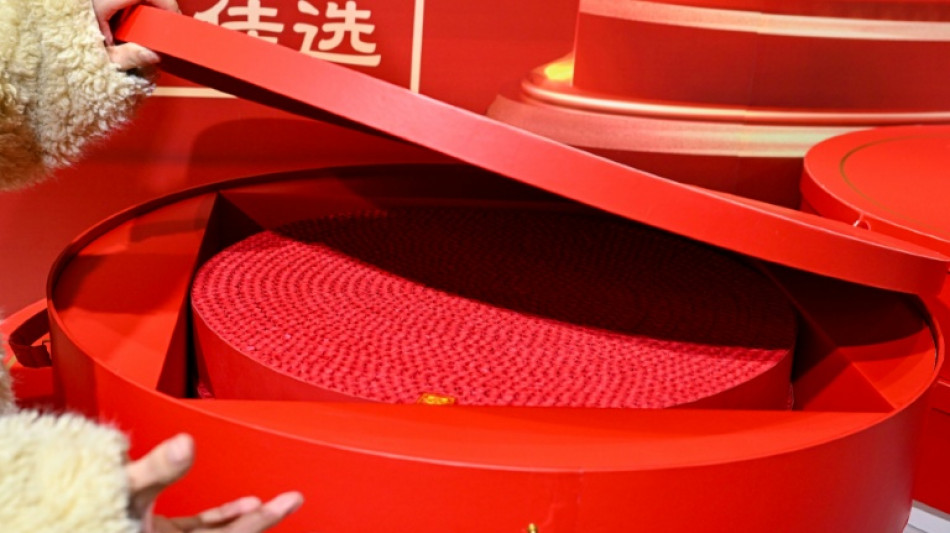
An area for Chinese customers was a sea of red, which symbolises good fortune.
"What traditional industries need is to keep up with the pace," said Li, whose company has started to experiment with integrating drones into fireworks shows.
But, he added, modernising the industry is not only a financial concern.
"It is a totem of celebration for Chinese people and people around the world," he said.
F.Saeed--DT