Dubai Telegraph - Philippines' Duterte blocks bill to register social media users

EUR -
AED 4.267622
AFN 73.79462
ALL 95.916733
AMD 435.149076
ANG 2.079752
AOA 1065.597492
ARS 1644.882099
AUD 1.651104
AWG 2.091685
AZN 1.980093
BAM 1.955122
BBD 2.327993
BDT 141.360971
BGN 1.914642
BHD 0.436249
BIF 3430.210288
BMD 1.162047
BND 1.481086
BOB 7.98723
BRL 6.094984
BSD 1.155899
BTN 106.164179
BWP 15.686559
BYN 3.40142
BYR 22776.120479
BZD 2.324694
CAD 1.577073
CDF 2582.653931
CHF 0.90237
CLF 0.026822
CLP 1059.078442
CNY 8.014348
CNH 8.026264
COP 4363.386631
CRC 551.90858
CUC 1.162047
CUP 30.794245
CVE 110.22677
CZK 24.393462
DJF 205.828612
DKK 7.473361
DOP 68.816132
DZD 152.03337
EGP 58.453726
ERN 17.430704
ETB 179.280919
FJD 2.56871
FKP 0.866671
GBP 0.866746
GEL 3.166625
GGP 0.866671
GHS 12.506662
GIP 0.866671
GMD 85.414927
GNF 10135.484675
GTQ 8.867924
GYD 241.826127
HKD 9.089578
HNL 30.593389
HRK 7.536809
HTG 151.637407
HUF 392.551535
IDR 19684.959352
ILS 3.594514
IMP 0.866671
INR 106.839121
IQD 1514.174833
IRR 1534715.424716
ISK 145.198216
JEP 0.866671
JMD 181.017217
JOD 0.823937
JPY 183.353626
KES 149.278225
KGS 101.621453
KHR 4638.391251
KMF 492.708319
KPW 1045.832407
KRW 1725.977179
KWD 0.357334
KYD 0.963266
KZT 571.08193
LAK 24751.41538
LBP 103507.400168
LKR 359.59528
LRD 210.946837
LSL 19.334094
LTL 3.431223
LVL 0.702911
LYD 7.365445
MAD 10.779561
MDL 19.991066
MGA 4813.330576
MKD 61.618629
MMK 2440.880105
MNT 4146.415033
MOP 9.309771
MRU 46.257956
MUR 55.085373
MVR 17.965686
MWK 2004.30484
MXN 20.682157
MYR 4.585482
MZN 74.259135
NAD 19.334094
NGN 1612.921584
NIO 42.535247
NOK 11.136017
NPR 169.863086
NZD 1.969572
OMR 0.446812
PAB 1.155899
PEN 3.981319
PGK 4.978273
PHP 68.613108
PKR 322.861021
PLN 4.272324
PYG 7562.377114
QAR 4.215138
RON 5.092675
RSD 117.339303
RUB 92.107154
RWF 1685.915268
SAR 4.368657
SBD 9.34888
SCR 16.078124
SDG 698.97552
SEK 10.670501
SGD 1.481266
SHP 0.871836
SLE 28.499246
SLL 24367.54304
SOS 659.371308
SRD 43.758626
STD 24052.025975
STN 24.491506
SVC 10.113492
SYP 128.576954
SZL 19.339292
THB 36.790835
TJS 11.113645
TMT 4.078785
TND 3.395922
TOP 2.797931
TRY 51.214319
TTD 7.832284
TWD 36.973201
TZS 2983.265304
UAH 50.508082
UGX 4265.520575
USD 1.162047
UYU 45.474228
UZS 14096.110997
VES 494.034976
VND 30468.871375
VUV 137.806952
WST 3.18457
XAF 655.729571
XAG 0.013775
XAU 0.000225
XCD 3.14049
XCG 2.083177
XDR 0.815517
XOF 655.729571
XPF 119.331742
YER 277.152371
ZAR 19.226288
ZMK 10459.82129
ZMW 22.348249
ZWL 374.178648
  • CMSD

    -0.0100

    23.2

    -0.04%

  • JRI

    -0.2300

    12.57

    -1.83%

  • BCE

    0.0800

    26.06

    +0.31%

  • BCC

    -1.9600

    75.35

    -2.6%

  • RBGPF

    0.1000

    82.5

    +0.12%

  • NGG

    0.1200

    89.86

    +0.13%

  • CMSC

    -0.1050

    23.185

    -0.45%

  • AZN

    -3.3000

    194.22

    -1.7%

  • GSK

    -0.7600

    54.51

    -1.39%

  • BTI

    -0.7200

    57.87

    -1.24%

  • RIO

    -0.6200

    90.21

    -0.69%

  • VOD

    -0.1100

    14.51

    -0.76%

  • RYCEF

    -0.2400

    16.96

    -1.42%

  • RELX

    0.5000

    35.68

    +1.4%

  • BP

    1.1400

    40.44

    +2.82%

Philippines' Duterte blocks bill to register social media users
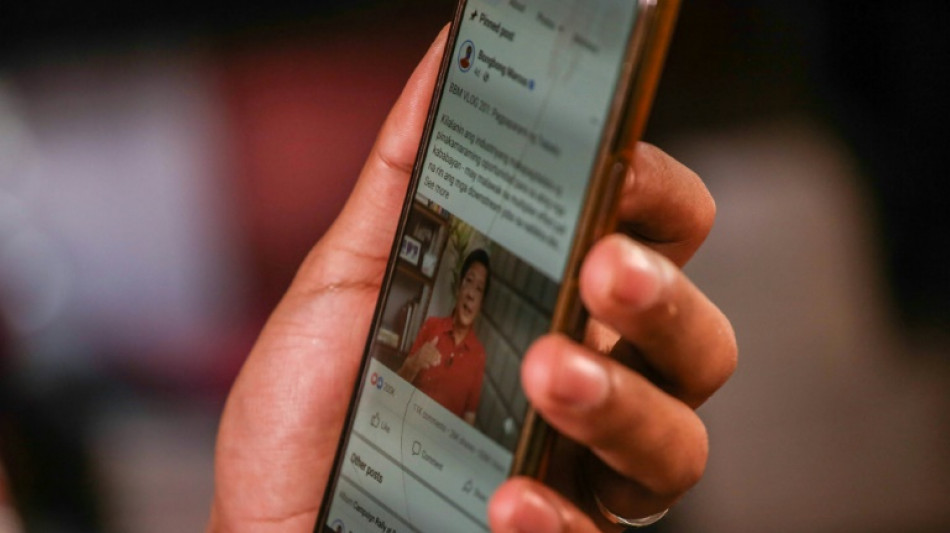
Philippines' Duterte blocks bill to register social media users / Photo: Jam STA ROSA - AFP

Philippines' Duterte blocks bill to register social media users

Philippine President Rodrigo Duterte has rejected a proposed law requiring social media users to register their real names and phone numbers, citing threats to free speech and privacy, his spokesman said Friday.

Text size:

The legislation, designed to combat fake news, online abuse, text scams and militant bombings, also required mobile phone users to provide their personal details when buying SIM cards.

It was approved by both houses of Congress in February, but critics said it was a form of state surveillance.

While supporting efforts to tackle cybercrime and other online offences, Duterte said he opposed the inclusion of social media user registration in the bill.

He called for "a more thorough study" of the provision, citing concerns it could lead to "dangerous state intrusion and surveillance threatening many constitutionally protected rights" such as individual privacy and free speech, presidential spokesman Martin Andanar said in a statement.

Filipinos rank among the world's heaviest users of social media, and the country has become a key battleground for misleading or fake news.

Renato Reyes, secretary-general of leftist alliance Bayan, welcomed the veto, saying SIM card and social media registration created a "chilling effect" for users and would "not deter crime".

"A big part of the problem is government itself, as it benefits directly and indirectly from nefarious online activities," Reyes said in a statement.

"We should start with demanding the government stop weaponizing social media and attacking people online."

Duterte's election victory in 2016 was underpinned by social media campaigning at a time when online misinformation was on the rise.

Critics accused the Duterte camp of employing online trolls to praise him while attacking dissenters -- even issuing death threats. Duterte has denied the allegations.

Since taking power, the authoritarian firebrand has been accused of harassing or even jailing opponents and shutting down media outlets critical of his policies.

Duterte's decision to block the bill comes as a torrent of misinformation floods Facebook, YouTube, TikTok and Twitter ahead of the May 9 national elections.

Ferdinand Marcos Junior is leading the race for the presidency, while his running mate and first daughter Sara Duterte is the top contender for vice president.

Senate president and vice presidential candidate Vicente Sotto, who had supported the legislation, responded sarcastically to the veto.

"Great! Bombings and blackmail and scams will continue using prepaid sims," Sotto tweeted.

Many mobile phone users in the Philippines use pre-paid SIM cards that they buy over the counter without giving their names and addresses to providers.

Militant groups fighting the government in the country's south are known to favour the use of mobile phones to remotely detonate improvised explosive devices, leaving police with one less way to track the perpetrators.

The proposed measure can still become law if legislators can muster a two-thirds vote in each chamber to override the presidential veto, but that is unlikely to happen before the polls.

Y.Sharma--DT