Dubai Telegraph - Rip-offs at the petrol pump?

EUR -
AED 4.235882
AFN 76.115853
ALL 93.747849
AMD 422.329897
AOA 1058.696833
ARS 1713.290941
AUD 1.63937
AWG 2.075875
AZN 1.965127
BAM 1.962034
BBD 2.323984
BDT 142.451707
BHD 0.434902
BIF 3462.675348
BMD 1.153264
BND 1.480899
BOB 13.700816
BRL 5.873694
BSD 1.153615
BTN 109.998047
BWP 15.732986
BYN 3.35655
BYR 22603.975624
BZD 2.320552
CAD 1.616997
CDF 2623.676159
CHF 0.931769
CLF 0.027208
CLP 1070.794606
CNY 7.786036
CNH 7.787601
COP 3632.366622
CRC 524.06274
CUC 1.153264
CUP 30.561498
CVE 110.61548
CZK 24.212261
DJF 204.958543
DKK 7.474564
DOP 66.942394
DZD 153.231936
EGP 58.990657
ERN 17.298961
ETB 184.378501
FJD 2.552116
FKP 0.856796
GBP 0.855497
GEL 3.015832
GGP 0.856796
GHS 13.487469
GIP 0.856796
GMD 85.341951
GNF 10129.181662
GTQ 8.803933
GYD 241.365803
HKD 9.04407
HNL 30.916959
HRK 7.533241
HTG 150.868674
HUF 364.913554
IDR 20791.044518
ILS 3.532391
IMP 0.856796
INR 110.093529
IQD 1511.595974
IRR 1585738.086273
ISK 142.001849
JEP 0.856796
JMD 182.670366
JOD 0.81771
JPY 183.017286
KES 149.105954
KGS 100.853385
KHR 4668.833461
KMF 496.484554
KRW 1662.050011
KWD 0.356717
KYD 0.961555
KZT 546.749981
LAK 26129.657724
LBP 103326.204446
LKR 387.350661
LRD 208.269893
LSL 19.085253
LTL 3.405289
LVL 0.697598
LYD 7.382455
MAD 10.778946
MDL 20.164064
MGA 4934.420544
MKD 61.725843
MMK 2421.613374
MNT 4147.162048
MOP 9.321435
MRU 46.373132
MUR 54.203809
MVR 17.829899
MWK 2000.730546
MXN 19.974396
MYR 4.71155
MZN 73.705541
NAD 19.08517
NGN 1573.467791
NIO 42.455684
NOK 10.935954
NPR 175.998406
NZD 1.958986
OMR 0.443419
PAB 1.153806
PEN 3.909574
PGK 5.166369
PHP 70.567119
PKR 320.453922
PLN 4.308139
PYG 6879.798314
QAR 4.218001
RON 5.248549
RSD 117.404632
RUB 91.394575
RWF 1693.881671
SAR 4.302987
SBD 9.319648
SCR 15.54488
SDG 691.958829
SEK 10.978163
SGD 1.478698
SLE 28.489851
SOS 659.392111
SRD 43.572051
STD 23870.237662
STN 24.572744
SVC 10.096076
SZL 19.082545
THB 38.555352
TJS 10.64999
TMT 4.047957
TND 3.392077
TRY 54.806803
TTD 7.834858
TWD 37.2261
TZS 3046.927156
UAH 51.499574
UGX 4332.746888
USD 1.153264
UYU 46.427102
UZS 13811.821984
VES 859.984864
VND 30331.421474
VUV 138.428769
WST 3.169203
XAF 658.047699
XAG 0.019941
XAU 0.000285
XCD 3.116754
XCG 2.079498
XDR 0.816755
XOF 658.041975
XPF 119.331742
YER 274.826965
ZAR 19.066194
ZMK 10380.764613
ZMW 21.673733
ZWL 371.350558
  • RBGPF

    0.0000

    69.21

    0%

  • CMSC

    0.0300

    21.84

    +0.14%

  • RYCEF

    -0.1300

    19.5

    -0.67%

  • NGG

    -0.4200

    79.97

    -0.53%

  • GSK

    -0.3800

    51.69

    -0.74%

  • AZN

    -1.7000

    169.64

    -1%

  • RIO

    -0.3300

    96.85

    -0.34%

  • BCE

    -0.0200

    21.68

    -0.09%

  • BP

    1.0000

    45.22

    +2.21%

  • RELX

    -1.1900

    35.42

    -3.36%

  • BTI

    -1.0400

    60.65

    -1.71%

  • BCC

    1.0000

    76.38

    +1.31%

  • VOD

    -0.3600

    15.78

    -2.28%

  • CMSD

    0.0900

    22.11

    +0.41%

  • JRI

    0.0900

    12.96

    +0.69%

Rip-offs at the petrol pump?

Rip-offs at the petrol pump?

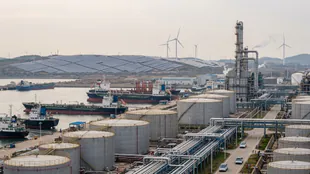
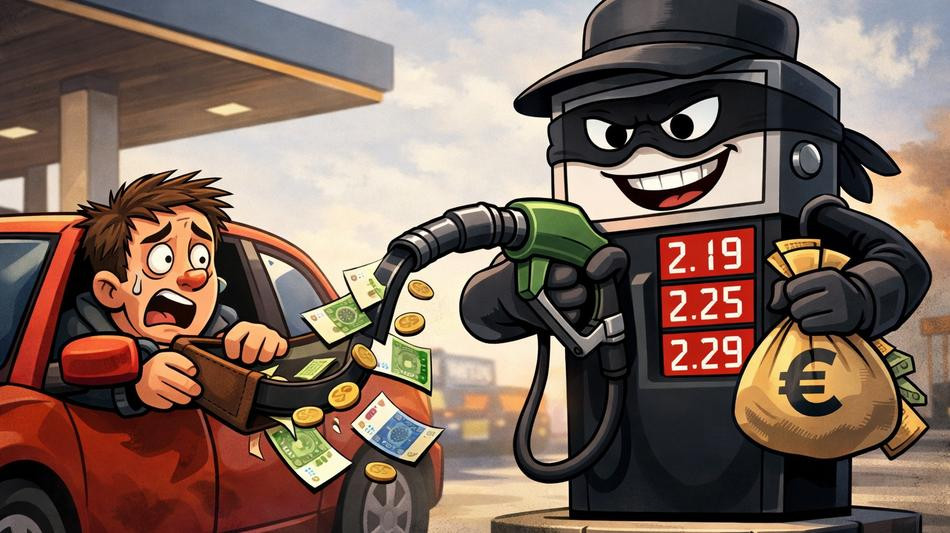
Fuel prices in Germany have become a political flashpoint. Since war broke out in Iran and the Strait of Hormuz was temporarily closed, global oil prices have surged. Crude oil quotations rose by around 20 percent to 84 dollars a barrel, and the wholesale price of diesel in Rotterdam climbed by 26 cents per litre – almost 50 percent. As a result, German motorists were paying an average of Euro 2.156 per litre for diesel and Euro 2.037 for Super E10 in mid‑March 2026.

Petrol‑station leaseholders emphasise that they do not set their own pump prices. The industry’s lobbying group accuses the oil majors of selling fuel they bought cheaply at a huge mark‑up – behaviour described as “predatory capitalism”. Leaseholders receive none of the extra margin yet face the anger of customers. Convenience‑store sales are also collapsing because angry motorists buy nothing after filling up.

Chancellor Friedrich Merz’s government has responded with a package of measures. Filling stations may raise prices only once a day at noon; price cuts are allowed at any time. Part of the national oil reserve will be released, and the competition authority will get more powers. Critics say this does not go far enough. The social welfare organisation SoVD warns that without a price cap consumers remain at the mercy of suppliers and calls for targeted relief for low‑ and middle‑income households. SPD politicians demand a price cap to ensure that consumers are not “fleeced”, while economy minister Katherina Reiche rejects the idea of a state‑financed fuel subsidy.

Text size:

Comments on social media reveal widespread anger. Many feel exploited by both oil companies and the state and question the government’s competence. Some want full transparency on profit margins and stronger oversight. Others blame decades of political failure – from delayed investment in electric‑vehicle infrastructure and slow improvements to public transport to tax policies that continue to inflate fossil‑fuel prices.

Political actors respond differently. The governing CDU points to global market forces. The Left Party demands a swift competition‑law probe. Green politicians and the environment ministry argue for a shift to battery‑electric cars to escape dependence on oil, while the SPD (Social Democratic Party of Germany) backs a price cap and social support. Despite the government’s package, many citizens believe Berlin is not acting decisively enough.

Public frustration has already translated into protests. Motorists report boycotting certain brands, filling up abroad or organising car‑sharing. Regional media report aggressive customers venting at station staff. Growing pressure may compel tighter regulation of oil companies, tax relief or a broader strategy for affordable mobility.