Four times as many icebergs calved from Greenland glaciers: study / Photo: Florent VERGNES - AFP
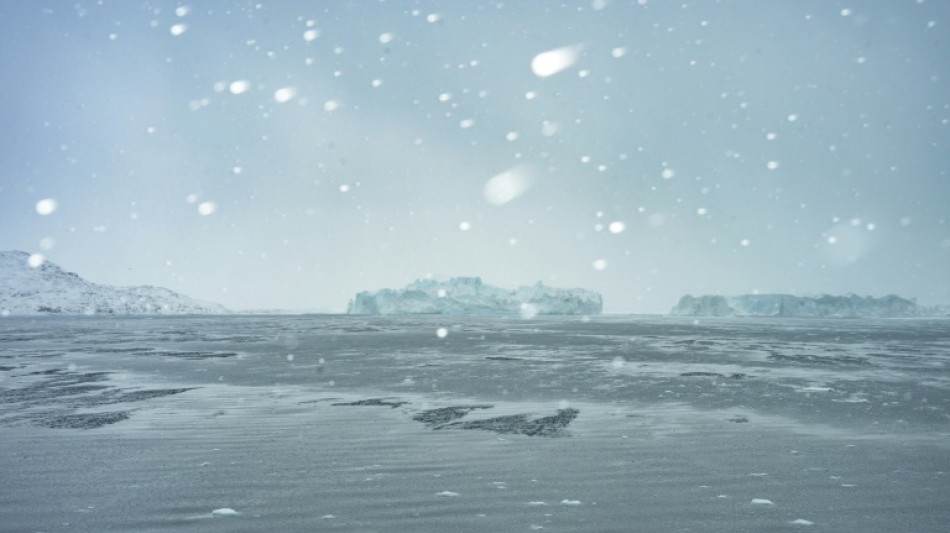
Greenland's glaciers are releasing four times more icebergs than 25 years ago as a result of climate change, with implications extending to maritime traffic and marine ecosystems, researchers said Thursday.
"Our results indicate a direct, climate-driven connection between glacier change at the surface, amplified iceberg traffic, and the increased availability of hard-bottom habitats on the deep seafloor," according to the study by researchers from the Technical University of Denmark (DTU), published in the scientific journal Nature.
"When the Greenland ice melts, sea levels rise. But we can also see that the changes affect the entire Arctic," Shfaqat Abbas Khan, one of the study's authors, said in a DTU press release.
In the Fram Strait, between northeast Greenland and Svalbard, "the occurrence of icebergs has quadrupled since the year 2000", the statement said.
In addition, the proportion of groups of icebergs originating from Greenland and from the Russian Arctic, and comprising more than five individual icebergs, has increased by 4.5 percent per decade since the turn of the century.
"The new study shows that the consequences do not stop at rising sea levels, but directly affect deep-sea ecosystems far from the glaciers," Abbas Khan said.
Icebergs transport large quantities of rocks and sediments several hundred kilometres offshore before sinking and transforming life on the seabed.
Furthermore, as new shipping routes open up in the Arctic, the risk that vessels will encounter icebergs along their journey increases.
F.El-Yamahy--DT