Dubai Telegraph - Scrapped by Trump, revived US climate-disaster database reveals record losses

EUR -
AED 4.385863
AFN 77.625902
ALL 96.496787
AMD 452.681252
ANG 2.137792
AOA 1095.121647
ARS 1725.099786
AUD 1.696815
AWG 2.151132
AZN 2.027435
BAM 1.952691
BBD 2.406679
BDT 146.017548
BGN 2.005577
BHD 0.450221
BIF 3539.6096
BMD 1.194244
BND 1.507819
BOB 8.256856
BRL 6.211184
BSD 1.194903
BTN 109.757731
BWP 15.63511
BYN 3.397506
BYR 23407.179097
BZD 2.403184
CAD 1.618338
CDF 2675.106521
CHF 0.917907
CLF 0.026011
CLP 1027.037422
CNY 8.305548
CNH 8.29219
COP 4383.304789
CRC 593.065805
CUC 1.194244
CUP 31.647462
CVE 110.090204
CZK 24.311759
DJF 212.780375
DKK 7.46686
DOP 75.181574
DZD 154.372194
EGP 55.928108
ERN 17.913657
ETB 185.802613
FJD 2.619036
FKP 0.866545
GBP 0.866042
GEL 3.218488
GGP 0.866545
GHS 13.060209
GIP 0.866545
GMD 87.179544
GNF 10485.439474
GTQ 9.167444
GYD 249.992027
HKD 9.321013
HNL 31.5338
HRK 7.530184
HTG 156.480891
HUF 380.865847
IDR 20062.102125
ILS 3.681119
IMP 0.866545
INR 109.817706
IQD 1565.314661
IRR 50307.521589
ISK 144.802028
JEP 0.866545
JMD 187.31181
JOD 0.846677
JPY 183.213121
KES 153.997363
KGS 104.436889
KHR 4803.41357
KMF 492.028581
KPW 1074.899637
KRW 1713.788253
KWD 0.366179
KYD 0.995819
KZT 602.054085
LAK 25743.126182
LBP 107003.50448
LKR 370.002526
LRD 221.059012
LSL 18.999733
LTL 3.526292
LVL 0.722386
LYD 7.504023
MAD 10.803901
MDL 20.038184
MGA 5331.512534
MKD 61.593164
MMK 2508.405093
MNT 4259.73915
MOP 9.602953
MRU 47.700862
MUR 53.919881
MVR 18.463461
MWK 2072.001491
MXN 20.51293
MYR 4.690389
MZN 76.145062
NAD 18.999733
NGN 1664.513237
NIO 43.970554
NOK 11.432294
NPR 175.612171
NZD 1.970777
OMR 0.459185
PAB 1.194898
PEN 3.998135
PGK 5.114922
PHP 70.471092
PKR 334.274054
PLN 4.204049
PYG 8024.192345
QAR 4.344602
RON 5.09585
RSD 117.380227
RUB 90.473105
RWF 1743.324726
SAR 4.478888
SBD 9.646715
SCR 16.801913
SDG 718.34237
SEK 10.56403
SGD 1.511052
SHP 0.895992
SLE 29.017334
SLL 25042.695149
SOS 681.714749
SRD 45.491212
STD 24718.436143
STN 24.461366
SVC 10.455399
SYP 13207.829097
SZL 18.991846
THB 37.271749
TJS 11.166371
TMT 4.179853
TND 3.417274
TOP 2.875452
TRY 51.860284
TTD 8.110123
TWD 37.505822
TZS 3039.350406
UAH 51.077388
UGX 4278.189365
USD 1.194244
UYU 45.218204
UZS 14457.04573
VES 428.107931
VND 31050.339618
VUV 142.79457
WST 3.244534
XAF 654.914413
XAG 0.010053
XAU 0.000216
XCD 3.227503
XCG 2.153481
XDR 0.814503
XOF 654.911676
XPF 119.331742
YER 284.711769
ZAR 18.850494
ZMK 10749.631313
ZMW 23.748293
ZWL 384.546026
  • SCS

    0.0200

    16.14

    +0.12%

  • RBGPF

    0.0000

    82.4

    0%

  • RYCEF

    -0.5500

    16.6

    -3.31%

  • GSK

    -0.7000

    50.1

    -1.4%

  • BP

    0.0800

    37.7

    +0.21%

  • RIO

    0.4600

    93.37

    +0.49%

  • NGG

    0.3700

    84.68

    +0.44%

  • CMSC

    -0.1000

    23.7

    -0.42%

  • BTI

    -0.1800

    60.16

    -0.3%

  • CMSD

    -0.0457

    24.0508

    -0.19%

  • BCE

    -0.2500

    25.27

    -0.99%

  • RELX

    -0.9800

    37.38

    -2.62%

  • VOD

    0.0700

    14.57

    +0.48%

  • BCC

    -0.8900

    80.85

    -1.1%

  • JRI

    -0.6900

    12.99

    -5.31%

  • AZN

    -2.3800

    93.22

    -2.55%

Scrapped by Trump, revived US climate-disaster database reveals record losses
Scrapped by Trump, revived US climate-disaster database reveals record losses / Photo: JOSH EDELSON - AFP/File

Scrapped by Trump, revived US climate-disaster database reveals record losses

A flagship US climate-disaster database killed by President Donald Trump's administration has been brought back to life by its former lead scientist -- revealing that extreme weather inflicted a record $101 billion in damages in just the first half of 2025.

Text size:

The Billion-Dollar Weather and Climate Disasters tracker, long maintained by the National Oceanic and Atmospheric Administration (NOAA), chronicled major US catastrophes from 1980 to 2024 before it was abruptly shut down in May amid sweeping budget cuts that critics decried as an ideologically driven attack on science.

"This dataset was simply too important to stop being updated, and the demand for its revival came from every sector of society," Adam Smith, an applied climatologist who helmed the database for 15 years before resigning in May, told AFP.

Among those calling for its return were groups such as the American Academy of Actuaries, who argued the list was a vital tool for tracking the rising costs of climate-fueled disasters, from wildfires to floods, that threaten homeowners, insurers, and mortgage markets.

Congressional Democrats have also sought to restore the program within NOAA, introducing a bill last month that has yet to advance.

Now based at the nonprofit Climate Central, Smith said he worked with an interdisciplinary team of experts in meteorology, economics, risk management, communication, and web design over recent months to recreate the dataset using the same public and private data sources and methodologies.

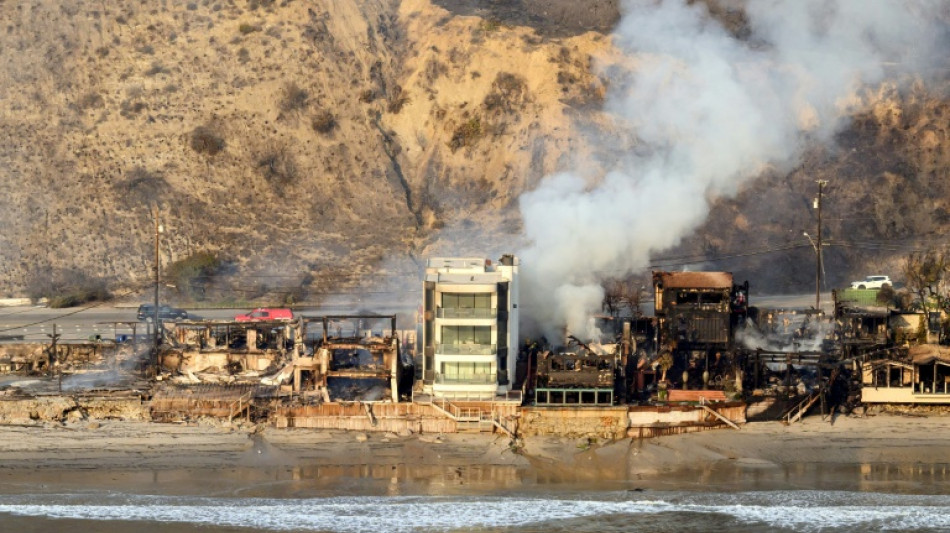
The new findings, he said, show that "the year started out with a bang": the Los Angeles wildfires were likely the costliest in history, with insured losses reaching an estimated $60 billion.

That was followed by a barrage of spring storms across the central and southern United States, including several destructive tornadoes.

Altogether, 14 separate billion-dollar weather and climate disasters between January and June caused $101.4 billion in inflation-adjusted damages -- though 2025 as a whole may fall short of a record, thanks to a milder-than-usual Atlantic hurricane season.

Smith said his decision to leave NOAA stemmed from his realization that "the current environment to do science, across the board, is becoming more difficult, and that's likely an understatement."

But he added he was happy to give the dataset a new home so it can remain a "public good" and continue to publish updates at regular intervals.

Looking ahead, the team plans to broaden the scope of the tracker to include events causing at least $100 million in losses -- to capture the smaller and mid-sized disasters that still have "life-changing impacts to lives and livelihoods."

C.Akbar--DT