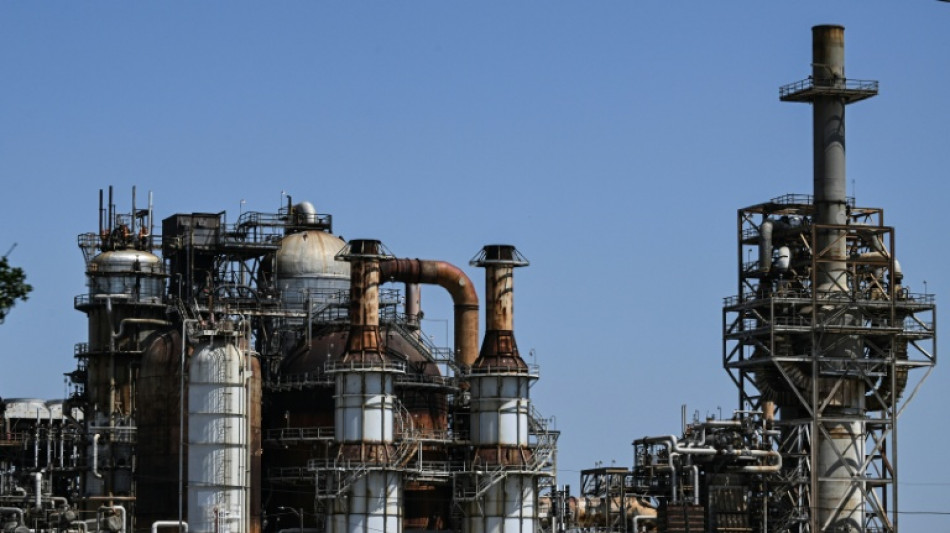
IEA feels the heat as Washington pushes pro-oil agenda / Photo: RONALDO SCHEMIDT - AFP
No stranger to ire from oil-producing nations, the International Energy Agency (IEA) is facing pressure from the Trump administration over its globally-respected reports that predict a dwindling in fossil fuel demand.
The United States, the world's biggest oil producer and a major contributor to the Paris-based IEA, is threatening to withdraw from the global energy authority unless internal changes are made.
In recent years, the IEA has increasingly charted a decline in fossil fuels and a massive renewables boom, a notable shift for an organisation founded after the oil crisis to ensure energy security for rich nations.
This has angered oil-producing nations and more recently the Trump administration, which is pursuing an energy policy that promotes fossil fuels and has played down their role in driving human-caused climate change.
The IEA's governance and funding structure have come under scrutiny, as have the focus of its influential reports on energy trends that have predicted peak oil demand and taken climate goals into account.
The lead up to its flagship report, the World Energy Outlook due in November, has proved a balancing act, said one source with close direct knowledge of internal IEA discussions.
"They are in a difficult place, trying to do a difficult job," the source said.
Reached for comment, the US Department of Energy pointed AFP to comments made in a July interview by its secretary Chris Wright, a former oil and gas executive.
"We will do one of two things: we will reform the way the IEA operates or we will withdraw," Wright told Bloomberg. "My strong preference is to reform it."
- 'Placate the US' -
This month, the IEA said new fossil fuel projects may be necessary to maintain current production levels -- an assessment described as a U-turn by the OPEC oil cartel, long a critic of the agency.
In 2021, the IEA declared that a halt in investment in new oil and gas projects was necessary to meet carbon neutrality.
This net zero scenario has not been abandoned and will appear in the November energy outlook, according to two sources familiar with the report. The final version could change, one of those sources said.
But there is one surprise: the return of another scenario dropped from IEA reports in 2020 that predicts demand for fossil fuels in the absence of global efforts to develop clean energy.
This "is an attempt to placate the US a little," said the source close to the IEA discussions.
Its return is notable for an agency under executive director Fatih Birol that just two years ago anticipated a peak in demand for coal, oil and gas by the end of this decade.
In this revised scenario no such peak is considered, said Marc-Antoine Eyl-Mazzega, an energy specialist at the French Institute of International Relations, who is familiar with broad shape of the report.
This change reflects the Trump administration's pro-oil agenda and heralds "a battle over narratives about the world's energy transformation", said Eyl-Mazzega.
Any response from the IEA's other 31 member states would be closely watched, he added.
- 'Muddying waters' -
Neil Grant, an energy analyst at Climate Analytics, a think tank, said: "We should all be worried about the Trump administration's efforts to try and obscure that transparency and muddy the waters within the IEA."
In a statement, the IEA said the decision to reintroduce this scenario "drew on feedback from multiple stakeholders".
"The Trump administration, and by extension the oil and gas industry, currently need narratives that say they will be able to continue selling their products for decades to come, that the transition will not take place," said Romain Ioualalen at Oil Change International, an activist network.
But a source at a Western energy company played down the alarm.
"We shouldn't exaggerate the Trump administration's so-called pro-oil and gas influence within the IEA, which remains an independent and serious institution," the source said.
Closely scrutinised every year by analysts, governments, and industry, the next Energy Outlook "will contain multiple scenarios, with each pointing to different possible trajectories for energy demand", said the IEA.
None of these are a forecast, it stressed.
"The big question is how they are interpreted. Because they serve as a reference for some -- even dogma," said Eyl-Mazzega.
Y.Chaudhry--DT