Dubai Telegraph - Global road transport emissions to peak in 2025: study

EUR -
AED 4.289106
AFN 72.978162
ALL 95.257832
AMD 430.626595
ANG 2.090731
AOA 1071.954318
ARS 1625.161268
AUD 1.61676
AWG 2.104791
AZN 1.975394
BAM 1.950866
BBD 2.35234
BDT 143.366756
BGN 1.949976
BHD 0.440574
BIF 3473.926594
BMD 1.167706
BND 1.487107
BOB 8.070483
BRL 5.841102
BSD 1.167941
BTN 111.907547
BWP 16.45018
BYN 3.262963
BYR 22887.045797
BZD 2.348898
CAD 1.602963
CDF 2621.501329
CHF 0.914764
CLF 0.026521
CLP 1043.777298
CNY 7.923063
CNH 7.924371
COP 4427.265468
CRC 530.737107
CUC 1.167706
CUP 30.94422
CVE 110.582325
CZK 24.315267
DJF 207.524926
DKK 7.473023
DOP 69.705106
DZD 154.85073
EGP 61.744578
ERN 17.515596
ETB 182.35277
FJD 2.556926
FKP 0.863742
GBP 0.871224
GEL 3.129164
GGP 0.863742
GHS 13.323215
GIP 0.863742
GMD 84.670566
GNF 10252.462715
GTQ 8.910462
GYD 244.338834
HKD 9.146171
HNL 31.060436
HRK 7.537074
HTG 152.937269
HUF 357.757189
IDR 20488.168117
ILS 3.389386
IMP 0.863742
INR 111.733392
IQD 1529.930214
IRR 1535533.939684
ISK 143.604208
JEP 0.863742
JMD 184.662916
JOD 0.827932
JPY 184.719789
KES 150.925387
KGS 102.11626
KHR 4684.838406
KMF 492.771763
KPW 1050.901516
KRW 1742.544498
KWD 0.360144
KYD 0.973334
KZT 552.849263
LAK 25636.994177
LBP 104568.109284
LKR 379.879139
LRD 213.982322
LSL 19.171807
LTL 3.447933
LVL 0.706334
LYD 7.413249
MAD 10.715122
MDL 20.075962
MGA 4891.522719
MKD 61.636893
MMK 2452.025909
MNT 4180.541034
MOP 9.422645
MRU 46.670951
MUR 54.767933
MVR 17.994673
MWK 2024.769903
MXN 20.111005
MYR 4.590834
MZN 74.61249
NAD 19.171807
NGN 1600.971677
NIO 42.9811
NOK 10.777054
NPR 179.047686
NZD 1.9735
OMR 0.448982
PAB 1.167921
PEN 3.991986
PGK 5.088
PHP 71.919089
PKR 325.295202
PLN 4.242511
PYG 7116.998355
QAR 4.257322
RON 5.200946
RSD 117.400016
RUB 85.533366
RWF 1708.257212
SAR 4.389495
SBD 9.379319
SCR 17.107269
SDG 701.210948
SEK 10.915254
SGD 1.489188
SHP 0.871811
SLE 28.720739
SLL 24486.222194
SOS 667.480245
SRD 43.446834
STD 24169.165267
STN 24.438082
SVC 10.21889
SYP 129.065111
SZL 19.157461
THB 37.801579
TJS 10.914054
TMT 4.09865
TND 3.402893
TOP 2.811557
TRY 53.05533
TTD 7.929739
TWD 36.813698
TZS 3030.197606
UAH 51.341978
UGX 4367.839825
USD 1.167706
UYU 46.51116
UZS 14003.220669
VES 593.270376
VND 30763.225588
VUV 137.88004
WST 3.162758
XAF 654.288044
XAG 0.013813
XAU 0.00025
XCD 3.155784
XCG 2.104867
XDR 0.81152
XOF 654.28525
XPF 119.331742
YER 278.643902
ZAR 19.244911
ZMK 10510.763608
ZMW 21.985355
ZWL 376.00099
  • RBGPF

    -0.2100

    60.79

    -0.35%

  • CMSC

    0.0898

    23.14

    +0.39%

  • JRI

    0.0100

    13.14

    +0.08%

  • RIO

    -2.4500

    109.59

    -2.24%

  • RYCEF

    -0.0700

    15.93

    -0.44%

  • BCC

    2.4200

    69.4

    +3.49%

  • NGG

    0.4500

    87.43

    +0.51%

  • CMSD

    0.0400

    23.6

    +0.17%

  • RELX

    -0.1600

    31.46

    -0.51%

  • BCE

    -0.2000

    24.19

    -0.83%

  • GSK

    -0.0300

    50.96

    -0.06%

  • VOD

    -0.0300

    15.48

    -0.19%

  • AZN

    -2.7600

    184.96

    -1.49%

  • BTI

    1.3500

    66.7

    +2.02%

  • BP

    -0.0200

    44.12

    -0.05%

Global road transport emissions to peak in 2025: study
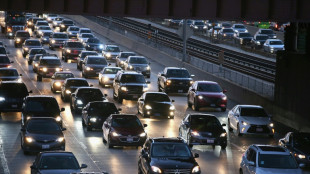
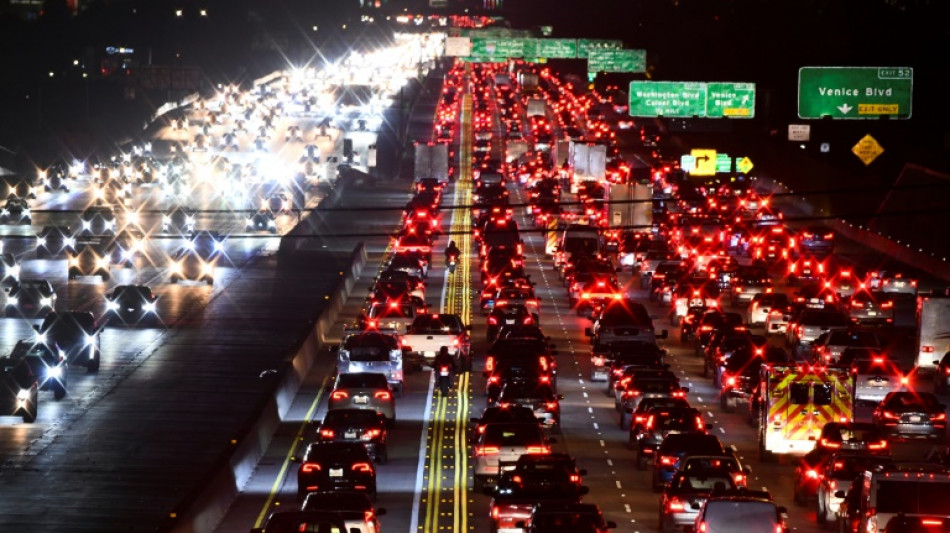
Global road transport emissions to peak in 2025: study / Photo: Patrick T. FALLON - AFP/File

Global road transport emissions to peak in 2025: study

CO2 emissions from road transport could peak worldwide this year thanks to rapid growth in electric vehicles and stricter new regulations, a German think tank said Tuesday.

Text size:

The International Council on Clean Transportation (ICCT) estimated that vehicle emissions would top out at around nine gigatonnes in 2025, a quarter-century earlier than previously predicted.

The volume of emissions would then decline to 7.1 gigatonnes in 2050, the ICCT calculated in a scenario based on environmental rules as of August 2024.

The organisation's previous forecast, which used regulatory conditions in 2021, predicted a peak in road transport emissions in 2050.

The quicker turnaround was due to changing regulations in major markets that required a higher share of zero-emissions vehicles (ZEVs), including battery-powered cars, in new sales, the ICCT said.

Progress in the number of cleaner vehicles already on the roads was "underpinned by the falling costs of ZEVs", the ICCT said.

The think tank, however, warned that a weakening of current environmental standards for road transport could lead to the peak being delayed.

The European Union for example has agreed to ban the sale of new petrol and diesel cars from 2035 but criticism of the plan has grown.

The target is increasingly under fire from Europe's struggling automotive industry and has become a bugbear of many far-right political parties in the bloc.

An increase in global vehicle activity or a slowdown in the sale of ZEVs could also delay the peak, the ICCT said.

While the difference between the two scenarios modelled by the think tank was already significant, yearly emissions would have to fall to 2.3 gigatonnes by 2050 to align with the Paris climate accords.

The climate deal set a target to limit global warming to well below 2 degrees Celsius above pre-industrial levels -- and to 1.5C if possible.

The ICCT included all emissions linked to road transport in its modelling, including vehicle production and fuel use.

D.Farook--DT