Dubai Telegraph - Africa faces disproportionate burden from climate change: UN

EUR -
AED 4.275666
AFN 72.780078
ALL 95.393423
AMD 429.347931
ANG 2.084524
AOA 1068.77153
ARS 1620.253509
AUD 1.625238
AWG 2.098541
AZN 1.984819
BAM 1.945073
BBD 2.355668
BDT 142.941072
BGN 1.944186
BHD 0.441107
BIF 3482.169409
BMD 1.164239
BND 1.489262
BOB 8.04652
BRL 5.803154
BSD 1.169593
BTN 111.575271
BWP 16.473595
BYN 3.267649
BYR 22819.089661
BZD 2.352272
CAD 1.599973
CDF 2613.717122
CHF 0.914685
CLF 0.026445
CLP 1040.80664
CNY 7.89948
CNH 7.920558
COP 4412.14084
CRC 531.506181
CUC 1.164239
CUP 30.852341
CVE 110.254109
CZK 24.340693
DJF 208.267316
DKK 7.472717
DOP 69.32255
DZD 154.199775
EGP 61.562181
ERN 17.463589
ETB 182.618572
FJD 2.562782
FKP 0.861177
GBP 0.871815
GEL 3.119842
GGP 0.861177
GHS 13.284307
GIP 0.861177
GMD 84.405421
GNF 10255.542125
GTQ 8.884005
GYD 243.613344
HKD 9.117059
HNL 31.104249
HRK 7.535885
HTG 153.1556
HUF 360.049724
IDR 20490.960396
ILS 3.390244
IMP 0.861177
INR 111.70585
IQD 1525.153442
IRR 1530974.638351
ISK 143.609052
JEP 0.861177
JMD 184.923397
JOD 0.825483
JPY 184.673373
KES 150.361612
KGS 101.812374
KHR 4692.656422
KMF 491.309356
KPW 1047.781183
KRW 1751.050907
KWD 0.359145
KYD 0.970444
KZT 551.207745
LAK 25560.873628
LBP 104243.676363
LKR 378.751203
LRD 213.347445
LSL 19.198119
LTL 3.437696
LVL 0.704237
LYD 7.423706
MAD 10.721188
MDL 20.104538
MGA 4898.527183
MKD 61.672507
MMK 2444.745362
MNT 4168.128186
MOP 9.394668
MRU 46.736784
MUR 54.917397
MVR 17.944448
MWK 2027.634651
MXN 20.161306
MYR 4.596998
MZN 74.406853
NAD 19.198325
NGN 1594.646111
NIO 43.041912
NOK 10.827949
NPR 179.30867
NZD 1.984792
OMR 0.447642
PAB 1.164453
PEN 4.013105
PGK 4.904914
PHP 71.866127
PKR 325.754055
PLN 4.248618
PYG 7127.037408
QAR 4.244236
RON 5.203912
RSD 117.383959
RUB 85.278713
RWF 1710.688755
SAR 4.370727
SBD 9.332701
SCR 16.996581
SDG 699.134444
SEK 10.976739
SGD 1.488888
SHP 0.869222
SLE 28.699004
SLL 24413.51779
SOS 668.453179
SRD 43.317866
STD 24097.402267
STN 24.472658
SVC 10.188548
SYP 128.681891
SZL 19.184566
THB 37.919857
TJS 10.881648
TMT 4.074837
TND 3.362315
TOP 2.803209
TRY 53.024515
TTD 7.906194
TWD 36.762016
TZS 3029.942739
UAH 51.417255
UGX 4354.870851
USD 1.164239
UYU 46.37306
UZS 14023.261923
VES 593.935283
VND 30689.347116
VUV 137.470647
WST 3.153367
XAF 655.224958
XAG 0.014894
XAU 0.000255
XCD 3.146415
XCG 2.098617
XDR 0.81489
XOF 655.224958
XPF 119.331742
YER 277.845635
ZAR 19.360723
ZMK 10479.556608
ZMW 22.017401
ZWL 374.884569
  • CMSD

    0.0400

    23.6

    +0.17%

  • RBGPF

    0.8900

    61.68

    +1.44%

  • RYCEF

    -0.1300

    15.9

    -0.82%

  • RIO

    -2.4500

    109.59

    -2.24%

  • BCE

    -0.2000

    24.19

    -0.83%

  • CMSC

    0.0898

    23.14

    +0.39%

  • GSK

    -0.0300

    50.96

    -0.06%

  • BTI

    1.3500

    66.7

    +2.02%

  • RELX

    -0.1600

    31.46

    -0.51%

  • NGG

    0.4500

    87.43

    +0.51%

  • BCC

    2.4200

    69.4

    +3.49%

  • AZN

    -2.7600

    184.96

    -1.49%

  • VOD

    -0.0300

    15.48

    -0.19%

  • JRI

    0.0100

    13.14

    +0.08%

  • BP

    -0.0200

    44.12

    -0.05%

Africa faces disproportionate burden from climate change: UN
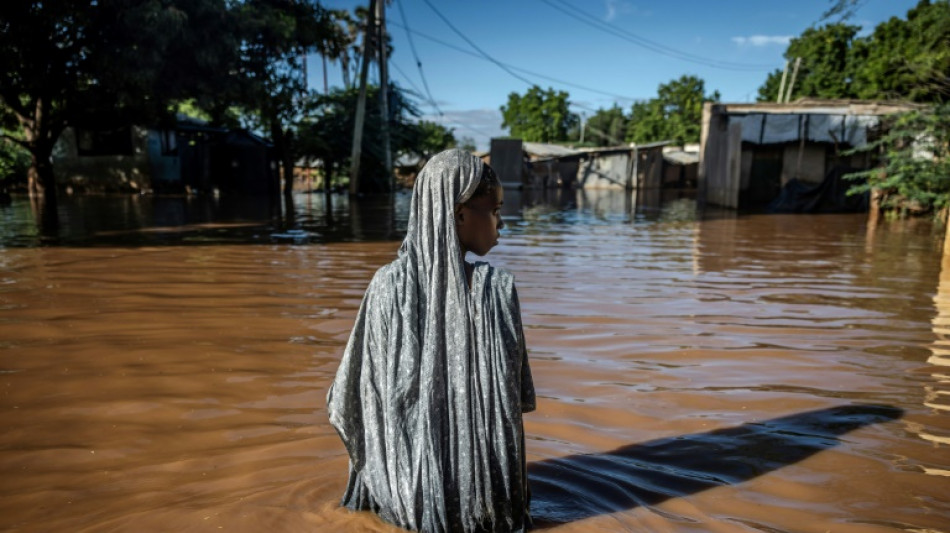
Africa faces disproportionate burden from climate change: UN / Photo: LUIS TATO - AFP/File

Africa faces disproportionate burden from climate change: UN

Africa faces a disproportionate burden from climate change and the costs of adapting, the World Meteorological Organization (WMO) said in a new report on Monday.

Text size:

The African continent has been warming at a slightly faster rate than the global average -- at about 0.3 degrees Celsius per decade between 1991 and 2023, the WMO said in its report on the state of the climate in Africa last year.

North Africa experienced the most rapid warming, it said. The city of Agadir in Morocco reached a new maximum temperature of 50.4 degrees.

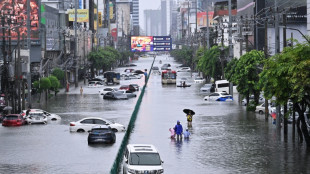
Other countries saw extreme rainfall leading to flooding.

Climate activists have long pointed out that Africa pays one of the highest prices for climate change while the continent is responsible for just a fraction of global greenhouse gas emissions.

The UN's COP29 climate summit, which will be hosted by Azerbaijan in November, will focus in large part on how much wealthy industrialised nations should contribute to help poorer countries adapt to climate change.

"Africa faces disproportionate burdens and risks arising from climate change related weather events and patterns," Josefa Leonel Correia Sacko, commissioner for agriculture, rural development, blue economy and sustainable environment at the African Union Commission, said in the WMO report.

They "cause massive humanitarian crises with detrimental impacts on agriculture, and food security, education, energy, infrastructure, peace, and security, public health, water resources, and overall socio-economic development," she said.

In September and October, around 300,000 people were affected by flooding across 10 countries, with Niger, Benin, Ghana and Nigeria most heavily impacted.

That came months after flooding hit Libya and parts of East Africa, the WMO, the United Nations' weather and climate agency, said.

Zambia faced its worst drought in 40 years, affecting around six million people, while a string of other nations also grappled with severe drought in 2023, WMO said.

"Climate extremes including floods and droughts had a major impact on food security," the report said.

African countries on average are losing two to five percent of gross domestic product and "many are diverting up to nine percent of their budgets responding to climate extremes", the WMO said.

If adequate measures to respond are not implemented, by 2030 an estimated up to 118 million people who live on less than $1.90 a day will be exposed to drought, floods and extreme heat in Africa, it said.

"This will place additional burdens on poverty alleviation efforts and significantly hamper growth," according to the report.

The UN agency highlighted the urgent need to invest in improved data collection and forecasting and early warning capabilities.

"Between 1970 and 2021, Africa accounted for 35 percent of weather, climate and water-related fatalities. Yet only 40 percent of the African population has access to early warning systems –- the lowest rate of any region of the world," the WMO said.

H.El-Hassany--DT