Dubai Telegraph - 'Human-induced' climate change behind deadly Sahel heatwave: study

EUR -
AED 4.177871
AFN 72.80738
ALL 92.182487
AMD 413.339148
ANG 2.036739
AOA 1044.327004
ARS 1734.581912
AUD 1.618871
AWG 2.0477
AZN 1.928636
BAM 1.956464
BBD 2.291528
BDT 140.07875
BGN 1.915101
BHD 0.428849
BIF 3408.961307
BMD 1.137611
BND 1.454257
BOB 13.930909
BRL 5.934653
BSD 1.137761
BTN 109.140463
BWP 15.555482
BYN 3.44392
BYR 22297.173895
BZD 2.288106
CAD 1.612063
CDF 2662.009743
CHF 0.94585
CLF 0.027869
CLP 1100.433526
CNY 7.637067
CNH 7.635167
COP 3833.032082
CRC 516.709349
CUC 1.137611
CUP 27.305463
CVE 110.304358
CZK 24.37667
DJF 202.176084
DKK 7.475571
DOP 67.735955
DZD 152.253445
EGP 59.266572
ERN 17.064164
ETB 185.398838
FJD 2.543362
FKP 0.858687
GBP 0.857582
GEL 2.974854
GGP 0.858687
GHS 13.236665
GIP 0.858687
GMD 83.609373
GNF 10005.482122
GTQ 8.689024
GYD 238.053894
HKD 8.924637
HNL 30.540629
HRK 7.534515
HTG 148.897055
HUF 366.91877
IDR 20519.088038
ILS 3.503384
IMP 0.858687
INR 109.175098
IQD 1490.318663
IRR 1564030.148208
ISK 136.991576
JEP 0.858687
JMD 180.101096
JOD 0.806586
JPY 178.89671
KES 147.581934
KGS 99.48237
KHR 4617.627329
KMF 492.585757
KPW 1023.850183
KRW 1546.399926
KWD 0.35126
KYD 0.948134
KZT 500.31412
LAK 25526.996138
LBP 101880.004207
LKR 376.574366
LRD 195.678961
LSL 18.695606
LTL 3.35907
LVL 0.68813
LYD 7.277597
MAD 10.956009
MDL 20.114089
MGA 4990.758826
MKD 61.590894
MMK 2388.795803
MNT 4090.929754
MOP 9.19284
MRU 45.575861
MUR 54.00265
MVR 17.576362
MWK 1972.795246
MXN 20.312054
MYR 4.643391
MZN 72.704379
NAD 18.695606
NGN 1509.655352
NIO 41.86457
NOK 10.847757
NPR 174.629915
NZD 2.005113
OMR 0.437407
PAB 1.137701
PEN 3.865981
PGK 5.146836
PHP 71.061437
PKR 315.226376
PLN 4.368335
PYG 6682.266833
QAR 4.146907
RON 5.278285
RSD 117.528802
RUB 96.130204
RWF 1679.791987
SAR 4.272768
SBD 9.10147
SCR 15.782527
SDG 684.270165
SEK 11.316333
SGD 1.452735
SHP 0.858898
SLE 28.042309
SLL 23855.122804
SOS 650.26346
SRD 42.872012
STD 23546.249072
STN 24.50993
SVC 9.954464
SYP 14791.21738
SZL 18.690916
THB 38.184476
TJS 10.495199
TMT 3.993014
TND 3.369043
TOP 2.739094
TRY 55.720974
TTD 7.721823
TWD 36.143607
TZS 2997.608165
UAH 51.052419
UGX 4453.589093
USD 1.137611
UYU 45.606273
UZS 13441.796191
VES 969.73532
VND 29548.87466
VUV 134.011815
WST 3.123559
XAF 655.957
XAG 0.018567
XAU 0.000275080591
XCD 3.07445
XCG 2.050414
XDR 0.80435
XOF 655.957
XPF 119.331742
YER 269.215231
ZAR 18.651931
ZMK 10239.86412
ZMW 22.156808
ZWL 366.31025
SSP 6498.706883
MXV 2.300288
  • NGG

    -0.2500

    75.24

    -0.33%

  • CMSC

    0.0000

    20.4

    0%

  • RIO

    -0.1500

    94.41

    -0.16%

  • GSK

    0.4600

    49.7

    +0.93%

  • BTI

    0.4200

    56.05

    +0.75%

  • BCE

    -0.4100

    20.56

    -1.99%

  • BCC

    -0.5500

    76.59

    -0.72%

  • CMSD

    -0.0300

    20.27

    -0.15%

  • RYCEF

    -0.0400

    19.56

    -0.2%

  • RBGPF

    -1.5200

    64.47

    -2.36%

  • BP

    0.2800

    44.43

    +0.63%

  • RELX

    -0.4500

    33.07

    -1.36%

  • AZN

    -0.4300

    166.15

    -0.26%

  • VOD

    -0.0400

    16.58

    -0.24%

  • JRI

    -0.2500

    10.77

    -2.32%

'Human-induced' climate change behind deadly Sahel heatwave: study
'Human-induced' climate change behind deadly Sahel heatwave: study / Photo: Frederic J. BROWN - AFP

'Human-induced' climate change behind deadly Sahel heatwave: study

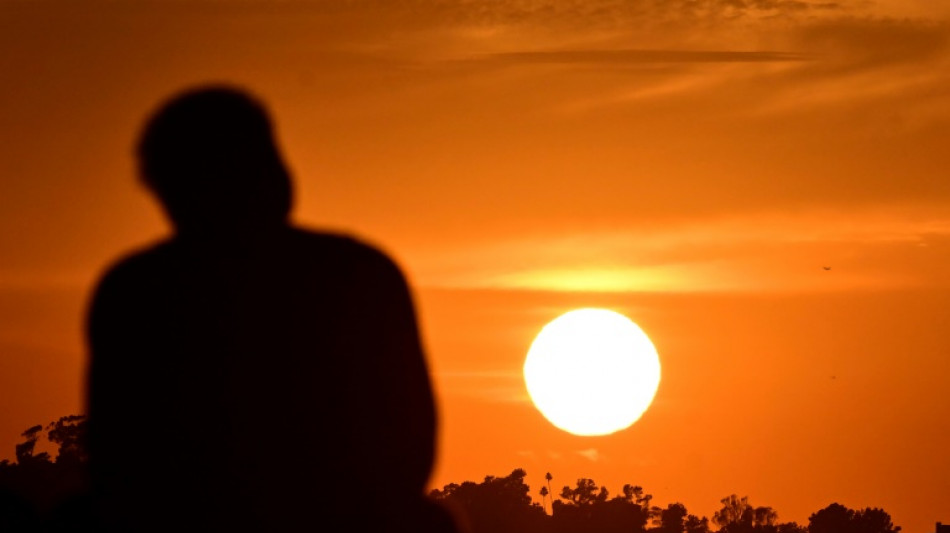
The deadly heatwave that hit Africa's Sahel region in early April would not have occurred without human-induced climate change, according to a study by the World Weather Attribution (WWA) group published Thursday.

Text size:

The West African nations of Mali and Burkina Faso experienced an exceptional heatwave from April 1 until April 5, with soaring temperatures above 45 degrees Celsius (113 degrees Fahrenheit) triggering many deaths.

Observations and climate models used by researchers at the WWA showed that "heatwaves with the magnitude observed in March and April 2024 in the region would have been impossible to occur without the global warming of 1.2C to date", which scientists attribute to human-induced climate change.

While periods of high temperatures are common in the Sahel at this time of year, the report said that the April heatwave would have been 1.4C cooler "if humans had not warmed the planet by burning fossil fuels".

It added that the five days of extreme heat was a once-in-a-200-year event, but that "these trends will continue with future warming".

The length and severity of the extreme heat led to an increase in the number of deaths and hospitalisations in the two countries, despite their populations being acclimatised to high temperatures, the WWA said.

- Deaths in heatwave -

A lack of data in the affected countries made it impossible to know the exact number of deaths, the WWA said, adding there were likely hundreds, if not thousands, of other heat-related casualties.

"From April 1 to 4, we saw an increase in the use of services," Djibo Mahamane Diango, head of anaesthesia at Gabriel Toure hospital in the capital Bamako, told reporters on April 5.

He said the hospital had seen the arrival of 102 bodies -- more than half of them people aged over 60 -- during the first four days of this month.

That compares with 130 for the whole of the month of April the previous year, he added.

The April heatwave in Mali -- where the temperature spiked at 48.5 degrees Celsius -- and neighbouring Burkina Faso coincided with the holy month of Ramadan when Muslims fast from dawn until dusk.

It also came during power outages which restricted the use of fans and air conditioning and affected health services.

The national blood transfusion centre in Bamako had called on medical centres to suspend any non-essential transfusions because of daily power shutdowns lasting more than 12 hours a day.

Mali often suffers from electricity cuts partly due to the state of disrepair of its power stations.

Countries in the Sahel region have had to contend with drought since the 1970s, as well as periods of intense rainfall from the 1990s.

The dwindling availability of water and pasture, compounded by the development of agricultural land, has disrupted the lives of pastoral populations and encouraged the emergence of armed groups that have extended their hold over vast swathes of territory in Mali, Burkina Faso and Niger.

Z.W.Varughese--DT