Dubai Telegraph - South America sweats under high temps -- in the middle of winter

EUR -
AED 4.236113
AFN 75.551437
ALL 92.94317
AMD 422.008093
ANG 2.064459
AOA 1057.730942
ARS 1720.684117
AUD 1.63271
AWG 2.077686
AZN 1.970132
BAM 1.95713
BBD 2.32508
BDT 141.696306
BGN 1.956706
BHD 0.434944
BIF 3458.099988
BMD 1.153469
BND 1.477517
BOB 13.535199
BRL 5.999307
BSD 1.154385
BTN 110.119845
BWP 15.539697
BYN 3.47186
BYR 22607.991914
BZD 2.321678
CAD 1.606177
CDF 2621.835404
CHF 0.939038
CLF 0.026802
CLP 1054.858928
CNY 7.778076
CNH 7.779364
COP 3605.271094
CRC 518.361301
CUC 1.153469
CUP 30.566928
CVE 110.857929
CZK 24.221745
DJF 205.569719
DKK 7.475405
DOP 67.474256
DZD 153.325528
EGP 57.878073
ERN 17.302035
ETB 186.735537
FJD 2.551993
FKP 0.853799
GBP 0.855009
GEL 3.010633
GGP 0.853799
GHS 12.774667
GIP 0.853799
GMD 84.78512
GNF 10121.689873
GTQ 8.799352
GYD 241.51834
HKD 9.051329
HNL 30.948303
HRK 7.535033
HTG 150.993935
HUF 363.5007
IDR 20611.337118
ILS 3.417688
IMP 0.853799
INR 110.042728
IQD 1512.227812
IRR 1585544.038093
ISK 142.199988
JEP 0.853799
JMD 182.635715
JOD 0.817808
JPY 183.95235
KES 149.235805
KGS 100.871264
KHR 4668.658341
KMF 492.531513
KPW 1038.122416
KRW 1634.903447
KWD 0.356203
KYD 0.962054
KZT 537.215128
LAK 26028.027267
LBP 103293.146386
LKR 384.811544
LRD 209.527222
LSL 18.681619
LTL 3.405894
LVL 0.697722
LYD 7.336447
MAD 10.737068
MDL 20.039533
MGA 4972.508979
MKD 61.55216
MMK 2422.107235
MNT 4150.145922
MOP 9.330342
MRU 46.259882
MUR 54.385672
MVR 17.821151
MWK 2002.422013
MXN 19.643804
MYR 4.713539
MZN 73.718766
NAD 18.689059
NGN 1569.421107
NIO 42.478872
NOK 10.963612
NPR 176.194809
NZD 1.969203
OMR 0.443502
PAB 1.154385
PEN 3.895448
PGK 5.108472
PHP 70.769919
PKR 320.428285
PLN 4.310631
PYG 6889.682692
QAR 4.192878
RON 5.237789
RSD 117.321635
RUB 95.823199
RWF 1700.470496
SAR 4.317565
SBD 9.302659
SCR 15.878055
SDG 692.664623
SEK 11.024683
SGD 1.476752
SHP 0.854566
SLE 28.317876
SLL 24187.666783
SOS 659.754133
SRD 43.51173
STD 23874.478942
STN 24.516663
SVC 10.100865
SYP 14997.403507
SZL 18.627661
THB 38.260699
TJS 10.66655
TMT 4.048676
TND 3.384937
TOP 2.777276
TRY 55.236052
TTD 7.828321
TWD 37.071455
TZS 3051.505612
UAH 51.603515
UGX 4285.98736
USD 1.153469
UYU 46.211345
UZS 13789.372186
VES 882.865823
VND 30076.703528
VUV 136.795224
WST 3.149868
XAF 656.40883
XAG 0.017861
XAU 0.000265
XCD 3.117308
XCG 2.080514
XDR 0.816376
XOF 656.403136
XPF 119.331742
YER 273.54478
ZAR 18.670153
ZMK 10382.607151
ZMW 21.702751
ZWL 371.416539
  • RBGPF

    0.0000

    72.16

    0%

  • CMSC

    0.0250

    21.475

    +0.12%

  • BCC

    -0.1200

    84.13

    -0.14%

  • BCE

    0.1900

    23.32

    +0.81%

  • BTI

    1.5100

    57.35

    +2.63%

  • RIO

    -3.0200

    98.2

    -3.08%

  • RYCEF

    0.1700

    20.71

    +0.82%

  • GSK

    0.1500

    50.45

    +0.3%

  • BP

    -0.1000

    42.83

    -0.23%

  • RELX

    0.1200

    34.67

    +0.35%

  • JRI

    -0.0300

    12.68

    -0.24%

  • CMSD

    0.0000

    21.59

    0%

  • VOD

    0.1300

    16.22

    +0.8%

  • AZN

    -1.2600

    157.24

    -0.8%

  • NGG

    0.5200

    81.2

    +0.64%

South America sweats under high temps -- in the middle of winter
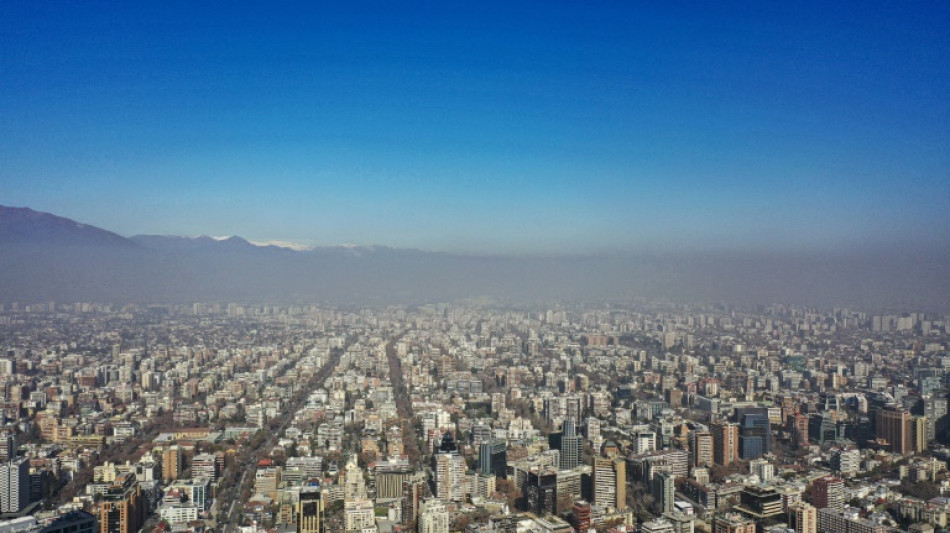
South America sweats under high temps -- in the middle of winter / Photo: MARTIN BERNETTI - AFP

South America sweats under high temps -- in the middle of winter

Far away from the extreme summer temperatures of the northern hemisphere, Southern Cone countries such as Chile and Argentina are also experiencing record heat, but in the middle of what is supposed to be their winter.

Text size:

On Tuesday, the mountain town of Vicuna in central Chile hit 37 degrees Celsius (almost 99 degrees Fahrenheit).

"It's been more than 70 years since a temperature like this was recorded" in Vicuna, Chilean meteorologist Cristobal Torres told AFP.

Unusually high temperatures were also recorded 450 kilometers (280 miles) south in the capital Santiago: 24C (75F) on Wednesday, with similar levels forecast for Thursday and Friday.

Meanwhile in Buenos Aires, the temperature exceeded 30C (86F) on Tuesday, making it the highest August 1 temperature since record-keeping began, according to Argentina's National Meteorological Service. The average August temperature in Buenos Aires is usually between 18C (64F) and 9C (48F).

Several cities across Uruguay also recorded temperatures of 30C (86F) on Wednesday.

"What we are experiencing is the combination of two phenomena: a global warming trend due to climate change plus the El Nino phenomenon," said Chile's Environment Minister Maisa Rojas, a climatologist.

"When El Nino ends, the global weather situation should stop being so extreme," she said.

An El Nino event is characterized by increased Pacific Ocean temperatures, causing rainfall, floods and avalanches in western South America, as well as heat waves.

Santiago, Buenos Aires and Montevideo are expected to return to normal temperatures in the coming days, but it is believed that similar heat waves will occur with increasing frequency.

"It is very likely that the heat record will be broken this year (in Santiago), and that is extraordinarily abnormal. Ten years ago we had two heat waves a year and now we are talking about nine," explained University of Santiago climatologist Raul Cordero.

One of the most significant impacts of the warm weather is on snowpacks in the mountains, which are vital for the water supply in Chile's capital.

"Winter heat waves have devastating effects on glaciers and snow," Cordero said.

Rojas also warned about the effects of heat at the poles.

"The ice around the polar areas is at minimum levels," she said on X, formerly known as Twitter.

"Especially around Antarctica, where at this time of year sea ice grows to reach a maximum in September, it is at a historic minimum."

O.Mehta--DT