Dubai Telegraph - Pacific ire at Australia's backing for fossil fuels

EUR -
AED 4.233923
AFN 75.511939
ALL 92.895059
AMD 421.789926
ANG 2.063391
AOA 1057.183632
ARS 1719.790065
AUD 1.633912
AWG 2.07661
AZN 1.955852
BAM 1.956117
BBD 2.323877
BDT 141.622958
BGN 1.955693
BHD 0.434719
BIF 3456.309917
BMD 1.152872
BND 1.476752
BOB 13.528193
BRL 6.004737
BSD 1.153787
BTN 110.062842
BWP 15.531652
BYN 3.470063
BYR 22596.288984
BZD 2.320476
CAD 1.60685
CDF 2620.478107
CHF 0.937976
CLF 0.026782
CLP 1054.082104
CNY 7.774045
CNH 7.776363
COP 3603.23191
CRC 518.092974
CUC 1.152872
CUP 30.551105
CVE 110.785372
CZK 24.226916
DJF 205.463307
DKK 7.476057
DOP 67.438429
DZD 153.253185
EGP 57.847537
ERN 17.293078
ETB 186.638874
FJD 2.552977
FKP 0.853357
GBP 0.855102
GEL 3.008812
GGP 0.853357
GHS 12.768095
GIP 0.853357
GMD 84.735928
GNF 10116.451155
GTQ 8.794797
GYD 241.393319
HKD 9.046505
HNL 30.932283
HRK 7.534481
HTG 150.915773
HUF 363.45904
IDR 20593.404655
ILS 3.415919
IMP 0.853357
INR 110.022081
IQD 1511.445014
IRR 1584723.283387
ISK 142.206962
JEP 0.853357
JMD 182.541174
JOD 0.817403
JPY 183.91477
KES 149.290173
KGS 100.818784
KHR 4666.250593
KMF 492.276675
KPW 1037.585037
KRW 1635.53902
KWD 0.356042
KYD 0.961556
KZT 536.93704
LAK 26032.107048
LBP 103321.649013
LKR 384.612348
LRD 209.413947
LSL 18.612937
LTL 3.404131
LVL 0.697361
LYD 7.349191
MAD 10.687132
MDL 20.02916
MGA 4969.934982
MKD 61.534975
MMK 2420.853442
MNT 4147.997617
MOP 9.325512
MRU 46.236495
MUR 54.357605
MVR 17.823333
MWK 2000.776401
MXN 19.652327
MYR 4.7111
MZN 73.667344
NAD 18.613017
NGN 1568.885967
NIO 42.456882
NOK 10.9678
NPR 176.103602
NZD 1.971619
OMR 0.443294
PAB 1.153787
PEN 3.893431
PGK 5.105828
PHP 70.756937
PKR 320.262416
PLN 4.310646
PYG 6886.116278
QAR 4.190708
RON 5.242689
RSD 117.308199
RUB 95.773657
RWF 1699.590255
SAR 4.31533
SBD 9.297844
SCR 16.16734
SDG 692.302189
SEK 11.032771
SGD 1.476563
SHP 0.854124
SLE 28.302367
SLL 24175.146142
SOS 659.412614
SRD 43.489212
STD 23862.12042
STN 24.503972
SVC 10.095637
SYP 14989.640166
SZL 18.618018
THB 38.26846
TJS 10.661028
TMT 4.035052
TND 3.383185
TOP 2.775839
TRY 55.076955
TTD 7.824268
TWD 37.02978
TZS 3049.926071
UAH 51.576803
UGX 4283.768737
USD 1.152872
UYU 46.187424
UZS 13782.234177
VES 882.402769
VND 30061.134452
VUV 136.724412
WST 3.148238
XAF 656.069043
XAG 0.017834
XAU 0.000265
XCD 3.115694
XCG 2.079437
XDR 0.815954
XOF 656.063352
XPF 119.331742
YER 273.403529
ZAR 18.690336
ZMK 10377.230082
ZMW 21.691516
ZWL 371.224277
  • RBGPF

    0.0000

    72.16

    0%

  • CMSC

    0.0250

    21.475

    +0.12%

  • BCC

    -0.0800

    84.17

    -0.1%

  • JRI

    -0.0310

    12.679

    -0.24%

  • NGG

    0.4500

    81.13

    +0.55%

  • GSK

    0.0600

    50.36

    +0.12%

  • BCE

    0.1500

    23.28

    +0.64%

  • RIO

    -2.9800

    98.24

    -3.03%

  • RELX

    0.2200

    34.77

    +0.63%

  • RYCEF

    0.1700

    20.71

    +0.82%

  • VOD

    0.1300

    16.22

    +0.8%

  • BTI

    1.4000

    57.24

    +2.45%

  • BP

    -0.0150

    42.915

    -0.03%

  • CMSD

    0.0400

    21.63

    +0.18%

  • AZN

    -1.3150

    157.185

    -0.84%

Pacific ire at Australia's backing for fossil fuels
Pacific ire at Australia's backing for fossil fuels / Photo: Hilaire Bule - AFP/File

Pacific ire at Australia's backing for fossil fuels

Pacific Islands expressed dismay on Thursday at Australia's subsidies for fossil fuels, flagging climate concerns as a point of friction between the neighbouring nations.

Text size:

Two Pacific ministers appeared in a joint livestream to condemn Australia's long and continuing enthusiasm for coal and gas projects.

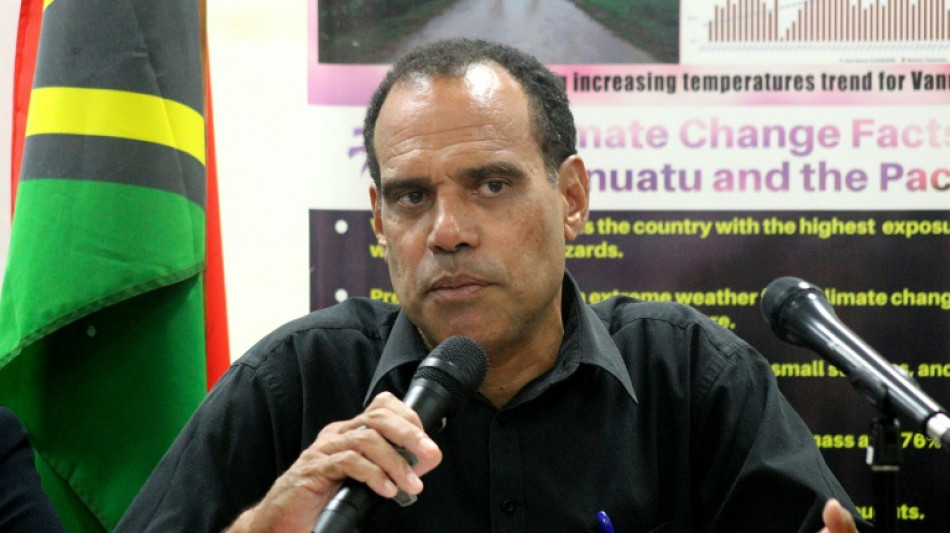
Vanuatu's Climate Change Minister Ralph Regenvanu welcomedAustralia's pledge last year to transition towards renewable energy but said it must stop funding climate-damaging projects.

"We are very disappointed to see that Australia continues to subsidise fossil fuel projects," Regenvanu told The Australia Institute, a Canberra-based think tank.

"We need money in the renewable energy sector. That's where the future of our economies and our societies lies -- not in the fossil fuel industry."

Regenvanu questioned why Canberra continues to pump "billions of dollars into the fossil fuel industry, which we in the Pacific have agreed, including Australia, is the greatest threat to our security".

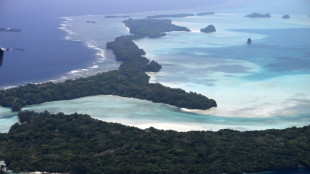
Vanuatu is a small archipelago and, like many Pacific Island nations, is threatened by rising sea levels.

Speaking alongside Regenvanu, Tuvalu's Finance Minister Seve Paeniu said Pacific nations are currently weighing a commitment to make the region fossil-free.

"The idea is to stop any further expansion of fossil fuel" and to eliminate consumption of coal, oil and natural gases, Paeniu said.

"It's a matter of our security and our survival."

Tuvalu, midway between Hawaii and Australia, is one of the smallest nations in the world, made up of less than 26 square kilometres (10 square miles) and shrinking fast.

"Our land is constantly being eaten away," Paeniu said. "And we know that fossil fuel is the cause of climate change."

- 'One step forwards' -

Australia has pledged that 82 percent of its electricity will come from renewable sources by 2030. The current figure is around 30 percent.

But it is one of the world's largest coal and gas exporters and a series of governments have resisted pressure to scale back the industries.

The centre-left Labor government approved a new coal mine last month, sparking anger from environmental groups.

Australia and its allies, including the United States, are currently locked in a battle with China for influence across the Pacific.

Australia's relationship with fossil fuels is a constant irritant.

Regenvanu described Australia as Vanuatu's greatest trade partner but said there are tensions in the relationship over climate change.

He accused Australia of "not recognising the main security threat to the Pacific".

Vanuatu is still under a state of emergency after being battered this year by an "unprecedented event of two Category Four cyclones within a few days", Regenvanu said.

He estimates fixing the damage will cost more than 40 percent of Vanuatu's gross domestic product, which the International Monetary Fund puts at around US$1 billion.

"It's like you take one step forwards and two backwards in terms of economic development," Regenvanu said.

"We're not seeing the emissions reduction that we need to see happen."

J.Chacko--DT