Dubai Telegraph - Wealth that Brazil is not utilizing!

EUR -
AED 4.237919
AFN 75.006812
ALL 91.71831
AMD 418.460854
ANG 2.066012
AOA 1058.182593
ARS 1740.061341
AUD 1.618017
AWG 2.07713
AZN 1.962775
BAM 1.955124
BBD 2.323497
BDT 142.010318
BGN 1.942626
BHD 0.43495
BIF 3448.898007
BMD 1.153961
BND 1.466232
BOB 13.907195
BRL 5.929972
BSD 1.153601
BTN 110.171456
BWP 15.602609
BYN 3.509487
BYR 22617.641203
BZD 2.320198
CAD 1.605067
CDF 2665.650835
CHF 0.943854
CLF 0.027908
CLP 1101.952519
CNY 7.743661
CNH 7.743784
COP 3595.962619
CRC 519.620462
CUC 1.153961
CUP 30.579974
CVE 110.226915
CZK 24.287077
DJF 205.439017
DKK 7.475315
DOP 68.126461
DZD 154.17925
EGP 59.593561
ERN 17.309419
ETB 188.438391
FJD 2.551986
FKP 0.852932
GBP 0.855472
GEL 2.993769
GGP 0.852932
GHS 13.249422
GIP 0.852932
GMD 85.393575
GNF 10142.759182
GTQ 8.81007
GYD 241.356607
HKD 9.051153
HNL 30.963302
HRK 7.533636
HTG 150.782475
HUF 365.83977
IDR 20391.649883
ILS 3.522986
IMP 0.852932
INR 110.586403
IQD 1511.271281
IRR 1586206.334795
ISK 139.964147
JEP 0.852932
JMD 182.057096
JOD 0.818131
JPY 178.5917
KES 149.391902
KGS 100.913961
KHR 4677.525703
KMF 491.587847
KPW 1038.565524
KRW 1561.840356
KWD 0.356455
KYD 0.961368
KZT 516.44156
LAK 25810.082158
LBP 103761.742216
LKR 379.658821
LRD 201.309572
LSL 18.741425
LTL 3.407347
LVL 0.698019
LYD 7.320471
MAD 10.936821
MDL 20.08506
MGA 4977.280261
MKD 61.503749
MMK 2423.032499
MNT 4149.505232
MOP 9.320439
MRU 46.329992
MUR 54.340124
MVR 17.782886
MWK 2000.408823
MXN 19.783477
MYR 4.698809
MZN 73.73214
NAD 18.741425
NGN 1528.468029
NIO 42.456434
NOK 10.77044
NPR 176.275094
NZD 2.003979
OMR 0.44369
PAB 1.153601
PEN 3.877344
PGK 5.133315
PHP 72.549532
PKR 319.817597
PLN 4.340854
PYG 6938.60259
QAR 4.216743
RON 5.254452
RSD 117.364537
RUB 97.510151
RWF 1702.211856
SAR 4.32975
SBD 9.254191
SCR 15.85166
SDG 694.10459
SEK 11.276931
SGD 1.467579
SHP 0.854754
SLE 28.445229
SLL 24197.981815
SOS 659.27221
SRD 43.58165
STD 23884.668779
STN 24.491962
SVC 10.094512
SYP 15003.804932
SZL 18.727529
THB 38.352482
TJS 10.653773
TMT 4.038865
TND 3.376333
TOP 2.778462
TRY 56.128442
TTD 7.833293
TWD 36.677734
TZS 3052.952309
UAH 51.493908
UGX 4522.437418
USD 1.153961
UYU 46.463745
UZS 13578.24964
VES 970.693817
VND 30008.763239
VUV 135.303329
WST 3.157225
XAF 655.957
XAG 0.018151
XAU 0.000268
XCD 3.118638
XCG 2.079173
XDR 0.815911
XOF 655.957
XPF 119.331742
YER 272.94074
ZAR 18.771944
ZMK 10387.036768
ZMW 22.294297
ZWL 371.575063
SSP 6519.016235
MXV 2.243465
  • RBGPF

    1.9700

    69.99

    +2.81%

  • CMSC

    -0.0300

    20.42

    -0.15%

  • NGG

    -1.9000

    74.96

    -2.53%

  • CMSD

    -0.0800

    20.24

    -0.4%

  • GSK

    1.9200

    50.05

    +3.84%

  • RELX

    1.9200

    35.72

    +5.38%

  • RIO

    -2.3200

    97.64

    -2.38%

  • BCE

    0.0800

    23.47

    +0.34%

  • BP

    -0.1700

    45.93

    -0.37%

  • BTI

    2.0500

    57.29

    +3.58%

  • BCC

    -0.1900

    75.25

    -0.25%

  • RYCEF

    -0.5000

    19.04

    -2.63%

  • JRI

    -0.0500

    11.96

    -0.42%

  • VOD

    0.1300

    17.53

    +0.74%

  • AZN

    3.6100

    163.78

    +2.2%


Wealth that Brazil is not utilizing!


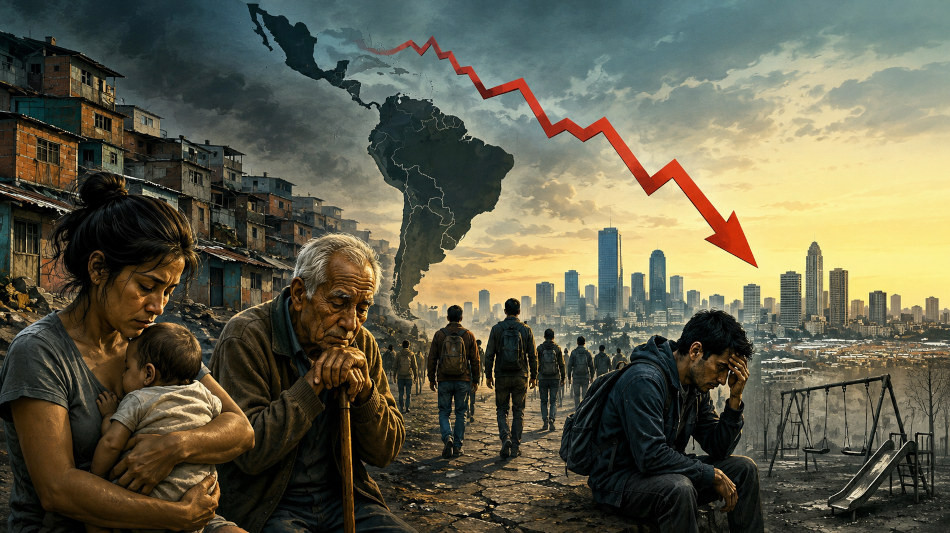
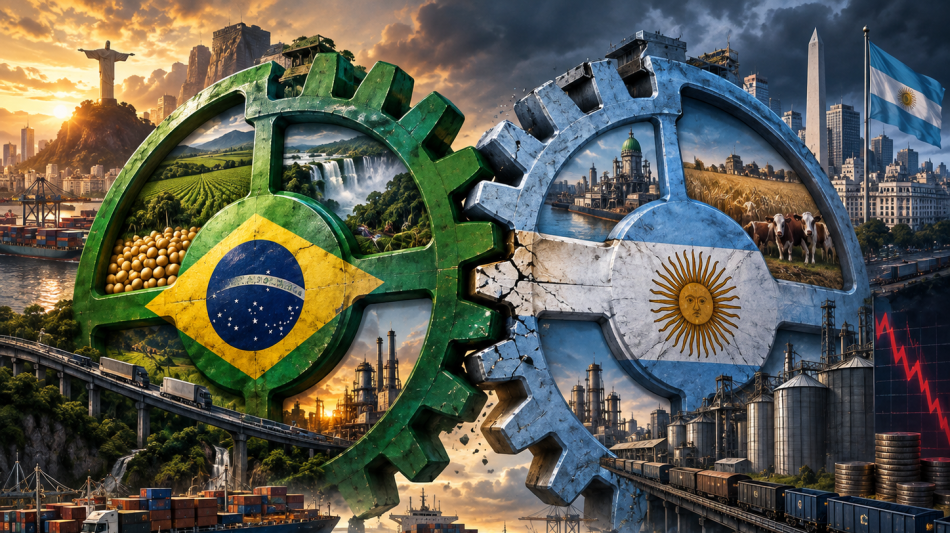
Brazil, a nation endowed with staggering natural riches, stands as one of the world’s great paradoxes: a land of immense wealth that it struggles to harness effectively. From the sprawling Amazon rainforest to vast mineral deposits and a coastline teeming with potential, the country possesses resources that could propel it to economic superpower status. Yet, persistent challenges—mismanagement, environmental degradation, and entrenched inequality—continue to stymie its ability to translate this bounty into sustainable prosperity. As global demand for green energy and rare minerals surges, Brazil’s untapped potential remains both a tantalising opportunity and a frustrating enigma.

A Treasure Trove of Resources:
Few nations rival Brazil’s natural endowment. The Amazon, covering nearly 60% of the country, is not only the planet’s largest carbon sink but also a repository of biodiversity, with untold species that could yield breakthroughs in medicine and agriculture. Beneath its soil lie some of the world’s richest reserves of iron ore, bauxite, and niobium—a metal critical for aerospace and electronics, of which Brazil supplies over 90% of global demand. Offshore, the pre-salt oil fields, discovered in 2006, hold an estimated 50 billion barrels, positioning Brazil as a top-tier petroleum producer. Add to this fertile lands that make it an agricultural giant—exporting soy, beef, and coffee—and the scale of its wealth becomes clear.

This abundance is no secret. In 2024, Brazil’s exports reached $330 billion, driven by commodities like iron ore ($47 billion) and crude oil ($39 billion), according to government data. Yet, these figures belie a deeper truth: the nation reaps only a fraction of the value its resources could command if harnessed strategically.

The Curse of Mismanagement:
Brazil’s failure to capitalise fully on its wealth is rooted in a litany of self-inflicted wounds. Corruption scandals, such as the Lava Jato (Car Wash) investigation, have siphoned billions from state coffers, notably from Petrobras, the national oil company. Infrastructure woes compound the problem: crumbling roads and inadequate ports inflate transport costs, rendering exports less competitive. A 2024 World Bank report estimated that logistical inefficiencies cost Brazil up to 5% of its GDP annually—roughly $100 billion.

The Amazon exemplifies this squandered potential. While its preservation is vital for global climate goals, illegal logging and mining—often abetted by lax enforcement—devastated 11,088 square kilometres in 2023 alone, per Brazil’s National Institute for Space Research. Rather than leveraging its forests for carbon credits or sustainable bio-industries, Brazil loses both ecological and economic ground. President Luiz Inácio Lula da Silva, re-elected in 2022, pledged to halt deforestation by 2030, yet progress remains sluggish, hampered by political resistance and budget constraints.

Missed Opportunities in the Green Boom:
As the world races towards net-zero emissions, Brazil’s resources align uncannily with global needs. Lithium and rare earth elements, essential for batteries and renewable technologies, abound in states like Minas Gerais, yet extraction lags behind leaders like Australia and China due to regulatory hurdles and underinvestment. The International Energy Agency projects demand for lithium to rise tenfold by 2040, yet Brazil’s output remains a trickle—less than 1% of the global total in 2024.

Hydropower, which supplies 60% of Brazil’s electricity, and untapped wind and solar potential could make it a renewable energy titan. The northeast’s windy coastlines boast some of the world’s highest capacity factors for wind farms, yet bureaucratic delays and a creaking grid deter investors. A 2024 study by the Brazilian Wind Energy Association estimated that tripling wind capacity by 2030 could create 200,000 jobs and add $20 billion to GDP—but only with bold reforms.

Inequality and Economic Stagnation:
Wealth in Brazil flows unevenly. The richest 1% control nearly 50% of national income, while 33 million people faced hunger in 2023, according to Oxfam. Commodity booms enrich agribusiness elites and mining firms, yet little trickles down to the broader population. Education, critical for a knowledge-based economy, languishes: Brazil ranks 60th in the OECD’s PISA assessments, hobbling its ability to innovate beyond raw resource extraction.

Economic growth has flatlined, averaging just 0.9% annually from 2011 to 2023. The real, Brazil’s currency, weakened by 15% against the dollar in 2024, reflecting investor unease over fiscal deficits and political gridlock. While competitors like Indonesia diversify into manufacturing, Brazil remains tethered to primary goods, exporting iron ore but importing steel—a failure to climb the value chain.

A Path Forward?
Solutions exist, but require political will. Streamlining bureaucracy could unlock billions in foreign investment, as seen with the $4 billion Vale mining project approved in 2024 after years of delays. Tax incentives for sustainable industries—such as eco-tourism or bio-pharmaceuticals—could tap the Amazon’s potential without razing it. Education reform, paired with vocational training, might equip Brazilians to process their own resources, rather than shipping them abroad raw.

Lula’s administration has hinted at such ambitions, unveiling a $350 million green transition fund in January 2025. Yet, with Congress fractured and state governments at odds, execution falters. On X, commentators lament “a nation asleep on a goldmine,” a sentiment echoed by economists who warn that without reform, Brazil risks becoming a resource-rich relic in a fast-evolving world.

Conclusion:
Brazil’s formidable wealth is both a blessing and a burden. Its resources could fuel a prosperous, sustainable future, yet decades of mismanagement and missed chances have left it punching below its weight. As global demand shifts towards green technologies, the window to harness this potential narrows. Whether Brazil awakens to its own richness—or remains mired in inertia—will define its place in the 21st century.
Featured


Marhabaan, welcome to the UAE and Dubai!

Marhabaan, welcome to the UAE and Dubai! The "skyward striving" Dubai next to ancient desert cities. Mysterious Bedouins and magnificent mosques exist peacefully alongside futuristic cities. Discover wadis and oases, golden sandy deserts, paradisiacal beaches and Arabian hospitality. The modern and the ancient Orient united in a book for dreaming.On this journey to Dubai and Abu Dhabi in the United Arab Emirates, the fairy tales of 1001 Arabian Nights meet the modern Arab world. These cascading cities enchant with their sky-high skyscrapers, fragrant souks, huge shopping centres and the ancient cultural heritage of the sheikhs.You can choose to stay in 4- or 5-star hotels with breakfast and swimming pools. You also have more options to book excursions so you can feel the magic of the East even more. If you want to do something out of the ordinary, you can spend an extra night in an enchanting hotel in the middle of the emirate's desert. Experience your own fairytale from 1001 nights and look forward to a holiday with plenty of casual extravagance in two superlative desert cities!

Trade and business at the Dubai Gold Souk

If Naif Deira is associated with a specific context, organization, or field, providing more details could help me offer more relevant information. Keep in mind that privacy considerations and ethical guidelines limit the amount of information available about private individuals, especially those who are not public figures. The Dubai Gold Souk is one of the most famous gold markets in the world and is located in the heart of Dubai's commercial business district in Deira. It's a traditional market where you can find a wide variety of gold, silver, and precious stone jewelry. The Gold Souk is known for its extensive selection of jewelry, including rings, bracelets, necklaces, and earrings, often crafted with intricate designs.Variety: The Gold Souk offers a vast array of jewelry designs, with a focus on gold. You can find items ranging from traditional to modern styles.Competitive Pricing: The market is known for its competitive pricing, and bargaining is a common practice. Prices are typically based on the weight of the gold and the craftsmanship involved.Gold and More: While gold is the primary focus, the souk also offers other precious metals such as silver and platinum, as well as a selection of gemstones.Cultural Experience: Visiting the Gold Souk provides not only a shopping experience but also a glimpse into the traditional trading culture of Dubai. The vibrant market is a popular destination for both tourists and locals.Security: The market is generally safe, and there are numerous shops with security measures in place. However, as with any crowded area, it's advisable to take standard precautions regarding personal belongings.Gold Souk is just one part of the larger Deira Souk complex, which also includes the Spice Souk and the Textile Souk. It's a must-visit for those interested in jewelry, and it reflects the rich cultural and trading history of Dubai.

Dubai: Amazing City Center, Night Walking Tour

During this excursion, we leisurely explore Dubai Downtown and Burj Khalifa in the evening, giving you the chance to witness the captivating transformation of the district as it comes alive with the vibrant glow of thousands of lights. As the sun sets, the illuminated facade of Burj Khalifa and the enchanting Dubai Fountain collaborate to produce a genuinely magical atmosphere.Dubai Downtown, also known as Downtown Dubai, is a distinguished and iconic district situated in the heart of Dubai, United Arab Emirates. It is a renowned neighborhood celebrated for its striking architecture, luxurious living, and exceptional entertainment options. At the core of Downtown Dubai stands the Burj Khalifa, a towering skyscraper that holds the title of the world's tallest man-made structure and serves as an emblem of modern Dubai.Burj Khalifa: The focal point of Downtown Dubai, Burj Khalifa, is famous for its groundbreaking height, reaching an impressive 828 meters (2,722 feet). Designed by architect Adrian Smith, its distinctive Y-shaped design encompasses a mix of residential, commercial, and hotel spaces.Dubai Mall: Adjacent to Burj Khalifa is the Dubai Mall, one of the largest shopping malls globally, featuring an extensive array of retail outlets, from high-end boutiques to international brands. The mall also provides various dining options, and entertainment attractions like an indoor ice rink and an aquarium, and hosts the mesmerizing Dubai Fountain.Dubai Fountain: Located just outside the Dubai Mall, the Dubai Fountain is a captivating attraction that presents a nightly spectacle of water, music, and light, captivating visitors with its perfectly synchronized performances.Emaar Boulevard: Stretching through Downtown Dubai, this boulevard is adorned with restaurants, cafes, and shops, making it a popular spot for leisurely strolls, dining, and people-watching.Luxury Living: Downtown Dubai boasts numerous upscale residential buildings and hotels, making it an appealing locale for those seeking a sophisticated urban lifestyle.Cultural Attractions: The Dubai Opera, an iconic cultural venue within the district, hosts a diverse range of performances, including opera, ballet, concerts, and theater productions.Transportation: Downtown Dubai is well-connected through public transportation, including the Dubai Metro, facilitating easy access to other parts of the city.In summary, Downtown Dubai is a dynamic and vibrant district that stands as a testament to Dubai's modernity and grandeur. It seamlessly combines architectural wonders with shopping, entertainment, and cultural offerings, creating a truly extraordinary destination.