Dubai Telegraph - Taiwan: Is the "Silicon Shield" collapsing?

EUR -
AED 4.339975
AFN 76.814055
ALL 96.797455
AMD 444.535927
ANG 2.115423
AOA 1083.663344
ARS 1692.015434
AUD 1.685082
AWG 2.130101
AZN 2.013663
BAM 1.954639
BBD 2.37329
BDT 144.104396
BGN 1.984592
BHD 0.444336
BIF 3491.925652
BMD 1.181748
BND 1.500509
BOB 8.142163
BRL 6.165657
BSD 1.1783
BTN 106.731597
BWP 15.599733
BYN 3.385189
BYR 23162.260663
BZD 2.369792
CAD 1.617282
CDF 2599.846012
CHF 0.916635
CLF 0.025765
CLP 1017.355497
CNY 8.200091
CNH 8.189295
COP 4354.327742
CRC 584.152989
CUC 1.181748
CUP 31.316322
CVE 110.877553
CZK 24.230684
DJF 209.825355
DKK 7.471252
DOP 74.365824
DZD 153.099053
EGP 55.224195
ERN 17.72622
ETB 183.179684
FJD 2.611077
FKP 0.868664
GBP 0.867943
GEL 3.184858
GGP 0.868664
GHS 12.949308
GIP 0.868664
GMD 86.268024
GNF 10342.855918
GTQ 9.037631
GYD 246.523555
HKD 9.234002
HNL 31.26319
HRK 7.534948
HTG 154.358305
HUF 377.809361
IDR 19918.953296
ILS 3.676034
IMP 0.868664
INR 107.038538
IQD 1548.680745
IRR 49781.134392
ISK 145.012752
JEP 0.868664
JMD 184.420447
JOD 0.837906
JPY 185.77138
KES 151.999706
KGS 103.344316
KHR 4765.99007
KMF 495.152823
KPW 1063.598142
KRW 1729.84719
KWD 0.363045
KYD 0.981917
KZT 582.993678
LAK 25320.958308
LBP 105522.815101
LKR 364.543446
LRD 221.518409
LSL 19.009707
LTL 3.489395
LVL 0.714828
LYD 7.461568
MAD 10.854401
MDL 20.090066
MGA 5230.892634
MKD 61.603405
MMK 2481.807261
MNT 4219.167775
MOP 9.482267
MRU 47.093105
MUR 54.43176
MVR 18.258453
MWK 2052.696671
MXN 20.401229
MYR 4.664955
MZN 75.33688
NAD 19.009707
NGN 1615.426317
NIO 43.36424
NOK 11.451852
NPR 170.770555
NZD 1.964016
OMR 0.453131
PAB 1.1783
PEN 3.979541
PGK 5.052998
PHP 69.145302
PKR 329.485672
PLN 4.218238
PYG 7785.375166
QAR 4.303159
RON 5.093811
RSD 117.646603
RUB 90.749791
RWF 1719.778381
SAR 4.431245
SBD 9.522701
SCR 16.161135
SDG 710.825762
SEK 10.663153
SGD 1.504252
SHP 0.886617
SLE 28.894177
SLL 24780.663673
SOS 672.200685
SRD 44.691391
STD 24459.797516
STN 24.485455
SVC 10.309876
SYP 13069.630436
SZL 19.00571
THB 37.266468
TJS 11.040741
TMT 4.142027
TND 3.365032
TOP 2.845365
TRY 51.538989
TTD 7.97926
TWD 37.331853
TZS 3045.890616
UAH 50.612034
UGX 4192.509477
USD 1.181748
UYU 45.542946
UZS 14469.404578
VES 446.683163
VND 30666.360419
VUV 141.360897
WST 3.227027
XAF 655.567566
XAG 0.015204
XAU 0.000238
XCD 3.193733
XCG 2.123638
XDR 0.815316
XOF 655.567566
XPF 119.331742
YER 281.732962
ZAR 18.960639
ZMK 10637.154271
ZMW 21.945963
ZWL 380.522372
  • SCS

    0.0200

    16.14

    +0.12%

  • CMSD

    0.0600

    23.95

    +0.25%

  • RBGPF

    0.1000

    82.5

    +0.12%

  • NGG

    1.1700

    88.06

    +1.33%

  • BCE

    -0.4900

    25.08

    -1.95%

  • CMSC

    -0.0400

    23.51

    -0.17%

  • BCC

    1.8700

    91.03

    +2.05%

  • RIO

    2.2900

    93.41

    +2.45%

  • RELX

    -0.7100

    29.38

    -2.42%

  • RYCEF

    0.2600

    16.88

    +1.54%

  • GSK

    1.0600

    60.23

    +1.76%

  • JRI

    0.0900

    12.97

    +0.69%

  • VOD

    0.4900

    15.11

    +3.24%

  • BTI

    0.8400

    62.8

    +1.34%

  • BP

    0.8400

    39.01

    +2.15%

  • AZN

    5.8700

    193.03

    +3.04%


Taiwan: Is the "Silicon Shield" collapsing?


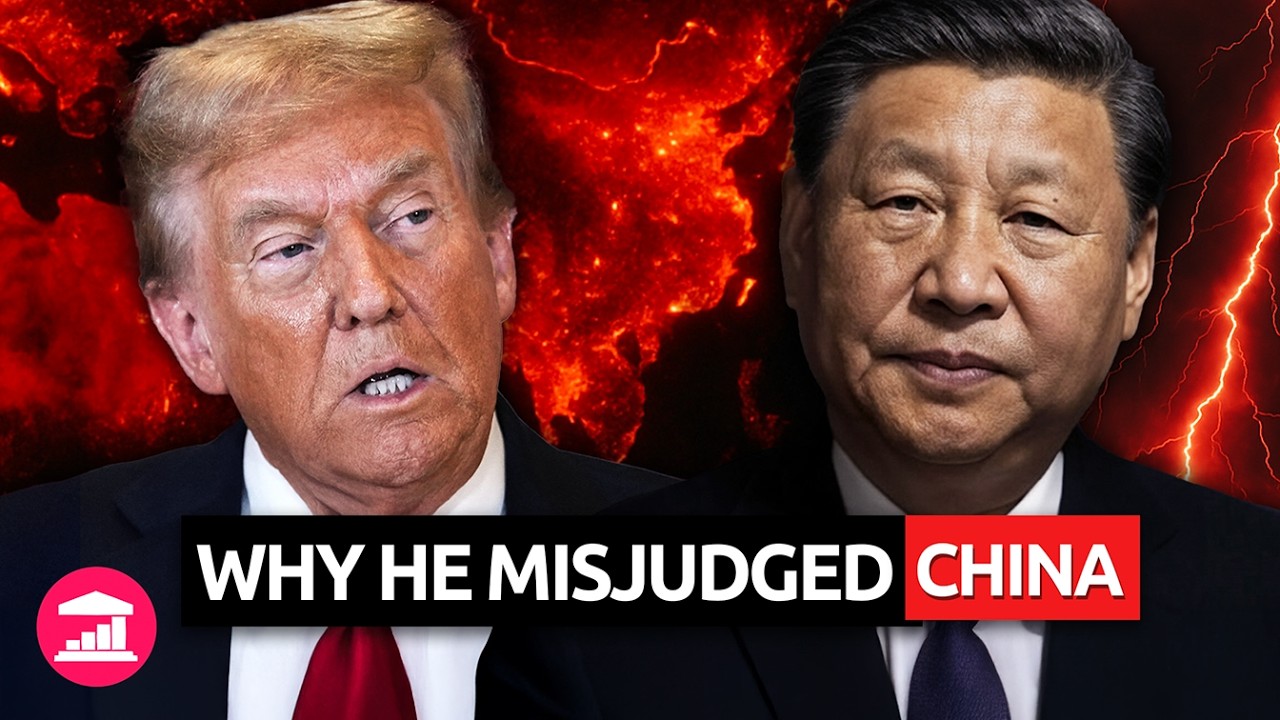
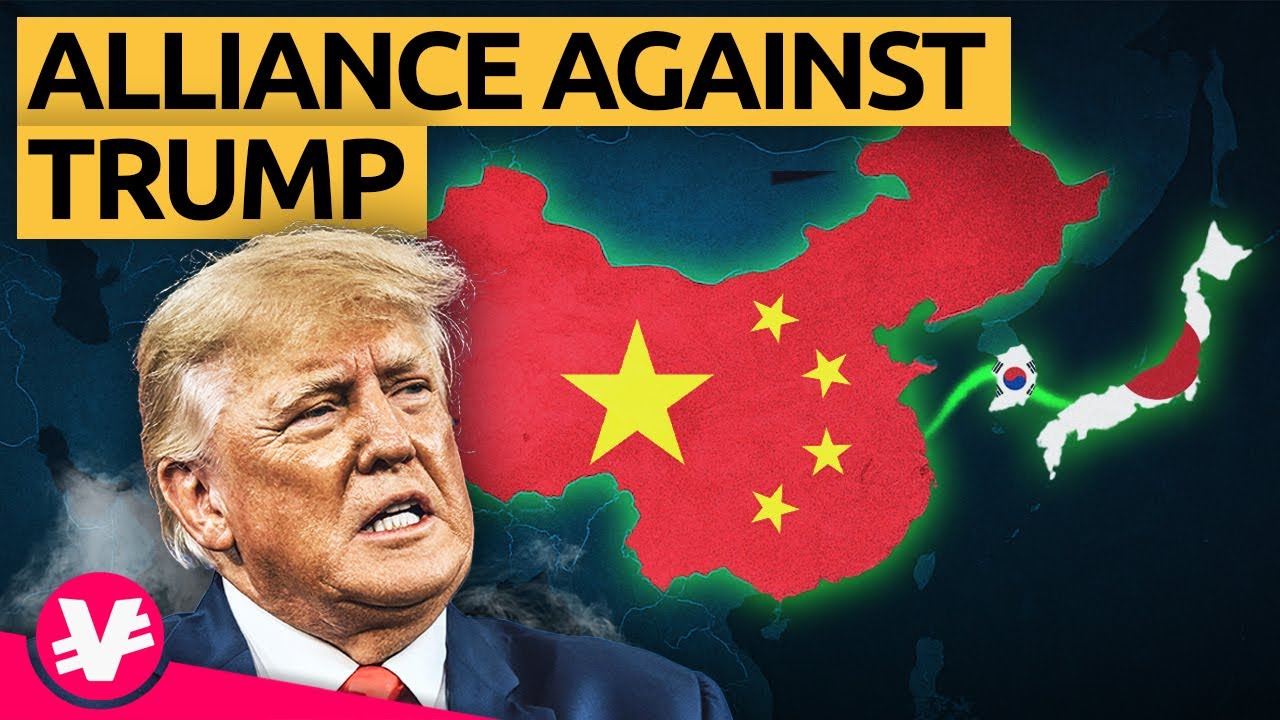
Taiwan, long regarded as a linchpin in the global technology supply chain, faces an uncertain future as its vaunted “silicon shield”—the notion that its dominance in semiconductor production deters aggression—comes under strain. The island’s strategic importance, driven by the Taiwan Semiconductor Manufacturing Company (TSMC), which produces over 90% of the world’s most advanced microchips, has historically offered a degree of protection against threats, notably from China. However, recent policies from United States President Donald Trump are raising fears that this shield may be crumbling, leaving Taiwan vulnerable at a time of escalating geopolitical tension.

The Silicon Shield: A Fragile Bastion
The concept of the silicon shield posits that Taiwan’s indispensable role in supplying cutting-edge semiconductors to the world—powering everything from smartphones to artificial intelligence—acts as a deterrent against military action, particularly from Beijing, which claims the island as part of its territory. The theory rests on the catastrophic economic fallout that would follow any disruption to TSMC’s operations, a scenario that would cripple global supply chains and affect major economies, including the U.S. and China itself. For years, this economic leverage has been Taiwan’s unspoken safeguard, complementing its military defences and U.S. support under the Taiwan Relations Act.

Yet, this shield is not impervious. China’s growing military assertiveness—demonstrated by large-scale drills encircling Taiwan in October 2024—and its advancements in domestic chip production have already cast doubt on the shield’s durability. Now, Trump’s aggressive economic strategy is adding a new layer of jeopardy, threatening to erode Taiwan’s technological edge and, with it, the island’s strategic security.

Trump’s Tariff Threat:
Since reclaiming the presidency, Trump has doubled down on his “America First” agenda, targeting Taiwan’s semiconductor industry with a bold and controversial plan. In a speech to Republicans on 27 January 2025, he proposed tariffs of up to 100% on imported microchips, arguing that Taiwan had “stolen” America’s chip industry and that such measures would force production back to U.S. soil. “They won’t want to pay a 25%, 50%, or even 100% tax,” Trump declared, framing the policy as a means to revitalise American manufacturing.

This stance marks a sharp departure from his first term, during which he bolstered Taiwan through arms sales and diplomatic engagement, including a historic call with then-President Tsai Ing-wen in 2016. Now, his rhetoric portrays Taiwan less as an ally and more as an economic rival. His administration has also questioned the $6.6 billion in grants awarded to TSMC under the 2022 CHIPS and Science Act for a factory in Arizona, with Trump dismissing it as a “ridiculous programme.” Such moves signal a transactional approach, echoing his earlier demands that Taiwan “pay” for U.S. defence support.

Economic and Strategic Fallout:
The implications of Trump’s plan are profound. For Taiwan, tariffs would not only raise costs for U.S. importers—likely passed on to consumers—but also jeopardise TSMC’s investments in American facilities, which now total $65 billion. Taiwanese Premier Cho Jung-tai has vowed to maintain the island’s tech leadership, announcing on 28 January 2025 that the government would explore “cooperative plans and assistance programmes” to shield its industry. Economy Minister Kuo Jyh-huei, meanwhile, downplayed the immediate impact, citing Taiwan’s technological superiority, though analysts warn that prolonged pressure could force TSMC to shift more production overseas, diluting Taiwan’s economic leverage.

Strategically, this shift could weaken the silicon shield’s second layer: the reliance of third parties, particularly the U.S., on Taiwanese chips. If Trump succeeds in relocating significant semiconductor production, Taiwan’s role as a global chokepoint diminishes, potentially reducing the incentive for Washington to defend the island. This fear is compounded by Trump’s ambiguous stance on Taiwan’s defence, having dodged questions in 2024 about whether he would intervene if China attacked, instead noting the island’s distance—9,500 miles from the U.S. versus 68 miles from China.

China’s Opportunistic Gaze:
Beijing, which has never renounced the use of force to achieve unification, may see an opening. While China relies heavily on TSMC—despite progress with firms like SMIC—some analysts argue that Taiwan’s chip prowess is less a shield and more a prize, incentivising control over the industry. Trump’s policies could accelerate this calculus. Posts on X suggest a growing sentiment that his approach might “incentivise Taiwan to capitulate” by undermining its economic defences, though such views remain speculative.

Taiwanese officials remain defiant. The foreign ministry, responding to Trump’s tariff threats, reiterated on 28 January 2025 that the Republic of China is a “sovereign and independent country,” dismissing any distortion of its status. President Lai Ching-te, who has stressed the “solid as a rock” U.S.-Taiwan partnership, faces the challenge of bolstering defences—currently budgeted at 2.45% of GDP—while navigating this economic onslaught.

A Shield at Risk:
Taiwan’s silicon shield has never been a guarantee, but Trump’s plan introduces unprecedented pressure. By targeting the island’s economic lifeline, he risks not only disrupting global tech supply chains but also weakening a key deterrent against Chinese aggression. For Taipei, the task is clear yet daunting: reinforce its technological edge, deepen international ties, and prepare for a world where its shield may no longer hold. As the U.S. pivots inward, Taiwan stands at a crossroads, its fate hanging in the balance between economic might and geopolitical reality.
Featured


Marhabaan, welcome to the UAE and Dubai!

Marhabaan, welcome to the UAE and Dubai! The "skyward striving" Dubai next to ancient desert cities. Mysterious Bedouins and magnificent mosques exist peacefully alongside futuristic cities. Discover wadis and oases, golden sandy deserts, paradisiacal beaches and Arabian hospitality. The modern and the ancient Orient united in a book for dreaming.On this journey to Dubai and Abu Dhabi in the United Arab Emirates, the fairy tales of 1001 Arabian Nights meet the modern Arab world. These cascading cities enchant with their sky-high skyscrapers, fragrant souks, huge shopping centres and the ancient cultural heritage of the sheikhs.You can choose to stay in 4- or 5-star hotels with breakfast and swimming pools. You also have more options to book excursions so you can feel the magic of the East even more. If you want to do something out of the ordinary, you can spend an extra night in an enchanting hotel in the middle of the emirate's desert. Experience your own fairytale from 1001 nights and look forward to a holiday with plenty of casual extravagance in two superlative desert cities!

Trade and business at the Dubai Gold Souk

If Naif Deira is associated with a specific context, organization, or field, providing more details could help me offer more relevant information. Keep in mind that privacy considerations and ethical guidelines limit the amount of information available about private individuals, especially those who are not public figures. The Dubai Gold Souk is one of the most famous gold markets in the world and is located in the heart of Dubai's commercial business district in Deira. It's a traditional market where you can find a wide variety of gold, silver, and precious stone jewelry. The Gold Souk is known for its extensive selection of jewelry, including rings, bracelets, necklaces, and earrings, often crafted with intricate designs.Variety: The Gold Souk offers a vast array of jewelry designs, with a focus on gold. You can find items ranging from traditional to modern styles.Competitive Pricing: The market is known for its competitive pricing, and bargaining is a common practice. Prices are typically based on the weight of the gold and the craftsmanship involved.Gold and More: While gold is the primary focus, the souk also offers other precious metals such as silver and platinum, as well as a selection of gemstones.Cultural Experience: Visiting the Gold Souk provides not only a shopping experience but also a glimpse into the traditional trading culture of Dubai. The vibrant market is a popular destination for both tourists and locals.Security: The market is generally safe, and there are numerous shops with security measures in place. However, as with any crowded area, it's advisable to take standard precautions regarding personal belongings.Gold Souk is just one part of the larger Deira Souk complex, which also includes the Spice Souk and the Textile Souk. It's a must-visit for those interested in jewelry, and it reflects the rich cultural and trading history of Dubai.

Dubai: Amazing City Center, Night Walking Tour

During this excursion, we leisurely explore Dubai Downtown and Burj Khalifa in the evening, giving you the chance to witness the captivating transformation of the district as it comes alive with the vibrant glow of thousands of lights. As the sun sets, the illuminated facade of Burj Khalifa and the enchanting Dubai Fountain collaborate to produce a genuinely magical atmosphere.Dubai Downtown, also known as Downtown Dubai, is a distinguished and iconic district situated in the heart of Dubai, United Arab Emirates. It is a renowned neighborhood celebrated for its striking architecture, luxurious living, and exceptional entertainment options. At the core of Downtown Dubai stands the Burj Khalifa, a towering skyscraper that holds the title of the world's tallest man-made structure and serves as an emblem of modern Dubai.Burj Khalifa: The focal point of Downtown Dubai, Burj Khalifa, is famous for its groundbreaking height, reaching an impressive 828 meters (2,722 feet). Designed by architect Adrian Smith, its distinctive Y-shaped design encompasses a mix of residential, commercial, and hotel spaces.Dubai Mall: Adjacent to Burj Khalifa is the Dubai Mall, one of the largest shopping malls globally, featuring an extensive array of retail outlets, from high-end boutiques to international brands. The mall also provides various dining options, and entertainment attractions like an indoor ice rink and an aquarium, and hosts the mesmerizing Dubai Fountain.Dubai Fountain: Located just outside the Dubai Mall, the Dubai Fountain is a captivating attraction that presents a nightly spectacle of water, music, and light, captivating visitors with its perfectly synchronized performances.Emaar Boulevard: Stretching through Downtown Dubai, this boulevard is adorned with restaurants, cafes, and shops, making it a popular spot for leisurely strolls, dining, and people-watching.Luxury Living: Downtown Dubai boasts numerous upscale residential buildings and hotels, making it an appealing locale for those seeking a sophisticated urban lifestyle.Cultural Attractions: The Dubai Opera, an iconic cultural venue within the district, hosts a diverse range of performances, including opera, ballet, concerts, and theater productions.Transportation: Downtown Dubai is well-connected through public transportation, including the Dubai Metro, facilitating easy access to other parts of the city.In summary, Downtown Dubai is a dynamic and vibrant district that stands as a testament to Dubai's modernity and grandeur. It seamlessly combines architectural wonders with shopping, entertainment, and cultural offerings, creating a truly extraordinary destination.