Dubai Telegraph - Iran's Ayatollahs the next to Fall?

EUR -
AED 4.256969
AFN 73.026624
ALL 95.949668
AMD 436.29849
ANG 2.074968
AOA 1062.937298
ARS 1612.956254
AUD 1.648622
AWG 2.089361
AZN 1.97515
BAM 1.955793
BBD 2.330592
BDT 141.989509
BGN 1.981339
BHD 0.437098
BIF 3425.188147
BMD 1.159146
BND 1.479895
BOB 7.995972
BRL 6.159011
BSD 1.157196
BTN 108.180626
BWP 15.778945
BYN 3.510788
BYR 22719.261378
BZD 2.327292
CAD 1.591102
CDF 2637.057544
CHF 0.913917
CLF 0.027244
CLP 1075.745893
CNY 7.982348
CNH 8.005172
COP 4253.385281
CRC 540.49813
CUC 1.159146
CUP 30.717369
CVE 110.264618
CZK 24.515015
DJF 206.059287
DKK 7.48519
DOP 68.689762
DZD 153.294785
EGP 59.995792
ERN 17.38719
ETB 182.369469
FJD 2.566871
FKP 0.87126
GBP 0.86899
GEL 3.147128
GGP 0.87126
GHS 12.613956
GIP 0.87126
GMD 85.201694
GNF 10142.964899
GTQ 8.863969
GYD 242.099162
HKD 9.082199
HNL 30.628894
HRK 7.547552
HTG 151.809475
HUF 393.739159
IDR 19654.711213
ILS 3.60393
IMP 0.87126
INR 108.971952
IQD 1515.894754
IRR 1525001.44174
ISK 144.047519
JEP 0.87126
JMD 181.799371
JOD 0.82188
JPY 184.582853
KES 149.909481
KGS 101.364887
KHR 4623.983998
KMF 494.955743
KPW 1043.080849
KRW 1744.874492
KWD 0.35536
KYD 0.964297
KZT 556.328075
LAK 24848.914008
LBP 103633.441366
LKR 360.978751
LRD 211.759267
LSL 19.520632
LTL 3.422657
LVL 0.701156
LYD 7.407974
MAD 10.813063
MDL 20.15193
MGA 4824.983303
MKD 61.639787
MMK 2434.137979
MNT 4156.167228
MOP 9.340468
MRU 46.32084
MUR 53.912319
MVR 17.920835
MWK 2006.593056
MXN 20.746631
MYR 4.565921
MZN 74.073751
NAD 19.520632
NGN 1572.092184
NIO 42.579853
NOK 11.093021
NPR 173.089401
NZD 1.985179
OMR 0.445696
PAB 1.157196
PEN 4.000686
PGK 4.994983
PHP 69.723065
PKR 323.078682
PLN 4.282755
PYG 7557.973845
QAR 4.231485
RON 5.101986
RSD 117.449594
RUB 96.003268
RWF 1683.694173
SAR 4.352195
SBD 9.33305
SCR 15.877645
SDG 696.647132
SEK 10.831104
SGD 1.486609
SHP 0.86966
SLE 28.486057
SLL 24306.724357
SOS 661.297712
SRD 43.45349
STD 23991.981659
STN 24.499915
SVC 10.124965
SYP 128.128397
SZL 19.526932
THB 38.14522
TJS 11.114462
TMT 4.068602
TND 3.417588
TOP 2.790945
TRY 51.295112
TTD 7.850973
TWD 37.135217
TZS 3008.589588
UAH 50.693025
UGX 4373.984863
USD 1.159146
UYU 46.629839
UZS 14107.951178
VES 527.05282
VND 30499.449254
VUV 138.346896
WST 3.161587
XAF 655.95473
XAG 0.017031
XAU 0.000257
XCD 3.13265
XCG 2.085493
XDR 0.815797
XOF 655.95473
XPF 119.331742
YER 276.576393
ZAR 19.85325
ZMK 10433.709028
ZMW 22.593922
ZWL 373.244535
  • RBGPF

    -13.5000

    69

    -19.57%

  • NGG

    -3.5400

    81.99

    -4.32%

  • BCC

    -1.5600

    68.3

    -2.28%

  • RELX

    -0.4600

    33.36

    -1.38%

  • RIO

    -2.5000

    83.15

    -3.01%

  • BCE

    0.0600

    25.79

    +0.23%

  • CMSD

    -0.2420

    22.658

    -1.07%

  • VOD

    -0.0900

    14.33

    -0.63%

  • CMSC

    -0.2000

    22.65

    -0.88%

  • RYCEF

    -1.2600

    15.34

    -8.21%

  • AZN

    -5.3300

    183.6

    -2.9%

  • JRI

    -0.3900

    11.77

    -3.31%

  • BTI

    -1.3500

    57.37

    -2.35%

  • GSK

    -0.5300

    51.84

    -1.02%

  • BP

    -1.0800

    44.78

    -2.41%


Iran's Ayatollahs the next to Fall?


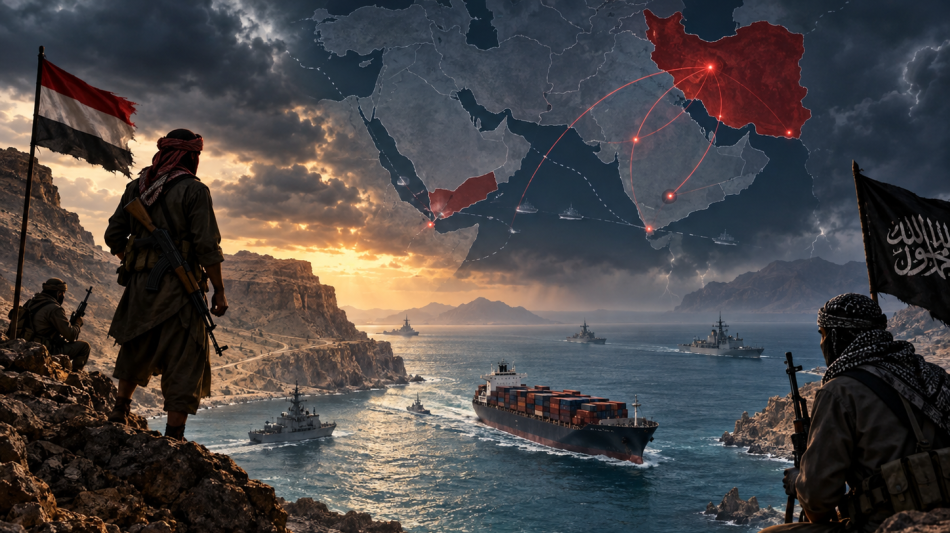
Following the collapse of the Assad regime in Syria and the ascent of Hay’at Tahrir al-Sham (HTS) to power, questions are emerging about the broader regional impact of this seismic shift. One of the most debated scenarios is whether Iran—long an influential player in Syria—could soon face its own regime-shaking upheaval. Could the Islamic Republic’s Ayatollah be next in line to lose his grip on power?

Iran’s Deep Involvement in Syria
Iran has been a steadfast supporter of the former Assad government, providing military advisors, financing, and strategic counsel. For years, Iranian-backed militias played a critical role in propping up the Syrian regime against a multitude of opposition forces. With Assad’s fall, Tehran finds itself facing a new power structure in Damascus—one led by a group previously hostile to both the regime and its foreign backers.

Reduced Regional Influence
The loss of Assad may weaken Iran’s leverage in the Levant, limiting its ability to exert pressure on neighboring countries. A more extremist government in Damascus could seek to push out or marginalize Iranian influence to consolidate its own standing.

Strategic Setback
Iran’s “Shia Crescent” strategy, which sought to create a corridor of allied governments stretching from Tehran to the Mediterranean, appears severely compromised. This setback may embolden Iran’s adversaries at home and abroad, fueling the notion that Tehran’s regime could be similarly vulnerable.

Domestic Pressures in Iran
Even before events in Syria escalated, Iran’s leadership faced growing internal discontent. Public frustration with economic hardships, alleged corruption, and strict social controls has been an undercurrent for years, occasionally erupting into protests.

Economic Challenges
International sanctions have strained Iran’s economy. Unemployment and inflation add to widespread dissatisfaction, weakening the regime’s domestic legitimacy.

Protest Movements
Periodic demonstrations, sometimes met with harsh crackdowns, reveal a restive population demanding reforms. Younger Iranians, especially urban and educated demographics, often use social media to organize protests and call for greater freedoms.

Leadership Questions
Ayatollah Ali Khamenei’s advanced age has sparked debates about succession. Hardline factions and moderate reformists remain divided, raising the possibility of political instability if the supreme leader’s authority wavers.

Could HTS’s Victory Inspire Iranian Opposition?
The question many observers are asking: if a once-fringe, hardline group like HTS can topple a long-entrenched regime in Syria, might Iran’s leadership be more vulnerable than it appears?

Symbolic Resonance
Zhe collapse of Assad—a key ally—damages Tehran’s image of regional ascendancy. Opposition groups in Iran may see HTS’s triumph as a sign that even the most entrenched regimes can crumble under the right conditions.

Geopolitical Shifts
Regional players opposed to Iran’s influence may feel emboldened and offer covert support to Iranian dissidents. A shift in Damascus could reduce Tehran’s ability to move personnel, weapons, or resources across Syria, weakening its strategic depth.

Counterarguments: Why Iran May Weather the Storm
Despite these challenges, it is far from certain that Iran’s leadership is on the brink. The Islamic Republic has shown resilience over four decades, surviving international sanctions, internal protests, and regional conflicts.

Security Apparatus
Iran’s Revolutionary Guard Corps (IRGC) remains a potent force, adept at suppressing unrest. A widespread intelligence network monitors opposition activities, often preventing them from gaining traction.

Ideological Cohesion
Many Iranians still identify with the Islamic Republic’s revolutionary ideals. The regime’s ability to rally nationalist sentiment, especially in times of perceived foreign threats, should not be underestimated.

Lack of a Unified Opposition
Multiple opposition groups inside and outside Iran remain fractured, lacking a coherent leadership to mount a credible challenge. HTS’s ascension in Syria may not easily translate into a similar movement within Iran.

Conclusion: A Cautious Outlook
While the unexpected rise of HTS in Syria has undoubtedly rattled long-standing alliances, it is premature to conclude that Iran’s Ayatollah is next in line to lose power. Tehran’s regime, though facing economic challenges and public dissent, still possesses formidable tools of control and a legacy of resilience.

Yet the region’s shifting geopolitics, coupled with growing discontent at home, suggests that Iran’s leadership must navigate increasingly turbulent waters. If the aftermath of Syria’s transformation continues to erode Tehran’s regional standing, domestic opposition could be emboldened—setting the stage for potential change. Whether that will translate into a full-scale power shift remains uncertain, but the seeds of doubt are undeniably taking root.

Featured


Marhabaan, welcome to the UAE and Dubai!

Marhabaan, welcome to the UAE and Dubai! The "skyward striving" Dubai next to ancient desert cities. Mysterious Bedouins and magnificent mosques exist peacefully alongside futuristic cities. Discover wadis and oases, golden sandy deserts, paradisiacal beaches and Arabian hospitality. The modern and the ancient Orient united in a book for dreaming.On this journey to Dubai and Abu Dhabi in the United Arab Emirates, the fairy tales of 1001 Arabian Nights meet the modern Arab world. These cascading cities enchant with their sky-high skyscrapers, fragrant souks, huge shopping centres and the ancient cultural heritage of the sheikhs.You can choose to stay in 4- or 5-star hotels with breakfast and swimming pools. You also have more options to book excursions so you can feel the magic of the East even more. If you want to do something out of the ordinary, you can spend an extra night in an enchanting hotel in the middle of the emirate's desert. Experience your own fairytale from 1001 nights and look forward to a holiday with plenty of casual extravagance in two superlative desert cities!

Trade and business at the Dubai Gold Souk

If Naif Deira is associated with a specific context, organization, or field, providing more details could help me offer more relevant information. Keep in mind that privacy considerations and ethical guidelines limit the amount of information available about private individuals, especially those who are not public figures. The Dubai Gold Souk is one of the most famous gold markets in the world and is located in the heart of Dubai's commercial business district in Deira. It's a traditional market where you can find a wide variety of gold, silver, and precious stone jewelry. The Gold Souk is known for its extensive selection of jewelry, including rings, bracelets, necklaces, and earrings, often crafted with intricate designs.Variety: The Gold Souk offers a vast array of jewelry designs, with a focus on gold. You can find items ranging from traditional to modern styles.Competitive Pricing: The market is known for its competitive pricing, and bargaining is a common practice. Prices are typically based on the weight of the gold and the craftsmanship involved.Gold and More: While gold is the primary focus, the souk also offers other precious metals such as silver and platinum, as well as a selection of gemstones.Cultural Experience: Visiting the Gold Souk provides not only a shopping experience but also a glimpse into the traditional trading culture of Dubai. The vibrant market is a popular destination for both tourists and locals.Security: The market is generally safe, and there are numerous shops with security measures in place. However, as with any crowded area, it's advisable to take standard precautions regarding personal belongings.Gold Souk is just one part of the larger Deira Souk complex, which also includes the Spice Souk and the Textile Souk. It's a must-visit for those interested in jewelry, and it reflects the rich cultural and trading history of Dubai.

Dubai: Amazing City Center, Night Walking Tour

During this excursion, we leisurely explore Dubai Downtown and Burj Khalifa in the evening, giving you the chance to witness the captivating transformation of the district as it comes alive with the vibrant glow of thousands of lights. As the sun sets, the illuminated facade of Burj Khalifa and the enchanting Dubai Fountain collaborate to produce a genuinely magical atmosphere.Dubai Downtown, also known as Downtown Dubai, is a distinguished and iconic district situated in the heart of Dubai, United Arab Emirates. It is a renowned neighborhood celebrated for its striking architecture, luxurious living, and exceptional entertainment options. At the core of Downtown Dubai stands the Burj Khalifa, a towering skyscraper that holds the title of the world's tallest man-made structure and serves as an emblem of modern Dubai.Burj Khalifa: The focal point of Downtown Dubai, Burj Khalifa, is famous for its groundbreaking height, reaching an impressive 828 meters (2,722 feet). Designed by architect Adrian Smith, its distinctive Y-shaped design encompasses a mix of residential, commercial, and hotel spaces.Dubai Mall: Adjacent to Burj Khalifa is the Dubai Mall, one of the largest shopping malls globally, featuring an extensive array of retail outlets, from high-end boutiques to international brands. The mall also provides various dining options, and entertainment attractions like an indoor ice rink and an aquarium, and hosts the mesmerizing Dubai Fountain.Dubai Fountain: Located just outside the Dubai Mall, the Dubai Fountain is a captivating attraction that presents a nightly spectacle of water, music, and light, captivating visitors with its perfectly synchronized performances.Emaar Boulevard: Stretching through Downtown Dubai, this boulevard is adorned with restaurants, cafes, and shops, making it a popular spot for leisurely strolls, dining, and people-watching.Luxury Living: Downtown Dubai boasts numerous upscale residential buildings and hotels, making it an appealing locale for those seeking a sophisticated urban lifestyle.Cultural Attractions: The Dubai Opera, an iconic cultural venue within the district, hosts a diverse range of performances, including opera, ballet, concerts, and theater productions.Transportation: Downtown Dubai is well-connected through public transportation, including the Dubai Metro, facilitating easy access to other parts of the city.In summary, Downtown Dubai is a dynamic and vibrant district that stands as a testament to Dubai's modernity and grandeur. It seamlessly combines architectural wonders with shopping, entertainment, and cultural offerings, creating a truly extraordinary destination.