RBGPF
1.9700
The United States is once again redefining its alliances in the Horn of Africa. Faced with an escalating war against Iran, a volatile Red Sea and the threat of maritime disruption, the Trump administration has quietly courted one of the world's most repressive governments: Eritrea. The overtures — meetings in Cairo and Asmara, hints of sanctions relief and talk of a strategic reset — have provoked both intrigue and alarm. They also reveal the hard calculus driving America’s diplomacy in an era when access to sea lanes may be as vital as any ideological commitment.
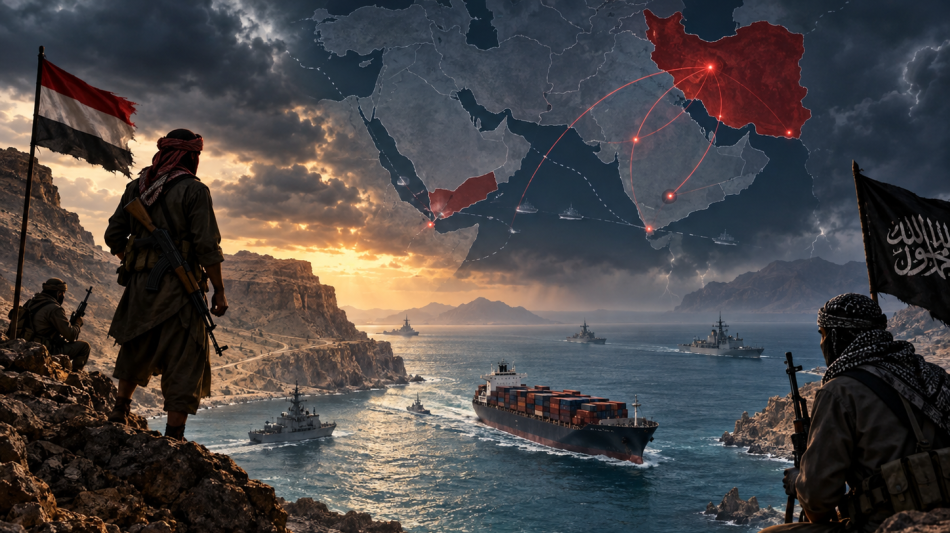
When Ayatollah Ali Khamenei was killed in U.S. and Israeli air strikes on Tehran in March 2026, the Middle East descended into a war that quickly spilled across the region. Iran’s proxies in Yemen, the Houthis, threatened to cut the Bab el‑Mandeb strait at the mouth of the Red Sea and boasted that they could shut down commercial shipping. Within weeks, Houthi drones and missiles were harassing vessels. In May 2025 the United States had concluded a tenuous ceasefire with the Houthis after a two‑month bombing campaign, but the lull did little to reassure shipping companies, and a carrier strike group later sailed around the Cape of Good Hope rather than risk the shorter route through the Red Sea. For Washington the geopolitical stakes were clear: if the Strait of Hormuz on the east side of the Arabian Peninsula could be closed by Iran, the Red Sea corridor on the west could not be allowed to fail.
Enter Eritrea. Stretching more than 1 000 kilometres along the Red Sea opposite Yemen, the small African state possesses some of the most coveted coastal real estate on the planet. Its ports, archipelagos and arid coastline could offer docking, resupply and surveillance points for any power seeking to patrol the waterway. For years, however, Asmara was treated as a pariah. Sanctions imposed in 2021 for its brutal incursions into Ethiopia’s Tigray region isolated the regime. Western governments criticised its indefinite military conscription, the absence of elections since independence in 1993 and systematic repression of dissent. Human Rights Watch and the United Nations listed arbitrary detention, enforced disappearances and crimes against humanity. Many compared the one‑party state to North Korea. Eritrea was, in the words of one U.S. congressional report, a “militarised authoritarian state” in which conscripts were forced to work for years under threat of punishment.
A secretive diplomatic charm offensive
Against this backdrop, the Trump administration began exploring a reset. Massad Boulos, the president’s senior envoy for Africa, held private meetings with Eritrea’s veteran leader, Isaias Afwerki, in Cairo and New York. Egyptian President Abdel Fattah al‑Sisi acted as go‑between. Officials familiar with the talks say Washington offered to ease some sanctions in exchange for access to Eritrean ports and cooperation on maritime security. A second meeting was planned for Asmara. The State Department did not publicly acknowledge the initiative, but a spokesperson confirmed that the administration wished to “strengthen U.S. ties with the people and government of Eritrea”.
On the surface, the logic seems hard‑headed. If the United States is fighting a war with Iran and trying to keep the Red Sea open, it needs partners on the African shore. With Sudan in turmoil, Ethiopia distracted by internal strife and Djibouti hosting multiple foreign bases, Eritrea’s underutilised coastline is appealing. “The Red Sea region is too strategically important for the U.S. not to try to reopen ties with Eritrea,” a senior American official said privately. Some believe that bringing Asmara into Washington’s orbit would deprive Iran of another foothold and prevent Beijing or Moscow from consolidating influence on the western flank of the Middle East.
Yet the manner in which the talks have been conducted — behind closed doors, without congressional oversight or public debate — has fuelled speculation about a “secret alliance”. There is no signed treaty or formal announcement, only a series of leaks and carefully worded denials. For a president known for his transactional approach to foreign policy and his penchant for surprises, the opacity is not unusual. Nevertheless, the prospect of striking a bargain with Eritrea without demanding reforms has alarmed human‑rights advocates.
Eritrea’s record: repression at home, adventurism abroad
Eritrea’s president, Isaias Afwerki, has ruled his country since it won independence from Ethiopia in 1993. He has never held national elections and has shelved the constitution ratified in 1997. There is only one legal political party. The legislature has not convened in more than a decade. Independent media were shut down in 2001, and journalists and dissidents have vanished into secret prisons. Freedom House ranks Eritrea alongside North Korea as one of the least free places on earth. The national service programme, introduced during the border war with Ethiopia in the late 1990s, obliges men up to the age of sixty and women up to twenty‑seven to serve in the military or civil service indefinitely; conscripts often work for decades, earning paltry wages and facing arbitrary punishments. The United Nations Commission of Inquiry has said that these policies amount to enslavement.
The regime has also been accused of fomenting instability beyond its borders. From 2020 until late 2022 Eritrean troops fought alongside Ethiopian federal forces and Amhara militias against the Tigray People’s Liberation Front, contributing to a humanitarian catastrophe that claimed hundreds of thousands of lives. Despite a peace agreement, Eritrean units remain in parts of Tigray and have been implicated in looting and human‑rights abuses. Eritrean soldiers have been accused of smuggling goods and trafficking refugees. The government’s military adventures have strained relations with neighbouring Ethiopia and Sudan, even as Asmara cultivates ties with Russia and the United Arab Emirates to extract mining revenue and arms deals.
Isaias himself is a study in contradictions. In a speech marking the 35th anniversary of Eritrean independence, he devoted pages to denouncing what he called America’s “unipolar hegemony” and belittling the economic and military capabilities of the United States. He warned that Washington’s interventions in Iran and Venezuela were unlawful and lectured about the need for a new world order based on fairness and justice. He claimed the United States had accumulated unsustainable debt and undermined global stability through offshoring and intimidation. Yet he offered no mention of his country’s own systemic abuses or the diplomatic overtures reportedly underway. His government rejected a United Nations visit by human‑rights experts and continues to detain thousands of political prisoners.
Analysts say this rhetorical barrage serves a purpose. By casting himself as a champion of sovereignty and a critic of Western dominance, Isaias distracts from Eritrea’s collapsing infrastructure, intermittent electricity supply and widespread poverty. Only about half of Eritreans have access to electricity, and less than a fifth use the internet. Meanwhile, young people flee in droves to escape indefinite conscription and economic stagnation. The regime blames sanctions and conspiracies for these problems, but decades of central planning and militarisation are largely responsible. Even as he condemns American interventionism, Isaias relies on foreign mining investments and remittances from the diaspora to prop up his economy.
Strategic calculations and ethical dilemmas
Why, then, would Washington seek to rehabilitate such a regime? The answer lies in the strategic map. Iran’s influence in the Horn of Africa has waxed and waned over the decades. In the early 2000s Tehran cultivated close ties with Sudan and Eritrea, establishing naval access points and using soft‑power tools such as development aid and religious networks. But after the Gulf states increased their engagement in the region, and following renewed sanctions on Iran, Sudan, Djibouti and Eritrea severed or scaled back relations with Tehran. Eritrea aligned itself with Riyadh and Abu Dhabi, which offered financial assistance and military cooperation linked to the war in Yemen. By courting Eritrea now, Washington hopes to consolidate that shift and ensure that any residual Iranian presence on the Red Sea is neutered.
From a geopolitical perspective, the plan has logic. Eritrea controls the Dahlak Archipelago, a chain of islands that could serve as a naval outpost. Its ports at Massawa and Assab are deep enough for modern warships. The country lies directly opposite Yemen’s Hodeidah and the Houthi‑controlled coast, making it an ideal staging ground for monitoring missile launches and intercepting drones. With shipping insurance costs rising and energy markets jittery, the prospect of a reliable American‑Eritrean partnership is attractive to investors and defence planners alike.
Yet the ethical costs are steep. Lifting sanctions without demanding improvements in Eritrea’s human‑rights record could embolden other authoritarian regimes to leverage strategic assets for impunity. Critics argue that normalisation would reward a government that has shown little willingness to reform. “Normally, when we lift sanctions, the country has done something to merit it,” one former U.S. intelligence official observed. “It is the exact same militarised, autocratic state that it has been since 1993. If we are going to reward them, what are we getting for it?” There is also concern that closer ties with Washington might embolden Isaias to clamp down further on dissidents, secure in the knowledge that strategic necessity outweighs moral condemnation.
There are practical risks, too. Eritrea’s relationship with the United States has been volatile. After years of isolation, Asmara may be wary of becoming dependent on a superpower that could change course after the next election. The regime’s long‑standing anti‑American rhetoric and its alliance with other pariah states such as Russia and North Korea suggest that any partnership will be transactional and fragile. In his independence day address Isaias openly questioned whether Trump’s policies could reverse America’s decline and mocked Washington’s claims to military supremacy. He lamented “threats and intimidation” and asked why Iran alone should be sanctioned for pursuing nuclear technology. These remarks underline the ideological gulf between the two governments.
In the broader Horn of Africa, a U.S.–Eritrea alignment could also upset delicate balances. Ethiopia and Eritrea remain locked in disputes over borders and access to the sea. Ethiopia’s government has hinted at historic claims to Eritrean coastline, raising fears of renewed conflict. Sudan is embroiled in civil war, Somalia remains unstable and Djibouti hosts China’s first overseas military base alongside American, French, Japanese and Italian forces. Any perception that Washington is endorsing Eritrea could deepen rivalries and encourage other powers to strengthen their own proxies. Russia, which has supplied arms to Eritrea and is expanding its presence in Africa, may respond by deepening ties with Ethiopia or Sudan. Saudi Arabia and the United Arab Emirates, long‑standing patrons of Asmara, could resent an American incursion into their sphere of influence.
The narrow path between realism and complicity
As the war with Iran rages, the temptation to make quick deals will only grow. The Biden administration faced similar pressures when the Houthis first attacked ships in the Red Sea, and it launched air strikes without resolving underlying conflicts. Trump, with his penchant for bold gestures, appears willing to gamble on an illiberal partner if it offers tactical advantages. Eritrea’s president, ever the political survivor, is adept at extracting concessions from larger powers while giving little in return. The result could be a marriage of convenience that serves immediate security needs but undermines long‑term stability and values.
For a policy to be sustainable, Washington would need to insist on tangible human‑rights improvements in Eritrea as part of any agreement. These could include a verifiable plan to end indefinite conscription, release political prisoners and allow independent media. Sanctions relief could be made conditional on such steps, rather than granted outright. Regional diplomacy with Ethiopia and Sudan would also be essential to prevent the new partnership from inflaming territorial disputes. Finally, transparency is crucial: American voters and lawmakers deserve to know when their government contemplates alliances with regimes that run counter to democratic principles.
The calculus facing the United States is stark. To keep oil flowing and commerce moving, it needs control of the Red Sea. To check Iran’s influence, it must maintain pressure on the Houthis and secure alternative supply routes. But courting a brutal dictatorship carries moral hazards and strategic pitfalls. As Isaias Afwerki lectures the world about justice while presiding over a security state, he provides a mirror for Western hypocrisy. Whether Trump’s secretive outreach to Eritrea will prove a masterstroke or a misstep remains to be seen. What is certain is that the people of Eritrea — long conscripted, silenced and marginalized — deserve more than to be pawns in a geopolitical game.