Dubai Telegraph - Iran lifts Dollar, sinks Euro

EUR -
AED 4.17633
AFN 75.629335
ALL 93.552771
AMD 417.030966
AOA 1042.80361
ARS 1704.08887
AUD 1.626138
AWG 2.046943
AZN 1.935917
BAM 1.952025
BBD 2.2907
BDT 140.39847
BHD 0.428569
BIF 3397.314667
BMD 1.137191
BND 1.46722
BOB 12.800638
BRL 5.823099
BSD 1.137315
BTN 109.025459
BWP 15.615418
BYN 3.262719
BYR 22288.937268
BZD 2.287396
CAD 1.604786
CDF 2570.050757
CHF 0.931075
CLF 0.027296
CLP 1074.258612
CNY 7.701172
CNH 7.693897
COP 3662.504526
CRC 517.601237
CUC 1.137191
CUP 30.135553
CVE 110.052159
CZK 24.162115
DJF 202.53631
DKK 7.474828
DOP 66.173475
DZD 151.706865
EGP 57.677624
ERN 17.05786
ETB 183.576015
FJD 2.535028
FKP 0.853619
GBP 0.854712
GEL 2.985181
GGP 0.853619
GHS 13.238804
GIP 0.853619
GMD 84.151858
GNF 9978.701225
GTQ 8.678178
GYD 237.859393
HKD 8.917946
HNL 30.465749
HRK 7.534799
HTG 148.67573
HUF 360.408129
IDR 20546.192556
ILS 3.475028
IMP 0.853619
INR 109.069721
IQD 1489.951194
IRR 1563637.181069
ISK 142.694445
JEP 0.853619
JMD 179.932012
JOD 0.806281
JPY 186.172908
KES 147.378604
KGS 99.447734
KHR 4594.296448
KMF 493.54069
KRW 1670.193171
KWD 0.352995
KYD 0.947804
KZT 540.44241
LAK 25779.595737
LBP 101850.655884
LKR 382.440362
LRD 205.8564
LSL 18.996477
LTL 3.357829
LVL 0.687875
LYD 7.285909
MAD 10.647109
MDL 19.989132
MGA 4890.584631
MKD 61.411231
MMK 2387.57629
MNT 4084.244985
MOP 9.186735
MRU 45.402192
MUR 53.834955
MVR 17.569167
MWK 1972.163882
MXN 19.853774
MYR 4.645991
MZN 72.664945
NAD 18.997311
NGN 1550.502517
NIO 41.849064
NOK 10.993448
NPR 174.433646
NZD 1.966743
OMR 0.437251
PAB 1.13732
PEN 3.864626
PGK 5.092152
PHP 70.201626
PKR 315.920611
PLN 4.321239
PYG 6877.698554
QAR 4.146081
RON 5.233298
RSD 117.409274
RUB 88.729742
RWF 1674.228299
SAR 4.261836
SBD 9.189757
SCR 16.796815
SDG 682.886009
SEK 11.06594
SGD 1.468358
SLE 27.548438
SOS 649.943012
SRD 42.907318
STD 23537.551034
STN 24.45303
SVC 9.951753
SZL 18.994182
THB 38.255662
TJS 10.497912
TMT 3.980167
TND 3.369483
TRY 53.847135
TTD 7.724129
TWD 36.761948
TZS 2998.206634
UAH 51.078614
UGX 4270.796627
USD 1.137191
UYU 45.671671
UZS 13619.659623
VES 843.00104
VND 29925.172664
VUV 135.426139
WST 3.134462
XAF 654.716688
XAG 0.019387
XAU 0.000279
XCD 3.073315
XCG 2.049736
XDR 0.813579
XOF 654.69083
XPF 119.331742
YER 271.276853
ZAR 19.033263
ZMK 10236.078763
ZMW 21.251554
ZWL 366.174934
  • CMSC

    0.0530

    21.778

    +0.24%

  • RBGPF

    -0.7300

    66

    -1.11%

  • RYCEF

    0.8000

    18.87

    +4.24%

  • NGG

    -0.7250

    81.575

    -0.89%

  • GSK

    0.7900

    52.14

    +1.52%

  • VOD

    0.7350

    15.885

    +4.63%

  • BTI

    -0.2450

    60.715

    -0.4%

  • AZN

    1.2500

    170.51

    +0.73%

  • RELX

    1.4800

    35.89

    +4.12%

  • JRI

    -0.1100

    12.95

    -0.85%

  • BCC

    0.5000

    78.34

    +0.64%

  • CMSD

    0.0400

    22.02

    +0.18%

  • RIO

    0.4200

    91.64

    +0.46%

  • BP

    -1.1200

    42.7

    -2.62%

  • BCE

    0.0500

    21.35

    +0.23%


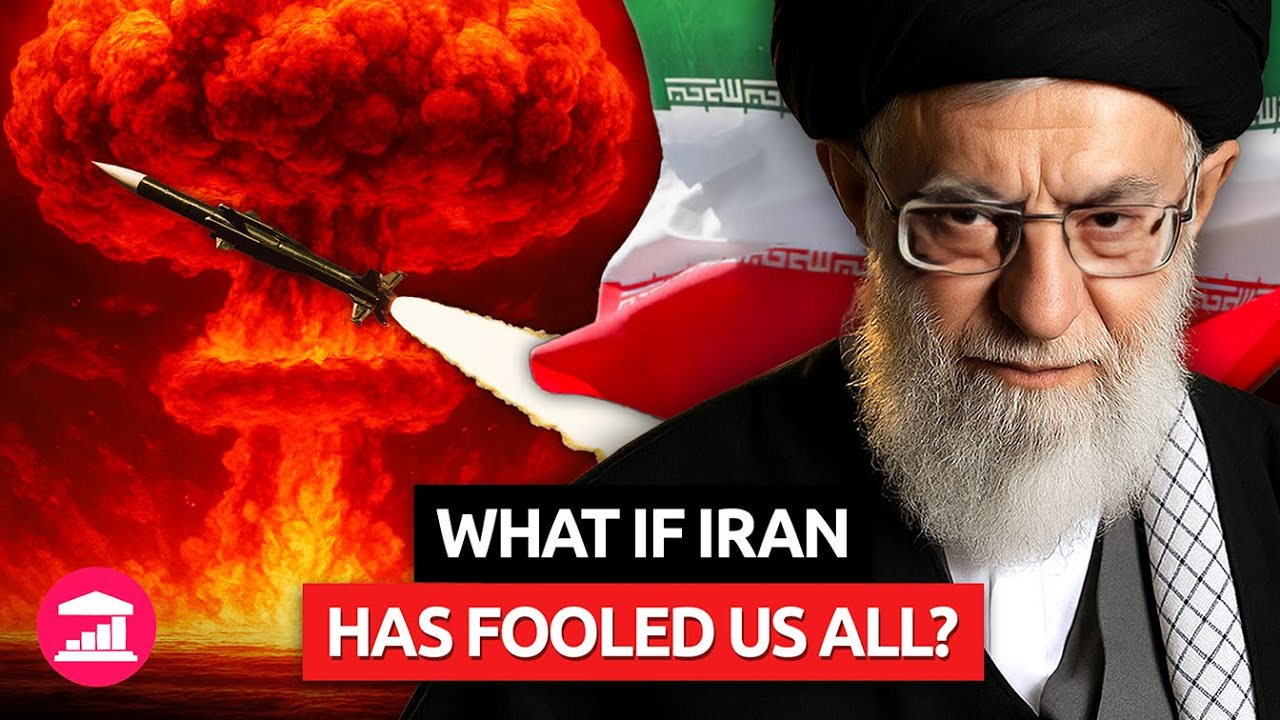
Iran lifts Dollar, sinks Euro


To say the dollar is crushing the euro sounds like tabloid economics. Yet the first full geopolitical stress test of 2026 has produced exactly the directional result implied by that phrase. Money is again flooding toward the U.S. currency while the euro is being repriced against a harsher reality: Europe remains more vulnerable to imported energy shocks, trade disruption and slower growth than the United States.

By the end of the first week of March, EUR/USD was trading around 1.16, the dollar index was back near 99, and oil had surged above $90 a barrel as traders priced a wider Middle East disruption. That is not a historic collapse of the single currency. It is, however, a decisive reminder of how quickly markets still fall back into the old hierarchy when fear becomes the dominant force.

Iran is central to that hierarchy test, not because its economy sets the global reserve system, but because it sits at the junction where sanctions, energy flows, shipping lanes and regional war all collide. Internally, the country has been living through a severe monetary breakdown. The rial plunged to roughly 1.5 million to the dollar earlier this year, protests erupted, and the state’s response deepened the atmosphere of repression and uncertainty. Externally, every escalation connected to Iran forces markets to reprice the cost of moving oil, gas, cargo and capital.

The Strait of Hormuz is the critical mechanism. Roughly 20 million barrels a day of oil and about a fifth of global LNG trade move through that narrow channel. Any threat there instantly travels through crude contracts, gas benchmarks, marine insurance, tanker availability and inflation expectations. Europe does not have to be the largest direct buyer of Hormuz crude to be hit hard. It is enough that Europe is the more energy-sensitive, more import-dependent, and more politically fragmented economic bloc.

That vulnerability is now colliding with a euro area that was improving, but still far from robust. Inflation in February edged back up to 1.9 percent. Output in the fourth quarter of 2025 rose just 0.2 percent. The ECB’s own baseline for 2026 is growth of 1.2 percent. Those are not the numbers of an economy built to absorb a prolonged external energy shock without political or financial strain. If fuel, gas and freight costs remain elevated, the euro area is pushed back toward the policy trap that haunted it after 2022: softer activity, stickier prices, and a currency market that demands a discount for both.

The logistics channel makes the shock even broader than the oil story suggests. Trade between Asia, the Gulf and Europe is already being rerouted or repriced. Airfreight costs on Asia-Europe lanes have jumped sharply. Shipping delays, war-risk premiums and booking suspensions are beginning to feed through supply chains. That matters for Europe because the euro is not merely a currency. It is the price label attached to an industrial and consumer economy that still depends on long, vulnerable trade arteries.

The United States is not immune. Higher oil prices, tighter freight and nervous markets will still hit American households and businesses. But the U.S. enters this episode with a different energy position, deeper domestic capital markets and a far greater capacity to attract crisis money. In other words, the same shock that raises inflation risk can also increase demand for the currency in which that shock is being hedged. That is a privilege the euro still does not fully share.

This is why the phrase “monetary order” is not exaggerated. The international order is not defined only by speeches about multipolarity or by occasional non-dollar trade settlements. It is defined by what investors, banks, commodity traders, insurers and central banks actually do when a geopolitical shock threatens liquidity. They reach for the currency that dominates settlement, collateral, sovereign debt markets and emergency funding. They reach for the dollar.

Even the reserve data tells a more sober story than the rhetoric around de-dollarization. Diversification is real, but it remains gradual rather than revolutionary. In the latest IMF reserve snapshot for 2025’s second quarter, the dollar still accounted for 56.32 percent of allocated foreign-exchange reserves. The euro stood at 21.13 percent. That is a meaningful role for the single currency, but it is not monetary parity. And when a live geopolitical shock erupts on the edge of the world’s most important energy corridor, that gap becomes political as well as financial.

Iran’s turmoil sharpens the lesson. A collapsing currency is not just an economic symptom. It is a measure of shrinking state credibility. The more households and firms in Iran think in dollars, gold or foreign stores of value, the less authority the rial has as a unit of account, a store of value and a symbol of sovereignty. Sanctions then do more than cut revenue; they tighten the external constraints around a country whose domestic money is already losing legitimacy. That is why chaos in Iran can radiate into the wider monetary system without Iran ever becoming a reserve-currency power itself.

There is also a strategic irony here. For years, the most confident forecasts of a post-dollar world assumed that repeated sanctions, geopolitical fragmentation and alternative payment channels would steadily weaken America’s monetary primacy. Yet in the current crisis, the opposite short-term effect has emerged. The harsher the fear, the more the market reverts to dollar behavior. That does not invalidate the long debate over a more multipolar currency future. It simply proves that the future has not arrived yet.

For Europe, the conclusion is uncomfortable but unavoidable. The euro cannot become a true equal to the dollar on institutional elegance alone. It needs faster and more durable growth, deeper capital markets, more unified fiscal capacity, and an energy system that is far less exposed to external shocks. Until those foundations are stronger, every major geopolitical disruption will tell the same story: the dollar gathers panic, the euro absorbs vulnerability.

For markets, the next chapter depends on duration. If the conflict is contained, shipping stabilizes and energy infrastructure avoids further damage, part of the dollar’s new crisis premium can evaporate. But if Hormuz remains constrained, if Gulf export capacity is knocked back further, or if sanctions and retaliation intensify, the euro will face a far tougher test. In that world, a move toward much lower euro levels would stop being a speculative talking point and start becoming the working assumption of 2026.

So the slogan is dramatic, but the underlying verdict is real. The dollar is not obliterating the euro. It is, however, beating it decisively in the one contest that still defines the system when panic strikes: the market’s instantaneous vote on which currency can carry fear. Chaos in Iran has not created a new monetary order. It has exposed, with uncomfortable clarity, how much of the old one still survives.
Featured


Marhabaan, welcome to the UAE and Dubai!

Marhabaan, welcome to the UAE and Dubai! The "skyward striving" Dubai next to ancient desert cities. Mysterious Bedouins and magnificent mosques exist peacefully alongside futuristic cities. Discover wadis and oases, golden sandy deserts, paradisiacal beaches and Arabian hospitality. The modern and the ancient Orient united in a book for dreaming.On this journey to Dubai and Abu Dhabi in the United Arab Emirates, the fairy tales of 1001 Arabian Nights meet the modern Arab world. These cascading cities enchant with their sky-high skyscrapers, fragrant souks, huge shopping centres and the ancient cultural heritage of the sheikhs.You can choose to stay in 4- or 5-star hotels with breakfast and swimming pools. You also have more options to book excursions so you can feel the magic of the East even more. If you want to do something out of the ordinary, you can spend an extra night in an enchanting hotel in the middle of the emirate's desert. Experience your own fairytale from 1001 nights and look forward to a holiday with plenty of casual extravagance in two superlative desert cities!

Trade and business at the Dubai Gold Souk

If Naif Deira is associated with a specific context, organization, or field, providing more details could help me offer more relevant information. Keep in mind that privacy considerations and ethical guidelines limit the amount of information available about private individuals, especially those who are not public figures. The Dubai Gold Souk is one of the most famous gold markets in the world and is located in the heart of Dubai's commercial business district in Deira. It's a traditional market where you can find a wide variety of gold, silver, and precious stone jewelry. The Gold Souk is known for its extensive selection of jewelry, including rings, bracelets, necklaces, and earrings, often crafted with intricate designs.Variety: The Gold Souk offers a vast array of jewelry designs, with a focus on gold. You can find items ranging from traditional to modern styles.Competitive Pricing: The market is known for its competitive pricing, and bargaining is a common practice. Prices are typically based on the weight of the gold and the craftsmanship involved.Gold and More: While gold is the primary focus, the souk also offers other precious metals such as silver and platinum, as well as a selection of gemstones.Cultural Experience: Visiting the Gold Souk provides not only a shopping experience but also a glimpse into the traditional trading culture of Dubai. The vibrant market is a popular destination for both tourists and locals.Security: The market is generally safe, and there are numerous shops with security measures in place. However, as with any crowded area, it's advisable to take standard precautions regarding personal belongings.Gold Souk is just one part of the larger Deira Souk complex, which also includes the Spice Souk and the Textile Souk. It's a must-visit for those interested in jewelry, and it reflects the rich cultural and trading history of Dubai.

Dubai: Amazing City Center, Night Walking Tour

During this excursion, we leisurely explore Dubai Downtown and Burj Khalifa in the evening, giving you the chance to witness the captivating transformation of the district as it comes alive with the vibrant glow of thousands of lights. As the sun sets, the illuminated facade of Burj Khalifa and the enchanting Dubai Fountain collaborate to produce a genuinely magical atmosphere.Dubai Downtown, also known as Downtown Dubai, is a distinguished and iconic district situated in the heart of Dubai, United Arab Emirates. It is a renowned neighborhood celebrated for its striking architecture, luxurious living, and exceptional entertainment options. At the core of Downtown Dubai stands the Burj Khalifa, a towering skyscraper that holds the title of the world's tallest man-made structure and serves as an emblem of modern Dubai.Burj Khalifa: The focal point of Downtown Dubai, Burj Khalifa, is famous for its groundbreaking height, reaching an impressive 828 meters (2,722 feet). Designed by architect Adrian Smith, its distinctive Y-shaped design encompasses a mix of residential, commercial, and hotel spaces.Dubai Mall: Adjacent to Burj Khalifa is the Dubai Mall, one of the largest shopping malls globally, featuring an extensive array of retail outlets, from high-end boutiques to international brands. The mall also provides various dining options, and entertainment attractions like an indoor ice rink and an aquarium, and hosts the mesmerizing Dubai Fountain.Dubai Fountain: Located just outside the Dubai Mall, the Dubai Fountain is a captivating attraction that presents a nightly spectacle of water, music, and light, captivating visitors with its perfectly synchronized performances.Emaar Boulevard: Stretching through Downtown Dubai, this boulevard is adorned with restaurants, cafes, and shops, making it a popular spot for leisurely strolls, dining, and people-watching.Luxury Living: Downtown Dubai boasts numerous upscale residential buildings and hotels, making it an appealing locale for those seeking a sophisticated urban lifestyle.Cultural Attractions: The Dubai Opera, an iconic cultural venue within the district, hosts a diverse range of performances, including opera, ballet, concerts, and theater productions.Transportation: Downtown Dubai is well-connected through public transportation, including the Dubai Metro, facilitating easy access to other parts of the city.In summary, Downtown Dubai is a dynamic and vibrant district that stands as a testament to Dubai's modernity and grandeur. It seamlessly combines architectural wonders with shopping, entertainment, and cultural offerings, creating a truly extraordinary destination.