Dubai Telegraph - EU India deal gains unveiled

EUR -
AED 4.240569
AFN 75.054318
ALL 91.799489
AMD 419.472559
ANG 2.067301
AOA 1058.842636
ARS 1741.160096
AUD 1.618209
AWG 2.078426
AZN 1.961829
BAM 1.955819
BBD 2.324312
BDT 142.061362
BGN 1.943837
BHD 0.435378
BIF 3459.424484
BMD 1.154681
BND 1.466708
BOB 13.912194
BRL 5.934364
BSD 1.154006
BTN 110.210579
BWP 15.608352
BYN 3.510718
BYR 22631.748964
BZD 2.321032
CAD 1.605197
CDF 2667.313005
CHF 0.943761
CLF 0.02794
CLP 1103.240443
CNY 7.74612
CNH 7.746923
COP 3598.251789
CRC 519.802732
CUC 1.154681
CUP 30.599048
CVE 110.676187
CZK 24.273186
DJF 205.209587
DKK 7.475639
DOP 68.183772
DZD 154.276417
EGP 59.743428
ERN 17.320216
ETB 185.961393
FJD 2.550171
FKP 0.853464
GBP 0.855301
GEL 3.027171
GGP 0.853464
GHS 13.273097
GIP 0.853464
GMD 85.446361
GNF 10135.213023
GTQ 8.813199
GYD 241.440224
HKD 9.056296
HNL 31.095665
HRK 7.533713
HTG 150.830793
HUF 365.61586
IDR 20372.038111
ILS 3.525184
IMP 0.853464
INR 110.659611
IQD 1513.209542
IRR 1587195.731313
ISK 139.970003
JEP 0.853464
JMD 182.121746
JOD 0.818689
JPY 178.342838
KES 149.473898
KGS 100.976904
KHR 4678.767972
KMF 491.894338
KPW 1039.21333
KRW 1554.373959
KWD 0.356554
KYD 0.961722
KZT 516.622716
LAK 25841.76224
LBP 103401.690197
LKR 379.793641
LRD 201.665359
LSL 18.787098
LTL 3.409473
LVL 0.698455
LYD 7.314937
MAD 10.944039
MDL 20.092454
MGA 4996.881974
MKD 61.508011
MMK 2424.543867
MNT 4152.093487
MOP 9.323911
MRU 46.256529
MUR 54.40861
MVR 17.793385
MWK 2004.526173
MXN 19.789329
MYR 4.695629
MZN 73.778652
NAD 18.786058
NGN 1529.767728
NIO 42.284321
NOK 10.772978
NPR 176.336163
NZD 1.998493
OMR 0.443978
PAB 1.154016
PEN 3.882612
PGK 5.129382
PHP 72.452741
PKR 320.13563
PLN 4.340948
PYG 6941.156713
QAR 4.209101
RON 5.25438
RSD 117.372186
RUB 97.57057
RWF 1699.690534
SAR 4.331757
SBD 9.259964
SCR 15.86606
SDG 694.538639
SEK 11.272891
SGD 1.467005
SHP 0.855288
SLE 28.462373
SLL 24213.075314
SOS 659.503467
SRD 43.608815
STD 23899.566849
STN 24.392638
SVC 10.098053
SYP 15013.16356
SZL 18.786575
THB 38.358639
TJS 10.657648
TMT 4.041384
TND 3.367628
TOP 2.780195
TRY 56.161498
TTD 7.836041
TWD 36.630181
TZS 3054.856537
UAH 51.511748
UGX 4524.004191
USD 1.154681
UYU 46.480244
UZS 13579.049465
VES 971.299246
VND 30008.428977
VUV 135.387724
WST 3.159195
XAF 655.957
XAG 0.018301
XAU 0.000269
XCD 3.120584
XCG 2.079911
XDR 0.816419
XOF 655.957
XPF 119.331742
YER 273.110909
ZAR 18.769751
ZMK 10393.509189
ZMW 22.30231
ZWL 371.806833
SSP 6523.082474
MXV 2.244124
  • CMSD

    -0.0800

    20.24

    -0.4%

  • JRI

    -0.0500

    11.96

    -0.42%

  • RBGPF

    1.9700

    69.99

    +2.81%

  • CMSC

    -0.0300

    20.42

    -0.15%

  • BCE

    0.0800

    23.47

    +0.34%

  • BCC

    -0.1900

    75.25

    -0.25%

  • RYCEF

    -0.5000

    19.04

    -2.63%

  • RIO

    -2.3200

    97.64

    -2.38%

  • NGG

    -1.9000

    74.96

    -2.53%

  • GSK

    1.9200

    50.05

    +3.84%

  • VOD

    0.1300

    17.53

    +0.74%

  • RELX

    1.9200

    35.72

    +5.38%

  • BP

    -0.1700

    45.93

    -0.37%

  • AZN

    3.6100

    163.78

    +2.2%

  • BTI

    2.0500

    57.29

    +3.58%


EU India deal gains unveiled


On 26 January 2026 negotiators from Brussels and New Delhi announced that they had finally concluded a free‑trade agreement (FTA) after nearly two decades of on‑off negotiations. European Commission President Ursula von der Leyen described it as the “mother of all deals”. The pact – which still requires legal revision and ratification in both the European Parliament and the Indian parliament – is broad in scope. It will eventually eliminate or reduce tariffs on over 90 % of EU exports to India, save European companies around €4 billion per year in duties and double EU exports to India by 2032. In return, the EU will cut tariffs to zero on about 90 % of Indian goods at launch and extend duty‑free access to 93 % within seven years. The agreement complements a newly signed Security and Defence Partnership that extends cooperation into areas such as maritime security, cyber‑defence and counterterrorism, signalling that the relationship now goes well beyond commerce.

Europe’s economic gains
Market access to a massive growth engine
India’s economy – valued at roughly $4.2 trillion and forecast to grow faster than any other major economy – is the EU’s tenth‑largest export market. EU goods face a weighted‑average tariff of about 9.3 % when entering India. Under the FTA, India will eliminate or reduce tariffs on 96.6 % of EU exports by value. Tariffs on roughly 30 % of goods will fall to zero immediately, while remaining duties will be phased out over five, seven or ten years. High barriers on automobiles and industrial goods are set to tumble: duties on cars will fall from 110 % to 10 % over five years under a quota for 250 000 vehicles; tariffs of up to 44 % on machinery, 22 % on chemicals and 11 % on pharmaceuticals will be scrapped. For European vintners and distillers, India’s prohibitive 150 % wine tariff will drop to 20–30 % and duties on spirits will fall to 40 %.

The EU’s exporters stand to benefit disproportionately in sectors where India currently imposes the steepest barriers. According to an Allianz Research estimate, an ambitious FTA could boost EU exports by USD 19.2 billion per year (about +0.3 % of total EU exports) and raise EU GDP by +0.1 percentage points annually. Germany, France and Italy – with strong industrial and machinery exports – would gain the most. The EU also expects improved access in financial and maritime services, stronger intellectual‑property protection and simplified customs procedures, making it easier for European firms to invest in and operate within the Indian market.

Securing supply chains and reducing dependency on China
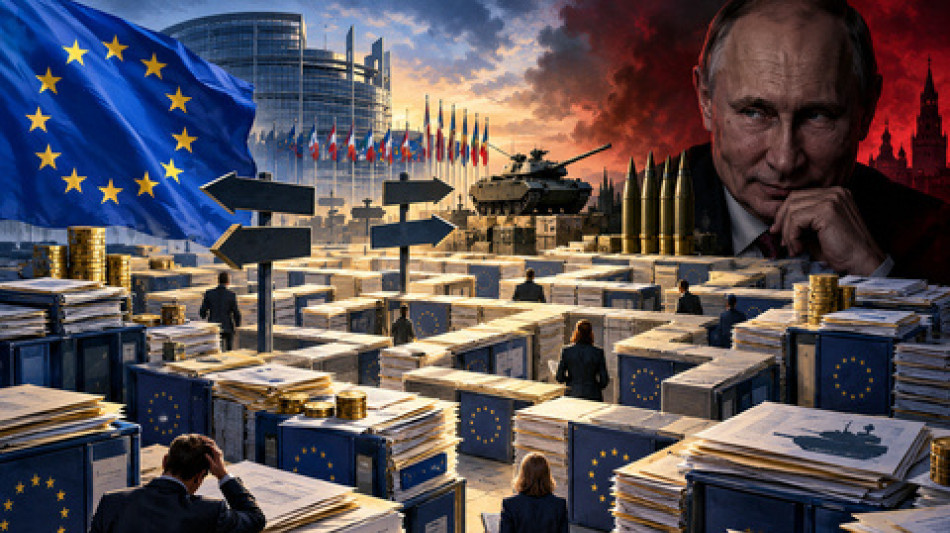
Beyond the immediate tariff windfall, the FTA is part of a broader strategy to diversify supply chains and reduce reliance on China. A Reuters analysis notes that for Europe the deal provides a route to “support supply‑chain diversification and reduce reliance on China” while tapping India’s fast‑growing market. EU trade with the United States and China dwarfs its trade with India – €873 billion and €736 billion in goods respectively in 2024 – but both relationships have become more uncertain. The return of U.S. tariff threats and growing geopolitical friction with Beijing have pushed Brussels to accelerate deals with Mercosur, Mexico, Indonesia and now India.

India’s demographic scale offers long‑term opportunities. The agreement opens a market of 1.4 billion consumers to European companies with lower tariffs and better regulatory cooperation. Crucially, it provides a foothold in sectors where China currently dominates global supply chains. The pact’s digital‑trade provisions set rules on data flows, privacy and standards, allowing European technology firms to collaborate with India’s vast digital workforce. It also contains labour, environment and women’s empowerment commitments, aligning trade flows with the EU’s sustainability agenda.

Strategic and defence dividends
The simultaneous Security and Defence Partnership gives the trade accord a geopolitical dimension. Signed on 27 January 2026, the pact builds a comprehensive framework for cooperation in maritime security, counterterrorism, cyber‑defence and emerging technologies. EU foreign policy chief Kaja Kallas said the partnership marks a new phase in relations and reflects how “the EU and India see the world changing in similar ways”. By aligning security interests, Europe hopes to embed India in a rules‑based order and create an Indo‑Pacific partner that can balance China’s influence, thus increasing the geopolitical payoff from deeper economic integration. The partnership also includes cooperation on space security, resilience of critical infrastructure and counter‑terrorism training, underlining that the EU’s gains are not merely commercial but strategic.

The truth behind the deal: limits and conditions
Ratification risks and delayed benefits
While political leaders celebrated, the FTA’s benefits will not be immediate. The legal text still needs to be reviewed, translated and approved by all 27 EU governments, the European Parliament and India’s parliament, a process that could take a year or more. Analysts caution that the ratification could face setbacks similar to the EU–Mercosur agreement, which has been challenged in the EU’s top court. Even after entry into force, many tariff cuts are phased in over up to ten years and low‑price cars as well as sensitive farm products are excluded entirely. Therefore, the claimed doubling of EU exports by 2032 will depend on smooth implementation and sustained political will on both sides.

Modest gains relative to global trade
Although labelled the “mother of all deals”, some analysts argue that the economic impact for Europe may be modest. EU–India goods trade was about €120 billion in 2024, a fraction of the EU’s trade with the United States or China. Even if EU exports to India double, they would remain small relative to the bloc’s global trade. Allianz estimates that Europe’s auto industry would gain less than USD 50 million in additional car exports because current car exports to India are only USD 300–400 million. The EU’s major export interests lie in machinery, chemicals and pharmaceuticals, while automotive gains attract headlines but deliver little material uplift.

Stringent conditions and mutual compromises
The FTA is less ambitious than some other EU deals. It leaves out government procurement, energy and raw materials and investment protection agreements, which are still being negotiated separately. Agriculture and dairy are largely excluded; India will maintain protections for rice, sugar, dairy and poultry. EU demands for far‑reaching environmental, labour and intellectual‑property standards have been controversial. India succeeded in limiting tariff elimination to around 97 % of EU exports and secured quotas for sensitive goods such as cars, steel and shrimps. Delhi also obtained a commitment that any flexibilities the EU grants other countries under its Carbon Border Adjustment Mechanism will also apply to India, mitigating some of the impact of Europe’s new carbon levy.

Non‑tariff barriers and the carbon border tax
The greatest obstacles to EU gains may lie outside the tariff schedules. Indian exporters complain of stringent EU technical standards, certification costs and regulatory delays, while the EU is concerned about data security and market access in services. India’s trade community fears that Europe’s Carbon Border Adjustment Mechanism could erode tariff gains by imposing duties on carbon‑intensive exports. A technical group and a €500 million EU fund have been created to help Indian firms verify carbon footprints and reduce emissions. For the EU, success will depend on the enforcement of environmental and labour provisions and on ensuring that India implements reforms to ease doing business.

Conclusion: beyond trade
The EU‑India trade pact represents the most comprehensive trade agreement either party has ever signed. For Europe it offers access to a vast and rapidly growing economy, savings in duties, diversification away from China and the United States, and a new strategic partner in the Indo‑Pacific. Tariffs on machinery, chemicals, pharmaceuticals and premium wines will fall sharply, and European firms will gain improved access to Indian services sectors. The accompanying security partnership underscores the geopolitical stakes: Europe aims to anchor India in a rules‑based order and counterbalance competitors in Asia. However, the deal is conditional, phased and subject to political hurdles. The economic gains are significant but remain limited relative to Europe’s overall trade. To realise its full potential, both sides must navigate ratification, implement reforms, and balance economic ambition with domestic sensitivities. Only then will the truth behind the deal – whether it truly delivers for Europe – become clear.


Featured


Marhabaan, welcome to the UAE and Dubai!

Marhabaan, welcome to the UAE and Dubai! The "skyward striving" Dubai next to ancient desert cities. Mysterious Bedouins and magnificent mosques exist peacefully alongside futuristic cities. Discover wadis and oases, golden sandy deserts, paradisiacal beaches and Arabian hospitality. The modern and the ancient Orient united in a book for dreaming.On this journey to Dubai and Abu Dhabi in the United Arab Emirates, the fairy tales of 1001 Arabian Nights meet the modern Arab world. These cascading cities enchant with their sky-high skyscrapers, fragrant souks, huge shopping centres and the ancient cultural heritage of the sheikhs.You can choose to stay in 4- or 5-star hotels with breakfast and swimming pools. You also have more options to book excursions so you can feel the magic of the East even more. If you want to do something out of the ordinary, you can spend an extra night in an enchanting hotel in the middle of the emirate's desert. Experience your own fairytale from 1001 nights and look forward to a holiday with plenty of casual extravagance in two superlative desert cities!

Trade and business at the Dubai Gold Souk

If Naif Deira is associated with a specific context, organization, or field, providing more details could help me offer more relevant information. Keep in mind that privacy considerations and ethical guidelines limit the amount of information available about private individuals, especially those who are not public figures. The Dubai Gold Souk is one of the most famous gold markets in the world and is located in the heart of Dubai's commercial business district in Deira. It's a traditional market where you can find a wide variety of gold, silver, and precious stone jewelry. The Gold Souk is known for its extensive selection of jewelry, including rings, bracelets, necklaces, and earrings, often crafted with intricate designs.Variety: The Gold Souk offers a vast array of jewelry designs, with a focus on gold. You can find items ranging from traditional to modern styles.Competitive Pricing: The market is known for its competitive pricing, and bargaining is a common practice. Prices are typically based on the weight of the gold and the craftsmanship involved.Gold and More: While gold is the primary focus, the souk also offers other precious metals such as silver and platinum, as well as a selection of gemstones.Cultural Experience: Visiting the Gold Souk provides not only a shopping experience but also a glimpse into the traditional trading culture of Dubai. The vibrant market is a popular destination for both tourists and locals.Security: The market is generally safe, and there are numerous shops with security measures in place. However, as with any crowded area, it's advisable to take standard precautions regarding personal belongings.Gold Souk is just one part of the larger Deira Souk complex, which also includes the Spice Souk and the Textile Souk. It's a must-visit for those interested in jewelry, and it reflects the rich cultural and trading history of Dubai.

Dubai: Amazing City Center, Night Walking Tour

During this excursion, we leisurely explore Dubai Downtown and Burj Khalifa in the evening, giving you the chance to witness the captivating transformation of the district as it comes alive with the vibrant glow of thousands of lights. As the sun sets, the illuminated facade of Burj Khalifa and the enchanting Dubai Fountain collaborate to produce a genuinely magical atmosphere.Dubai Downtown, also known as Downtown Dubai, is a distinguished and iconic district situated in the heart of Dubai, United Arab Emirates. It is a renowned neighborhood celebrated for its striking architecture, luxurious living, and exceptional entertainment options. At the core of Downtown Dubai stands the Burj Khalifa, a towering skyscraper that holds the title of the world's tallest man-made structure and serves as an emblem of modern Dubai.Burj Khalifa: The focal point of Downtown Dubai, Burj Khalifa, is famous for its groundbreaking height, reaching an impressive 828 meters (2,722 feet). Designed by architect Adrian Smith, its distinctive Y-shaped design encompasses a mix of residential, commercial, and hotel spaces.Dubai Mall: Adjacent to Burj Khalifa is the Dubai Mall, one of the largest shopping malls globally, featuring an extensive array of retail outlets, from high-end boutiques to international brands. The mall also provides various dining options, and entertainment attractions like an indoor ice rink and an aquarium, and hosts the mesmerizing Dubai Fountain.Dubai Fountain: Located just outside the Dubai Mall, the Dubai Fountain is a captivating attraction that presents a nightly spectacle of water, music, and light, captivating visitors with its perfectly synchronized performances.Emaar Boulevard: Stretching through Downtown Dubai, this boulevard is adorned with restaurants, cafes, and shops, making it a popular spot for leisurely strolls, dining, and people-watching.Luxury Living: Downtown Dubai boasts numerous upscale residential buildings and hotels, making it an appealing locale for those seeking a sophisticated urban lifestyle.Cultural Attractions: The Dubai Opera, an iconic cultural venue within the district, hosts a diverse range of performances, including opera, ballet, concerts, and theater productions.Transportation: Downtown Dubai is well-connected through public transportation, including the Dubai Metro, facilitating easy access to other parts of the city.In summary, Downtown Dubai is a dynamic and vibrant district that stands as a testament to Dubai's modernity and grandeur. It seamlessly combines architectural wonders with shopping, entertainment, and cultural offerings, creating a truly extraordinary destination.