Dubai Telegraph - Trump's threats to Colombia

EUR -
AED 4.239213
AFN 72.708767
ALL 95.386618
AMD 425.323465
ANG 2.066384
AOA 1059.471478
ARS 1669.331744
AUD 1.636279
AWG 2.077395
AZN 1.961708
BAM 1.956925
BBD 2.322484
BDT 141.539493
BGN 1.927268
BHD 0.435243
BIF 3445.01293
BMD 1.154108
BND 1.486054
BOB 7.996595
BRL 5.997787
BSD 1.153038
BTN 110.30295
BWP 15.649925
BYN 3.235359
BYR 22620.520413
BZD 2.319082
CAD 1.609756
CDF 2654.449107
CHF 0.920167
CLF 0.026996
CLP 1062.589273
CNY 7.808292
CNH 7.828892
COP 4144.564065
CRC 532.094231
CUC 1.154108
CUP 30.583867
CVE 110.967111
CZK 24.206615
DJF 205.108345
DKK 7.47404
DOP 67.226823
DZD 154.290387
EGP 60.068907
ERN 17.311623
ETB 183.280746
FJD 2.558539
FKP 0.864742
GBP 0.864571
GEL 3.069643
GGP 0.864742
GHS 13.635853
GIP 0.864742
GMD 84.249662
GNF 10130.189534
GTQ 8.790899
GYD 241.247583
HKD 9.04515
HNL 30.780263
HRK 7.535865
HTG 150.764021
HUF 355.58823
IDR 20956.007884
ILS 3.380418
IMP 0.864742
INR 110.322759
IQD 1511.881721
IRR 1587043.016681
ISK 143.409458
JEP 0.864742
JMD 182.034602
JOD 0.818246
JPY 184.826987
KES 149.30745
KGS 100.926411
KHR 4630.861153
KMF 493.958018
KPW 1038.530307
KRW 1761.862465
KWD 0.357035
KYD 0.960948
KZT 561.58297
LAK 25390.379769
LBP 103350.388122
LKR 388.736643
LRD 210.653608
LSL 19.100661
LTL 3.407781
LVL 0.698109
LYD 7.334352
MAD 10.688146
MDL 20.087456
MGA 4847.25442
MKD 61.630898
MMK 2422.8188
MNT 4130.308878
MOP 9.307027
MRU 46.204688
MUR 55.085534
MVR 17.830794
MWK 2004.686122
MXN 20.139876
MYR 4.70091
MZN 73.759008
NAD 19.100245
NGN 1570.360016
NIO 42.251951
NOK 10.924107
NPR 176.48665
NZD 1.984073
OMR 0.44375
PAB 1.153143
PEN 4.006198
PGK 5.032064
PHP 71.052677
PKR 321.418795
PLN 4.238927
PYG 7096.077614
QAR 4.198067
RON 5.242305
RSD 117.369371
RUB 84.221435
RWF 1688.460274
SAR 4.332289
SBD 9.288936
SCR 15.584271
SDG 693.040598
SEK 10.879172
SGD 1.486399
SHP 0.861658
SLE 28.393591
SLL 24201.074001
SOS 658.996031
SRD 43.105364
STD 23887.709281
STN 24.813326
SVC 10.089579
SYP 127.565999
SZL 19.10021
THB 37.859387
TJS 10.787352
TMT 4.039379
TND 3.949647
TOP 2.778815
TRY 53.2161
TTD 7.810319
TWD 36.416034
TZS 3029.531661
UAH 51.474279
UGX 4347.479354
USD 1.154108
UYU 46.446891
UZS 13811.787496
VES 649.284051
VND 30404.980117
VUV 136.507437
WST 3.147269
XAF 656.331304
XAG 0.016844
XAU 0.000266
XCD 3.119035
XCG 2.078149
XDR 0.817577
XOF 651.497317
XPF 119.331742
YER 275.39902
ZAR 19.05323
ZMK 10388.356246
ZMW 20.265645
ZWL 371.622364
  • RBGPF

    1.4900

    61.5

    +2.42%

  • CMSC

    -0.1100

    22.36

    -0.49%

  • BCC

    -0.1100

    67.97

    -0.16%

  • CMSD

    -0.1100

    22.41

    -0.49%

  • NGG

    -1.6900

    80.17

    -2.11%

  • RYCEF

    -0.3300

    16.52

    -2%

  • BCE

    -0.2300

    24.18

    -0.95%

  • JRI

    -0.1400

    12.46

    -1.12%

  • RELX

    -0.6300

    34.52

    -1.83%

  • RIO

    0.2400

    100.93

    +0.24%

  • GSK

    -0.8800

    50.64

    -1.74%

  • AZN

    -4.4000

    181.55

    -2.42%

  • VOD

    0.1100

    14.81

    +0.74%

  • BP

    0.7500

    43.72

    +1.72%

  • BTI

    -0.0300

    59.69

    -0.05%


Trump's threats to Colombia


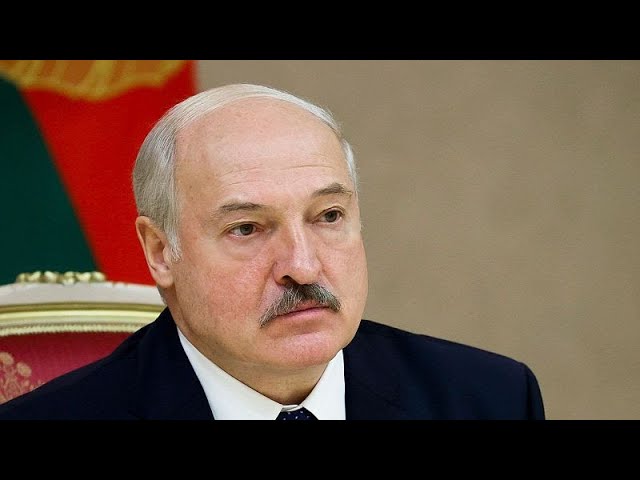
The relationship between Washington and Bogotá is being tested by an escalating dispute that has the potential to destabilise the wider region. During a White House cabinet meeting in early December 2025, the United States president declared that any country shipping illegal drugs into the U.S. “is subject to attack.” He singled out Colombia, saying he had heard the South American nation “makes cocaine” and warned that its leader would “be next” if he did not “wise up.” Those remarks, delivered with television cameras rolling, came after months of spiralling tensions and signalled a significant departure from decades of cooperation between the two countries on counter‑narcotics policy.

At the heart of the confrontation is the war on drugs. Colombia remains the world’s largest producer of coca, the shrub used to produce cocaine, with more than 250,000 hectares under cultivation according to recent United Nations estimates. The U.S. government has long provided billions of dollars in aid to support eradication campaigns, but the current administration argues that those efforts are failing. In September it took the unprecedented step of “decertifying” Colombia’s anti‑narcotics programme for the first time since the late 1990s, effectively declaring Bogotá an unreliable partner and threatening hundreds of millions of dollars in assistance. Officials in Washington also imposed personal sanctions on Colombia’s president, his family members and senior advisers, revoked his visa, froze any assets under U.S. jurisdiction and hinted at broader economic penalties.

Military muscle has accompanied the diplomatic pressure. Over the past several months, the United States has deployed its largest aircraft carrier and nearly 15,000 troops to the Caribbean Sea while launching more than twenty missile strikes on small vessels it claims were transporting drugs. The bombardments have killed dozens of people, including at least two Colombian citizens. Human rights organisations and some U.S. lawmakers have condemned the attacks as extrajudicial killings, noting that the government has not provided public evidence to justify them. Even so, the president has suggested that the campaign may soon expand to land targets; during the same cabinet meeting he asserted that “the land is much easier” and that “anybody” who sells drugs into the United States could be bombed. He later seized a Venezuelan oil tanker to punish Caracas for alleged sanctions violations, hinting that Colombia could be the next target if it did not fall into line.

These actions are closely linked to a personal and ideological clash with Colombia’s head of state. The Colombian leader, a former guerrilla who became the country’s first left‑wing president in 2022, has used his platform to call for a new approach to drug policy and to criticise the U.S. military’s bombing of small boats in the Caribbean. He also condemned the president’s support for Israel’s war in Gaza and refused to accept deportation flights when Colombian migrants were shackled, leading to an early diplomatic spat. In response, Washington slapped tariffs on Colombian exports of up to 50 percent, revoked the president’s U.S. visa after he joined a pro‑Palestinian demonstration in New York and labelled him a “drug lord”. The animosity escalated when the Colombian president suggested U.S. soldiers should disobey any order they consider unlawful; soon after, the U.S. placed financial sanctions on him and his family and removed Colombia from its list of trusted counter‑narcotics partners.

Colombia has not taken these provocations lying down. In a series of social‑media messages and public statements, its president warned that threatening the country’s sovereignty “is to declare war” and cautioned the U.S. leader not to “awake the jaguar”. He invited his counterpart to visit Colombia to witness the destruction of drug‑processing laboratories, noting that his government dismantles a laboratory every forty minutes and has destroyed more than eighteen thousand facilities. He also emphasised that Colombian security forces have carried out more than a thousand ground operations against criminal networks, seized more than 2,700 tonnes of cocaine and conducted thirteen aerial bombings during his administration. “If any country has helped stop thousands of tons of cocaine from being consumed by Americans, it is Colombia,” he said, adding that missile strikes on fishermen “are not fighting narco‑terrorists” and serve only to punish the poor. His administration argues that crop substitution, peace talks with armed groups and attacking criminal financial networks offer a more humane and effective path than mass eradication.

The confrontation has reverberated across Colombia and the wider region. The National Liberation Army (ELN), the country’s largest remaining rebel group, announced in mid‑December that it would conduct military drills and ordered civilians to stay off roads and rivers for several days in preparation for a possible U.S. intervention. The Colombian defence minister dismissed the directive as “criminal coercion” but pledged to keep troops in place. Human rights experts at the United Nations and regional organisations have warned that any U.S. attack on Colombian soil would violate international law and risk reigniting an internal conflict that the country has spent years trying to end. Analysts also caution that decertification and aid cuts could weaken Colombia’s security forces, undermining efforts to combat armed groups and increasing violence. Critics see the U.S. president’s tough talk as part of a strategy to project strength, rally domestic supporters and reassert U.S. dominance in Latin America under a rebranded “Monroe Doctrine,” while potentially paving the way for regime change in neighbouring Venezuela.

There is also a broader strategic dimension. Some observers believe Washington’s focus on drugs masks a desire to control Venezuela’s vast oil reserves and punish left‑leaning governments across the region. Others point to the timing of the threats, noting that Colombia will hold elections in 2026 and that the U.S. president has a history of intervening in other countries’ political processes. By revoking visas, imposing sanctions and threatening tariffs, Washington could influence voter sentiment and weaken the incumbent’s reform agenda. Meanwhile, Colombia has sought closer ties with China and the European Union to offset the potential loss of U.S. aid, signalling a shift in geopolitical alliances.

The stakes are high. Colombia has been a crucial partner in U.S. intelligence operations, and cooperation has disrupted many criminal networks. If relations continue to deteriorate, both countries risk losing valuable intelligence, weakening counter‑drug efforts and allowing armed groups to expand. In the short term, the rhetoric has already caused anger and fear among ordinary Colombians and has emboldened rebel groups. In the long term, a U.S. strike on Colombian territory could plunge the region into a wider conflict and unravel years of progress toward peace.

Featured


Marhabaan, welcome to the UAE and Dubai!

Marhabaan, welcome to the UAE and Dubai! The "skyward striving" Dubai next to ancient desert cities. Mysterious Bedouins and magnificent mosques exist peacefully alongside futuristic cities. Discover wadis and oases, golden sandy deserts, paradisiacal beaches and Arabian hospitality. The modern and the ancient Orient united in a book for dreaming.On this journey to Dubai and Abu Dhabi in the United Arab Emirates, the fairy tales of 1001 Arabian Nights meet the modern Arab world. These cascading cities enchant with their sky-high skyscrapers, fragrant souks, huge shopping centres and the ancient cultural heritage of the sheikhs.You can choose to stay in 4- or 5-star hotels with breakfast and swimming pools. You also have more options to book excursions so you can feel the magic of the East even more. If you want to do something out of the ordinary, you can spend an extra night in an enchanting hotel in the middle of the emirate's desert. Experience your own fairytale from 1001 nights and look forward to a holiday with plenty of casual extravagance in two superlative desert cities!

Trade and business at the Dubai Gold Souk

If Naif Deira is associated with a specific context, organization, or field, providing more details could help me offer more relevant information. Keep in mind that privacy considerations and ethical guidelines limit the amount of information available about private individuals, especially those who are not public figures. The Dubai Gold Souk is one of the most famous gold markets in the world and is located in the heart of Dubai's commercial business district in Deira. It's a traditional market where you can find a wide variety of gold, silver, and precious stone jewelry. The Gold Souk is known for its extensive selection of jewelry, including rings, bracelets, necklaces, and earrings, often crafted with intricate designs.Variety: The Gold Souk offers a vast array of jewelry designs, with a focus on gold. You can find items ranging from traditional to modern styles.Competitive Pricing: The market is known for its competitive pricing, and bargaining is a common practice. Prices are typically based on the weight of the gold and the craftsmanship involved.Gold and More: While gold is the primary focus, the souk also offers other precious metals such as silver and platinum, as well as a selection of gemstones.Cultural Experience: Visiting the Gold Souk provides not only a shopping experience but also a glimpse into the traditional trading culture of Dubai. The vibrant market is a popular destination for both tourists and locals.Security: The market is generally safe, and there are numerous shops with security measures in place. However, as with any crowded area, it's advisable to take standard precautions regarding personal belongings.Gold Souk is just one part of the larger Deira Souk complex, which also includes the Spice Souk and the Textile Souk. It's a must-visit for those interested in jewelry, and it reflects the rich cultural and trading history of Dubai.

Dubai: Amazing City Center, Night Walking Tour

During this excursion, we leisurely explore Dubai Downtown and Burj Khalifa in the evening, giving you the chance to witness the captivating transformation of the district as it comes alive with the vibrant glow of thousands of lights. As the sun sets, the illuminated facade of Burj Khalifa and the enchanting Dubai Fountain collaborate to produce a genuinely magical atmosphere.Dubai Downtown, also known as Downtown Dubai, is a distinguished and iconic district situated in the heart of Dubai, United Arab Emirates. It is a renowned neighborhood celebrated for its striking architecture, luxurious living, and exceptional entertainment options. At the core of Downtown Dubai stands the Burj Khalifa, a towering skyscraper that holds the title of the world's tallest man-made structure and serves as an emblem of modern Dubai.Burj Khalifa: The focal point of Downtown Dubai, Burj Khalifa, is famous for its groundbreaking height, reaching an impressive 828 meters (2,722 feet). Designed by architect Adrian Smith, its distinctive Y-shaped design encompasses a mix of residential, commercial, and hotel spaces.Dubai Mall: Adjacent to Burj Khalifa is the Dubai Mall, one of the largest shopping malls globally, featuring an extensive array of retail outlets, from high-end boutiques to international brands. The mall also provides various dining options, and entertainment attractions like an indoor ice rink and an aquarium, and hosts the mesmerizing Dubai Fountain.Dubai Fountain: Located just outside the Dubai Mall, the Dubai Fountain is a captivating attraction that presents a nightly spectacle of water, music, and light, captivating visitors with its perfectly synchronized performances.Emaar Boulevard: Stretching through Downtown Dubai, this boulevard is adorned with restaurants, cafes, and shops, making it a popular spot for leisurely strolls, dining, and people-watching.Luxury Living: Downtown Dubai boasts numerous upscale residential buildings and hotels, making it an appealing locale for those seeking a sophisticated urban lifestyle.Cultural Attractions: The Dubai Opera, an iconic cultural venue within the district, hosts a diverse range of performances, including opera, ballet, concerts, and theater productions.Transportation: Downtown Dubai is well-connected through public transportation, including the Dubai Metro, facilitating easy access to other parts of the city.In summary, Downtown Dubai is a dynamic and vibrant district that stands as a testament to Dubai's modernity and grandeur. It seamlessly combines architectural wonders with shopping, entertainment, and cultural offerings, creating a truly extraordinary destination.