Dubai Telegraph - Hidden Cartel crisis in USA

EUR -
AED 4.190388
AFN 75.874588
ALL 93.859535
AMD 416.274986
AOA 1046.314438
ARS 1707.327971
AUD 1.629329
AWG 2.053834
AZN 1.939027
BAM 1.957093
BBD 2.294185
BDT 140.502814
BHD 0.429572
BIF 3402.828576
BMD 1.141019
BND 1.470307
BOB 12.649356
BRL 5.803332
BSD 1.139022
BTN 109.934658
BWP 15.73398
BYN 3.267158
BYR 22363.967361
BZD 2.290883
CAD 1.607753
CDF 2578.702671
CHF 0.929639
CLF 0.027497
CLP 1082.199536
CNY 7.727091
CNH 7.723174
COP 3672.539977
CRC 518.328774
CUC 1.141019
CUP 30.236997
CVE 110.33692
CZK 24.121597
DJF 202.831321
DKK 7.475658
DOP 66.332074
DZD 152.143502
EGP 58.58253
ERN 17.115281
ETB 183.844212
FJD 2.539622
FKP 0.856448
GBP 0.854343
GEL 2.995211
GGP 0.856448
GHS 13.246634
GIP 0.856448
GMD 84.435768
GNF 9993.119638
GTQ 8.68974
GYD 238.305333
HKD 8.948217
HNL 30.508351
HRK 7.537336
HTG 148.92185
HUF 359.345579
IDR 20526.470778
ILS 3.465964
IMP 0.856448
INR 109.775356
IQD 1492.18572
IRR 1568900.771986
ISK 143.003514
JEP 0.856448
JMD 180.664595
JOD 0.809005
JPY 186.64271
KES 147.757141
KGS 99.781676
KHR 4605.840731
KMF 495.202064
KRW 1672.362654
KWD 0.35383
KYD 0.949227
KZT 541.587766
LAK 25792.037903
LBP 102002.181385
LKR 382.782862
LRD 206.164383
LSL 19.239009
LTL 3.369131
LVL 0.690191
LYD 7.288719
MAD 10.666953
MDL 20.132299
MGA 5047.201417
MKD 61.593826
MMK 2396.138529
MNT 4100.817242
MOP 9.200778
MRU 45.460836
MUR 54.015819
MVR 17.629454
MWK 1975.052767
MXN 19.885281
MYR 4.66163
MZN 72.911668
NAD 19.239009
NGN 1557.102301
NIO 41.915669
NOK 10.9236
NPR 175.892568
NZD 1.96678
OMR 0.438645
PAB 1.139052
PEN 3.876361
PGK 5.09512
PHP 70.436793
PKR 316.391986
PLN 4.311306
PYG 6886.458579
QAR 4.140935
RON 5.229742
RSD 117.387948
RUB 88.770502
RWF 1678.364579
SAR 4.276069
SBD 9.220692
SCR 15.363408
SDG 685.184361
SEK 11.029983
SGD 1.471341
SLE 27.641148
SOS 650.912871
SRD 43.121954
STD 23616.784271
STN 24.515013
SVC 9.966584
SZL 19.236201
THB 38.258539
TJS 10.507649
TMT 3.993566
TND 3.37623
TRY 54.037049
TTD 7.739112
TWD 36.90454
TZS 3006.582083
UAH 51.045778
UGX 4293.798799
USD 1.141019
UYU 45.739814
UZS 13785.106271
VES 845.838791
VND 30025.90822
VUV 135.408239
WST 3.145013
XAF 656.373335
XAG 0.019205
XAU 0.000279
XCD 3.08366
XCG 2.052856
XDR 0.816318
XOF 656.381969
XPF 119.331742
YER 272.189869
ZAR 19.051167
ZMK 10270.53691
ZMW 21.100661
ZWL 367.40757
  • RBGPF

    -0.7300

    66

    -1.11%

  • CMSC

    -0.0650

    21.725

    -0.3%

  • AZN

    0.9900

    169.26

    +0.58%

  • GSK

    0.6100

    51.35

    +1.19%

  • RELX

    1.5500

    34.41

    +4.5%

  • BP

    -0.1100

    43.82

    -0.25%

  • BTI

    1.1200

    60.96

    +1.84%

  • BCE

    0.0900

    21.3

    +0.42%

  • RIO

    -0.2900

    91.22

    -0.32%

  • NGG

    -0.0700

    82.3

    -0.09%

  • BCC

    1.3800

    77.84

    +1.77%

  • JRI

    0.1600

    13.06

    +1.23%

  • CMSD

    -0.0200

    21.98

    -0.09%

  • VOD

    -0.1000

    15.15

    -0.66%

  • RYCEF

    -0.1900

    18.17

    -1.05%


Hidden Cartel crisis in USA


Organised crime in the Americas is dominated by drug‑trafficking cartels that have grown ever richer and more violent. Public debate often focuses on border security and cross‑border smuggling, yet there are deeper, largely unspoken dynamics that underpin the cartel problem. These include the international supply chain for synthetic drugs, sophisticated money‑laundering networks, cybercrime operations and the complicity of domestic gangs. Understanding these hidden dimensions is essential for any realistic attempt to stem the flow of drugs and violence.

A lethal wave of synthetic drugs
The most pressing concern in the United States is the synthetic opioid fentanyl, which has become the deadliest drug in the country. In 2023 fentanyl‑related overdoses claimed around seventy‑five thousand lives and the economic cost of opioid deaths and addiction was estimated at about $2.7 trillion. A dose of two milligrams can kill an adult, and a single gram can be lethal to five hundred people. Despite increased seizures at ports and border crossings, the drug is usually trafficked in small consignments; the median fentanyl seizure in 2024 was just over a kilogram, but each packet holds tens of thousands of lethal doses.

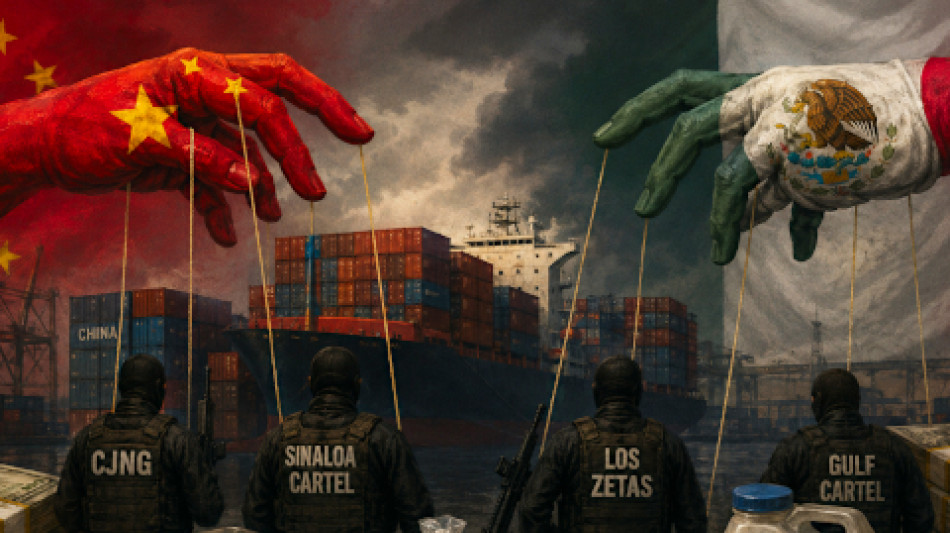
China banned the manufacture of fentanyl variants in 2019, but Chinese companies remain the primary suppliers of the precursor chemicals needed for fentanyl production. These substances are shipped from ports such as Hong Kong to Mexican ports like Lázaro Cárdenas and Manzanillo, where cartel groups collect them. Two Mexican organisations, the Sinaloa cartel and the Jalisco New Generation cartel, dominate the production of fentanyl for the U.S. market. U.S. law enforcement notes that four‑fifths of individuals arrested for fentanyl trafficking are American citizens, which underscores the domestic dimension of the crisis.

Money laundering and Chinese networks
Cartels rely on complex financial operations to move billions of dollars in proceeds. Recent enforcement actions reveal a growing partnership between Mexican cartels and Chinese money‑laundering organisations. These brokers offer low commissions and anonymity through the use of social‑media apps and cryptocurrencies; they settle transactions via WeChat and blockchain without leaving paper trails, making it harder for authorities to interdict funds. Payments to Chinese companies for drug precursors have reportedly risen by roughly 600 percent between 2022 and 2023. Investigations show that a vast majority of Chinese precursor manufacturers accept cryptocurrency, mainly Bitcoin and Tron, and there has been a significant increase in the use of Ethereum for these payments.

Chinese money‑laundering cells are typically small, family‑run operations that nonetheless handle enormous sums. They now provide services not only to Mexican cartels but also to European mafia groups. The cross‑border flow of funds is thus both global and decentralised, using technology to hide transactions from law enforcement. This reality challenges the common narrative that cartel profits are mainly funnelled through traditional banking systems.

Corruption and heavy arms
Another overlooked element is the source of the cartels’ weaponry. It is widely assumed that American firearms fuel cartel violence, but much of the heavy arsenal used by cartels—machine guns, rocket‑propelled grenades and shoulder‑launched missiles—is not sold in U.S. gun shops. Intelligence experts report that these weapons are acquired through corruption in Mexico’s security forces. The diversion of military stockpiles in Mexico and Central America gives cartels access to war‑grade arms, amplifying their firepower while complicating efforts to demilitarise the conflict.

Corruption also permeates government institutions. Former Mexican defence minister Salvador Cienfuegos and ex‑security chief Genaro García Luna were accused of aiding the Sinaloa cartel. This corruption allows cartels to operate with impunity, undermines public trust and complicates international cooperation. It also explains why direct military intervention by the United States is fraught with risks; any operation would have to distinguish between reliable partners and corrupt officials who may leak intelligence to the enemy.

The rise of cyber‑cartels
Beyond drug smuggling and violence, cartels increasingly exploit digital technologies. Organised crime groups in Mexico have embraced cybercrime, buying malware kits and network access from the burgeoning “cybercrime‑as‑a‑service” marketplace. These so‑called cyber‑cartels use dark‑web markets and cryptocurrency to launder money and sell drugs anonymously. One group hacked banking systems to steal over $15 million, proving that cartels are no longer confined to street violence.

The threat extends to personal security. Investigative reports describe how cartels access government intelligence platforms, such as a database that aggregates voter records, phone logs and credit‑bureau data. Cartels allegedly purchase this access on the black market, enabling them to geolocate rivals and disappear them without leaving traces. Such capabilities highlight the convergence of organised crime and cyber espionage, suggesting that cartel violence could be complemented by doxxing campaigns or attacks on critical infrastructure if provoked.

Cartels and domestic gangs
Within the United States, the cartel problem is not restricted to border areas. Federal investigations reveal that transnational criminal organisations have formed alliances with domestic gangs. More than six thousand active gang investigations are under way, and there are roughly 6,000 cases targeting cartel leadership. Groups such as the 18th Street gang, the Mexican Mafia, the Bloods and the Crips partner with cartels to distribute drugs, launder money and carry out acts of violence. These partnerships underscore that the cartel business model relies on local networks for sales, enforcement and logistics, making it as much a domestic issue as an international one.

Government responses and enduring challenges
The U.S. government has responded to cartel expansion with new institutions and sanctions. The formation of the Counter Cartel Coordination Centre and the creation of Homeland Security task forces have led to thousands of arrests and significant drug seizures. Financial sanctions, such as designating the La Línea organisation under anti‑narcotics authorities, aim to disrupt the revenue streams of violent cartels. Moreover, Washington has pressed Beijing to curb precursor exports; cooperation resumed in late 2023 after a period of diplomatic strain.

Despite these efforts, experts caution that enforcement alone will not solve the crisis. Sustainable solutions require reducing domestic demand through addiction treatment and education, as well as investing in economic opportunities in Mexico to offer alternatives to the illicit economy. Without addressing root causes, a heavy‑handed approach risks sparking retaliation; cartels could use their cyber capabilities to sow panic or target critical infrastructure in response.

Towards a nuanced understanding
The cartel problem no one talks about in the United States is not a single issue but an interlocking system. It begins with precursor chemicals shipped from East Asia, is financed through crypto‑laundered transactions and relies on corrupt officials and domestic gangs. Cartels have adapted to the digital age, developing cyber‑crime capabilities and exploiting government databases to intimidate rivals and undermine public trust. While American political debates often focus on building walls and militarising the border, the more difficult task is confronting the underlying networks that make cartels resilient.

To address this hidden crisis, policy must extend beyond border security. It should encompass international cooperation to control chemical precursors, financial regulation to disrupt crypto‑based laundering, measures to root out corruption within security services and cyber‑security initiatives to prevent cartels from acquiring sensitive data. Above all, demand reduction through treatment and economic development both in the United States and Mexico remains indispensable. Recognising these unseen dimensions is the first step toward crafting a strategy that can stop the lethal tide of fentanyl and weaken the cartels’ hold on the hemisphere.
Featured


Marhabaan, welcome to the UAE and Dubai!

Marhabaan, welcome to the UAE and Dubai! The "skyward striving" Dubai next to ancient desert cities. Mysterious Bedouins and magnificent mosques exist peacefully alongside futuristic cities. Discover wadis and oases, golden sandy deserts, paradisiacal beaches and Arabian hospitality. The modern and the ancient Orient united in a book for dreaming.On this journey to Dubai and Abu Dhabi in the United Arab Emirates, the fairy tales of 1001 Arabian Nights meet the modern Arab world. These cascading cities enchant with their sky-high skyscrapers, fragrant souks, huge shopping centres and the ancient cultural heritage of the sheikhs.You can choose to stay in 4- or 5-star hotels with breakfast and swimming pools. You also have more options to book excursions so you can feel the magic of the East even more. If you want to do something out of the ordinary, you can spend an extra night in an enchanting hotel in the middle of the emirate's desert. Experience your own fairytale from 1001 nights and look forward to a holiday with plenty of casual extravagance in two superlative desert cities!

Trade and business at the Dubai Gold Souk

If Naif Deira is associated with a specific context, organization, or field, providing more details could help me offer more relevant information. Keep in mind that privacy considerations and ethical guidelines limit the amount of information available about private individuals, especially those who are not public figures. The Dubai Gold Souk is one of the most famous gold markets in the world and is located in the heart of Dubai's commercial business district in Deira. It's a traditional market where you can find a wide variety of gold, silver, and precious stone jewelry. The Gold Souk is known for its extensive selection of jewelry, including rings, bracelets, necklaces, and earrings, often crafted with intricate designs.Variety: The Gold Souk offers a vast array of jewelry designs, with a focus on gold. You can find items ranging from traditional to modern styles.Competitive Pricing: The market is known for its competitive pricing, and bargaining is a common practice. Prices are typically based on the weight of the gold and the craftsmanship involved.Gold and More: While gold is the primary focus, the souk also offers other precious metals such as silver and platinum, as well as a selection of gemstones.Cultural Experience: Visiting the Gold Souk provides not only a shopping experience but also a glimpse into the traditional trading culture of Dubai. The vibrant market is a popular destination for both tourists and locals.Security: The market is generally safe, and there are numerous shops with security measures in place. However, as with any crowded area, it's advisable to take standard precautions regarding personal belongings.Gold Souk is just one part of the larger Deira Souk complex, which also includes the Spice Souk and the Textile Souk. It's a must-visit for those interested in jewelry, and it reflects the rich cultural and trading history of Dubai.

Dubai: Amazing City Center, Night Walking Tour

During this excursion, we leisurely explore Dubai Downtown and Burj Khalifa in the evening, giving you the chance to witness the captivating transformation of the district as it comes alive with the vibrant glow of thousands of lights. As the sun sets, the illuminated facade of Burj Khalifa and the enchanting Dubai Fountain collaborate to produce a genuinely magical atmosphere.Dubai Downtown, also known as Downtown Dubai, is a distinguished and iconic district situated in the heart of Dubai, United Arab Emirates. It is a renowned neighborhood celebrated for its striking architecture, luxurious living, and exceptional entertainment options. At the core of Downtown Dubai stands the Burj Khalifa, a towering skyscraper that holds the title of the world's tallest man-made structure and serves as an emblem of modern Dubai.Burj Khalifa: The focal point of Downtown Dubai, Burj Khalifa, is famous for its groundbreaking height, reaching an impressive 828 meters (2,722 feet). Designed by architect Adrian Smith, its distinctive Y-shaped design encompasses a mix of residential, commercial, and hotel spaces.Dubai Mall: Adjacent to Burj Khalifa is the Dubai Mall, one of the largest shopping malls globally, featuring an extensive array of retail outlets, from high-end boutiques to international brands. The mall also provides various dining options, and entertainment attractions like an indoor ice rink and an aquarium, and hosts the mesmerizing Dubai Fountain.Dubai Fountain: Located just outside the Dubai Mall, the Dubai Fountain is a captivating attraction that presents a nightly spectacle of water, music, and light, captivating visitors with its perfectly synchronized performances.Emaar Boulevard: Stretching through Downtown Dubai, this boulevard is adorned with restaurants, cafes, and shops, making it a popular spot for leisurely strolls, dining, and people-watching.Luxury Living: Downtown Dubai boasts numerous upscale residential buildings and hotels, making it an appealing locale for those seeking a sophisticated urban lifestyle.Cultural Attractions: The Dubai Opera, an iconic cultural venue within the district, hosts a diverse range of performances, including opera, ballet, concerts, and theater productions.Transportation: Downtown Dubai is well-connected through public transportation, including the Dubai Metro, facilitating easy access to other parts of the city.In summary, Downtown Dubai is a dynamic and vibrant district that stands as a testament to Dubai's modernity and grandeur. It seamlessly combines architectural wonders with shopping, entertainment, and cultural offerings, creating a truly extraordinary destination.