Dubai Telegraph - Why Russia can’t end war

EUR -
AED 4.17633
AFN 75.629335
ALL 93.552771
AMD 417.030966
AOA 1042.80361
ARS 1704.08887
AUD 1.626138
AWG 2.046943
AZN 1.935917
BAM 1.952025
BBD 2.2907
BDT 140.39847
BHD 0.428569
BIF 3397.314667
BMD 1.137191
BND 1.46722
BOB 12.800638
BRL 5.823099
BSD 1.137315
BTN 109.025459
BWP 15.615418
BYN 3.262719
BYR 22288.937268
BZD 2.287396
CAD 1.604786
CDF 2570.050757
CHF 0.931075
CLF 0.027296
CLP 1074.258612
CNY 7.701172
CNH 7.693897
COP 3662.504526
CRC 517.601237
CUC 1.137191
CUP 30.135553
CVE 110.052159
CZK 24.162115
DJF 202.53631
DKK 7.474828
DOP 66.173475
DZD 151.706865
EGP 57.677624
ERN 17.05786
ETB 183.576015
FJD 2.535028
FKP 0.853619
GBP 0.854712
GEL 2.985181
GGP 0.853619
GHS 13.238804
GIP 0.853619
GMD 84.151858
GNF 9978.701225
GTQ 8.678178
GYD 237.859393
HKD 8.917946
HNL 30.465749
HRK 7.534799
HTG 148.67573
HUF 360.408129
IDR 20546.192556
ILS 3.475028
IMP 0.853619
INR 109.069721
IQD 1489.951194
IRR 1563637.181069
ISK 142.694445
JEP 0.853619
JMD 179.932012
JOD 0.806281
JPY 186.172908
KES 147.378604
KGS 99.447734
KHR 4594.296448
KMF 493.54069
KRW 1670.193171
KWD 0.352995
KYD 0.947804
KZT 540.44241
LAK 25779.595737
LBP 101850.655884
LKR 382.440362
LRD 205.8564
LSL 18.996477
LTL 3.357829
LVL 0.687875
LYD 7.285909
MAD 10.647109
MDL 19.989132
MGA 4890.584631
MKD 61.411231
MMK 2387.57629
MNT 4084.244985
MOP 9.186735
MRU 45.402192
MUR 53.834955
MVR 17.569167
MWK 1972.163882
MXN 19.853774
MYR 4.645991
MZN 72.664945
NAD 18.997311
NGN 1550.502517
NIO 41.849064
NOK 10.993448
NPR 174.433646
NZD 1.966743
OMR 0.437251
PAB 1.13732
PEN 3.864626
PGK 5.092152
PHP 70.201626
PKR 315.920611
PLN 4.321239
PYG 6877.698554
QAR 4.146081
RON 5.233298
RSD 117.409274
RUB 88.729742
RWF 1674.228299
SAR 4.261836
SBD 9.189757
SCR 16.796815
SDG 682.886009
SEK 11.06594
SGD 1.468358
SLE 27.548438
SOS 649.943012
SRD 42.907318
STD 23537.551034
STN 24.45303
SVC 9.951753
SZL 18.994182
THB 38.255662
TJS 10.497912
TMT 3.980167
TND 3.369483
TRY 53.847135
TTD 7.724129
TWD 36.761948
TZS 2998.206634
UAH 51.078614
UGX 4270.796627
USD 1.137191
UYU 45.671671
UZS 13619.659623
VES 843.00104
VND 29925.172664
VUV 135.426139
WST 3.134462
XAF 654.716688
XAG 0.019387
XAU 0.000279
XCD 3.073315
XCG 2.049736
XDR 0.813579
XOF 654.69083
XPF 119.331742
YER 271.276853
ZAR 19.033263
ZMK 10236.078763
ZMW 21.251554
ZWL 366.174934
  • CMSC

    0.0530

    21.778

    +0.24%

  • RBGPF

    -0.7300

    66

    -1.11%

  • RYCEF

    0.8000

    18.87

    +4.24%

  • NGG

    -0.7250

    81.575

    -0.89%

  • GSK

    0.7900

    52.14

    +1.52%

  • VOD

    0.7350

    15.885

    +4.63%

  • BTI

    -0.2450

    60.715

    -0.4%

  • AZN

    1.2500

    170.51

    +0.73%

  • RELX

    1.4800

    35.89

    +4.12%

  • JRI

    -0.1100

    12.95

    -0.85%

  • BCC

    0.5000

    78.34

    +0.64%

  • CMSD

    0.0400

    22.02

    +0.18%

  • RIO

    0.4200

    91.64

    +0.46%

  • BP

    -1.1200

    42.7

    -2.62%

  • BCE

    0.0500

    21.35

    +0.23%


Why Russia can’t end war


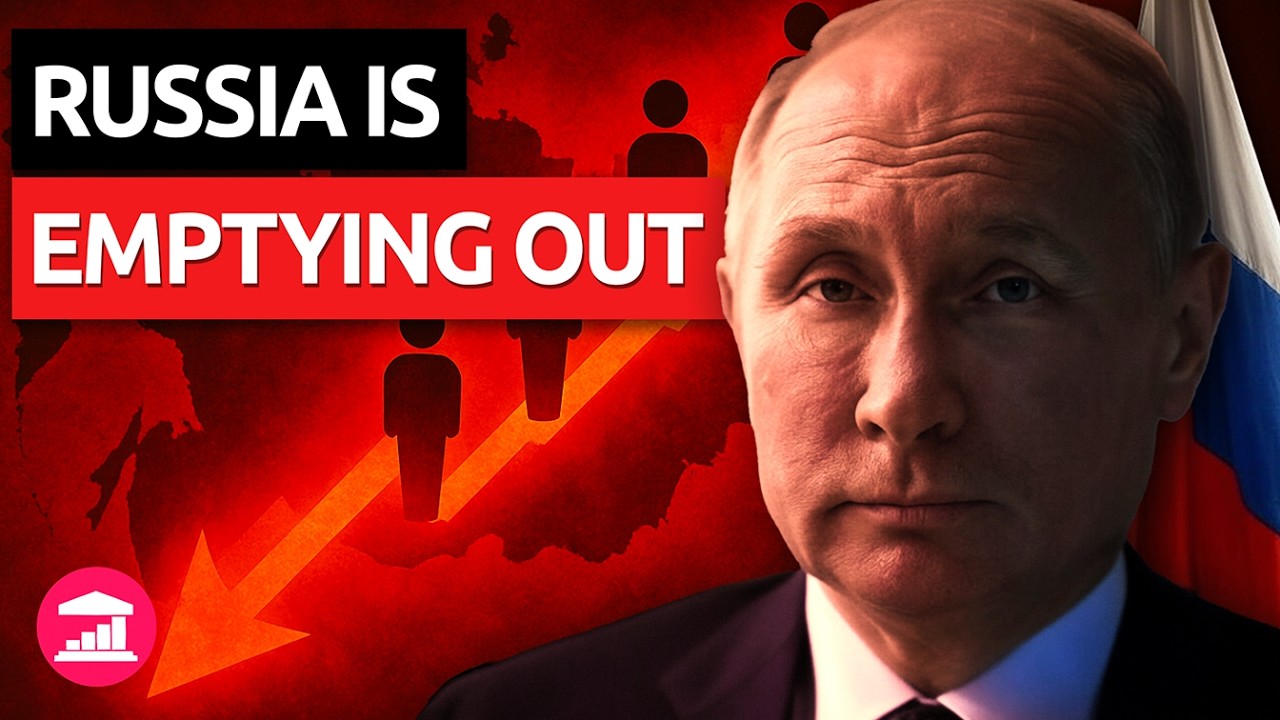
Nearly four years into Moscow’s full‑scale invasion of Ukraine, there is no sign that the Kremlin is preparing to withdraw its troops or relinquish occupied territories. The war has devastated Ukrainian infrastructure and caused horrific human rights violations, yet the Russian government shows little appetite for ending the conflict. This refusal is rooted in ideology, domestic politics, military calculations, economic factors and public opinion. Understanding why Russia cannot end the war requires examining each of these dimensions.

Ideological and historical motivations
At its core, the conflict is driven by a belief that Ukraine belongs in Russia’s sphere of influence. The Kremlin demands that the West respect a kind of “Monroe doctrine” for Russia and stop bringing neighbouring states into the Western alliance. Preventing Ukraine from joining NATO and reasserting dominance over the former Soviet space are central goals. Russian leaders portray the war as an existential struggle against Western encirclement and a continuation of Russia’s fight for great‑power status. This ideological framing means that a negotiated end that leaves Ukraine free to choose its alliances is viewed as defeat. The war thus fulfils a narrative of historical justice and national revival, making withdrawal politically unpalatable.

Regime survival and domestic politics
The invasion has become a pillar of the Russian political system. Moscow’s leadership invests significant resources in the military‑industrial complex and dedicates roughly two‑fifths of its federal budget to defence and security. Reversing course could call into question the enormous human and economic costs already incurred—nearly a million Russian casualties—and undermine the regime’s legitimacy. Analysts note that President Vladimir Putin uses the war to consolidate patronage networks and justify increasing authoritarian control. Domestic opposition is suppressed, and state media portrays the conflict as necessary for Russia’s security. In this environment, there is little public pressure to end the war; volunteer recruitment continues thanks to high bonuses, replenishing losses, and those who favour peace often support a cease‑fire only if Moscow retains its territorial gains.

Ending the war would also create a dilemma. A cease‑fire that left Russia occupying vast areas of Ukraine would require Moscow to maintain a huge army of conscripts and volunteers, consuming resources and risking domestic discontent. Demobilising this army could trigger unemployment and social unrest. For the Kremlin, continued fighting is therefore less risky than an abrupt peace that could threaten its grip on power.

Military stalemate and strategic calculations
Despite substantial casualties and equipment losses, Russian forces continue offensive operations because Moscow believes time favours its strategy. Experts estimate Russia loses around 100–150 troops per square kilometre, yet the leadership expects to outlast Ukraine and the West. A cease‑fire that leaves Ukraine free to integrate with NATO is unacceptable to the Kremlin. Conversely, Ukraine refuses to renounce NATO membership or surrender occupied territories. This stalemate means neither side will compromise until the costs become unbearably high.

Russia’s war machine has adapted to attritional fighting. Moscow has scaled up drone production and directed its industrial base toward a war economy, offsetting heavy losses in conventional arms. Analysts warn that each year of offensive operations costs Russia 8–10 % of its GDP and hundreds of thousands of casualties. Yet the regime calculates that these losses are sustainable if they help achieve strategic objectives. Until Ukraine’s armed forces and its foreign backers impose unbearable military costs, Moscow has little incentive to cease hostilities.

War economy and financial resilience
The Russian economy has proven more durable under sanctions than many expected. Years of tight fiscal policy allowed Moscow to accumulate large foreign exchange reserves and build a “Fortress Russia” economy. By early 2022, Russia held over $600 billion in reserves and kept public debt below one‑fifth of GDP. Current account surpluses and high energy revenues enabled the government to continue funding the war. War spending has stimulated industrial output and driven nominal GDP growth, while the departure of international firms has reduced competition, allowing domestic companies to gain market share.

However, this resilience masks growing imbalances. Defence spending has added about $100 billion per year to the budget, and the combined economic losses from sanctions and war are estimated at trillions of US dollars. Economists note that real GDP growth is roughly a tenth smaller than it would have been without the war. The war economy has created labour shortages; up to two million Russians are abroad and hundreds of thousands have been killed or wounded. Industrial capacity is nearing its limits, inflation remains high, and Russia’s central bank has raised interest rates sharply. Analysts warn that this stagflationary environment could erode living standards and strain public finances. The state has been forced to draw down its National Wealth Fund and raise taxes to cover growing deficits. Yet the economic costs have not prompted a policy change; propaganda and repression continue to dampen discontent.

Public sentiment and the social contract
Russian society has largely adapted to wartime conditions. While surveys indicate that many Russians are weary of the conflict, most support peace only if it secures Moscow’s territorial gains. As long as the Kremlin presents the war as protecting Russian speakers and defending the nation against Western aggression, domestic support remains sufficient. Humanitarian gestures such as prisoner exchanges or grain exports can boost support for talks, but there is no broad movement demanding withdrawal. The combination of propaganda, control of the media and modest improvements in wages for some sectors has kept dissatisfaction at bay. Without a significant shift in public opinion, there is little internal pressure on leaders to end the war.

International dynamics and peace prospects
External actors have limited leverage over Russia’s decision‑making. Western sanctions have slowed economic growth and restricted access to technology, but they have not forced Moscow to change course. Alternative supply chains through China, Iran and North Korea provide military inputs. Diplomatic efforts, including U.S.–Russia talks and European mediation, have yet to produce progress. Commentators note that Russia views negotiations as a means to impose its terms; absent recognition of its sphere of influence, it prefers to continue the war. Meanwhile, Western political fatigue and competing global crises reduce the likelihood of sustained pressure on Russia. Unless Ukraine and its partners can decisively shift the military balance or undermine the economic foundations of the war, the Kremlin is unlikely to agree to a settlement.

Conclusion
Russia’s inability to end the war in Ukraine stems from a combination of ideological ambitions, regime survival, military calculations, economic adaptation and public acquiescence. The conflict serves the Kremlin’s strategic goals of preventing Ukraine’s Western integration and reasserting Russian dominance.
It sustains the domestic political order and justifies expanding authoritarian control. Despite immense losses and economic strain, Moscow calculates that continuing the war is less risky than accepting a negotiated peace that would leave its goals unmet. Until these underlying drivers change—through decisive military setbacks, deeper economic crises or a shift in public sentiment—Russia’s war in Ukraine is likely to endure.
Featured


Marhabaan, welcome to the UAE and Dubai!

Marhabaan, welcome to the UAE and Dubai! The "skyward striving" Dubai next to ancient desert cities. Mysterious Bedouins and magnificent mosques exist peacefully alongside futuristic cities. Discover wadis and oases, golden sandy deserts, paradisiacal beaches and Arabian hospitality. The modern and the ancient Orient united in a book for dreaming.On this journey to Dubai and Abu Dhabi in the United Arab Emirates, the fairy tales of 1001 Arabian Nights meet the modern Arab world. These cascading cities enchant with their sky-high skyscrapers, fragrant souks, huge shopping centres and the ancient cultural heritage of the sheikhs.You can choose to stay in 4- or 5-star hotels with breakfast and swimming pools. You also have more options to book excursions so you can feel the magic of the East even more. If you want to do something out of the ordinary, you can spend an extra night in an enchanting hotel in the middle of the emirate's desert. Experience your own fairytale from 1001 nights and look forward to a holiday with plenty of casual extravagance in two superlative desert cities!

Trade and business at the Dubai Gold Souk

If Naif Deira is associated with a specific context, organization, or field, providing more details could help me offer more relevant information. Keep in mind that privacy considerations and ethical guidelines limit the amount of information available about private individuals, especially those who are not public figures. The Dubai Gold Souk is one of the most famous gold markets in the world and is located in the heart of Dubai's commercial business district in Deira. It's a traditional market where you can find a wide variety of gold, silver, and precious stone jewelry. The Gold Souk is known for its extensive selection of jewelry, including rings, bracelets, necklaces, and earrings, often crafted with intricate designs.Variety: The Gold Souk offers a vast array of jewelry designs, with a focus on gold. You can find items ranging from traditional to modern styles.Competitive Pricing: The market is known for its competitive pricing, and bargaining is a common practice. Prices are typically based on the weight of the gold and the craftsmanship involved.Gold and More: While gold is the primary focus, the souk also offers other precious metals such as silver and platinum, as well as a selection of gemstones.Cultural Experience: Visiting the Gold Souk provides not only a shopping experience but also a glimpse into the traditional trading culture of Dubai. The vibrant market is a popular destination for both tourists and locals.Security: The market is generally safe, and there are numerous shops with security measures in place. However, as with any crowded area, it's advisable to take standard precautions regarding personal belongings.Gold Souk is just one part of the larger Deira Souk complex, which also includes the Spice Souk and the Textile Souk. It's a must-visit for those interested in jewelry, and it reflects the rich cultural and trading history of Dubai.

Dubai: Amazing City Center, Night Walking Tour

During this excursion, we leisurely explore Dubai Downtown and Burj Khalifa in the evening, giving you the chance to witness the captivating transformation of the district as it comes alive with the vibrant glow of thousands of lights. As the sun sets, the illuminated facade of Burj Khalifa and the enchanting Dubai Fountain collaborate to produce a genuinely magical atmosphere.Dubai Downtown, also known as Downtown Dubai, is a distinguished and iconic district situated in the heart of Dubai, United Arab Emirates. It is a renowned neighborhood celebrated for its striking architecture, luxurious living, and exceptional entertainment options. At the core of Downtown Dubai stands the Burj Khalifa, a towering skyscraper that holds the title of the world's tallest man-made structure and serves as an emblem of modern Dubai.Burj Khalifa: The focal point of Downtown Dubai, Burj Khalifa, is famous for its groundbreaking height, reaching an impressive 828 meters (2,722 feet). Designed by architect Adrian Smith, its distinctive Y-shaped design encompasses a mix of residential, commercial, and hotel spaces.Dubai Mall: Adjacent to Burj Khalifa is the Dubai Mall, one of the largest shopping malls globally, featuring an extensive array of retail outlets, from high-end boutiques to international brands. The mall also provides various dining options, and entertainment attractions like an indoor ice rink and an aquarium, and hosts the mesmerizing Dubai Fountain.Dubai Fountain: Located just outside the Dubai Mall, the Dubai Fountain is a captivating attraction that presents a nightly spectacle of water, music, and light, captivating visitors with its perfectly synchronized performances.Emaar Boulevard: Stretching through Downtown Dubai, this boulevard is adorned with restaurants, cafes, and shops, making it a popular spot for leisurely strolls, dining, and people-watching.Luxury Living: Downtown Dubai boasts numerous upscale residential buildings and hotels, making it an appealing locale for those seeking a sophisticated urban lifestyle.Cultural Attractions: The Dubai Opera, an iconic cultural venue within the district, hosts a diverse range of performances, including opera, ballet, concerts, and theater productions.Transportation: Downtown Dubai is well-connected through public transportation, including the Dubai Metro, facilitating easy access to other parts of the city.In summary, Downtown Dubai is a dynamic and vibrant district that stands as a testament to Dubai's modernity and grandeur. It seamlessly combines architectural wonders with shopping, entertainment, and cultural offerings, creating a truly extraordinary destination.