Dubai Telegraph - France's debt is growing

EUR -
AED 4.278489
AFN 76.301366
ALL 96.530556
AMD 444.389335
ANG 2.085119
AOA 1068.154458
ARS 1670.316609
AUD 1.75427
AWG 2.096704
AZN 1.984845
BAM 1.955415
BBD 2.345238
BDT 142.439297
BGN 1.957372
BHD 0.439074
BIF 3456.06653
BMD 1.164835
BND 1.508396
BOB 8.046379
BRL 6.313529
BSD 1.16437
BTN 104.690912
BWP 15.469884
BYN 3.34764
BYR 22830.773166
BZD 2.341828
CAD 1.611422
CDF 2599.912958
CHF 0.937162
CLF 0.02734
CLP 1072.545921
CNY 8.235507
CNH 8.234944
COP 4446.759008
CRC 568.78787
CUC 1.164835
CUP 30.868137
CVE 110.780379
CZK 24.198994
DJF 207.014999
DKK 7.469472
DOP 74.84113
DZD 151.385181
EGP 55.40272
ERN 17.47253
ETB 180.60972
FJD 2.630723
FKP 0.8723
GBP 0.873382
GEL 3.149553
GGP 0.8723
GHS 13.337819
GIP 0.8723
GMD 85.033396
GNF 10119.511721
GTQ 8.919242
GYD 243.610929
HKD 9.068302
HNL 30.667954
HRK 7.538703
HTG 152.42995
HUF 382.163892
IDR 19442.733022
ILS 3.76907
IMP 0.8723
INR 104.795933
IQD 1525.399284
IRR 49054.133779
ISK 149.006189
JEP 0.8723
JMD 186.373259
JOD 0.825914
JPY 180.836077
KES 150.617641
KGS 101.8653
KHR 4665.166047
KMF 491.560932
KPW 1048.343898
KRW 1715.709753
KWD 0.357232
KYD 0.970405
KZT 588.861385
LAK 25249.913875
LBP 104272.296288
LKR 359.159196
LRD 204.939598
LSL 19.73441
LTL 3.439456
LVL 0.704598
LYD 6.329752
MAD 10.752872
MDL 19.812009
MGA 5193.953775
MKD 61.627851
MMK 2446.083892
MNT 4131.091086
MOP 9.337359
MRU 46.433846
MUR 53.664406
MVR 17.950554
MWK 2019.093291
MXN 21.176696
MYR 4.788683
MZN 74.437324
NAD 19.73441
NGN 1689.139851
NIO 42.851552
NOK 11.767103
NPR 167.505978
NZD 2.016522
OMR 0.447885
PAB 1.164465
PEN 3.914028
PGK 4.940241
PHP 68.699705
PKR 326.441746
PLN 4.232667
PYG 8008.421228
QAR 4.244263
RON 5.093014
RSD 117.420109
RUB 89.113003
RWF 1694.158743
SAR 4.371861
SBD 9.5794
SCR 15.722146
SDG 700.652754
SEK 10.953705
SGD 1.509027
SHP 0.873928
SLE 26.791608
SLL 24426.013032
SOS 664.266196
SRD 44.99647
STD 24109.740275
STN 24.495171
SVC 10.187374
SYP 12881.033885
SZL 19.719113
THB 37.125677
TJS 10.683448
TMT 4.076924
TND 3.415727
TOP 2.804644
TRY 49.510866
TTD 7.893444
TWD 36.432793
TZS 2836.374505
UAH 48.875802
UGX 4119.187948
USD 1.164835
UYU 45.541022
UZS 13930.253805
VES 289.561652
VND 30705.060237
VUV 142.19158
WST 3.250066
XAF 655.824896
XAG 0.019865
XAU 0.000276
XCD 3.148026
XCG 2.098577
XDR 0.815408
XOF 655.723589
XPF 119.331742
YER 277.700931
ZAR 19.720255
ZMK 10484.920268
ZMW 26.920577
ZWL 375.076512
  • CMSC

    -0.0800

    23.4

    -0.34%

  • BCC

    -1.1100

    73.15

    -1.52%

  • GSK

    -0.3270

    48.243

    -0.68%

  • BCE

    0.2500

    23.47

    +1.07%

  • RIO

    -0.3100

    73.42

    -0.42%

  • SCS

    -0.0850

    16.145

    -0.53%

  • NGG

    -0.3900

    75.52

    -0.52%

  • BP

    -0.9650

    36.265

    -2.66%

  • BTI

    -0.8250

    57.215

    -1.44%

  • RBGPF

    0.0000

    78.35

    0%

  • JRI

    0.0300

    13.78

    +0.22%

  • RYCEF

    -0.1400

    14.51

    -0.96%

  • RELX

    -0.1340

    40.406

    -0.33%

  • CMSD

    -0.0550

    23.265

    -0.24%

  • VOD

    -0.1630

    12.47

    -1.31%

  • AZN

    0.2900

    90.32

    +0.32%


France's debt is growing


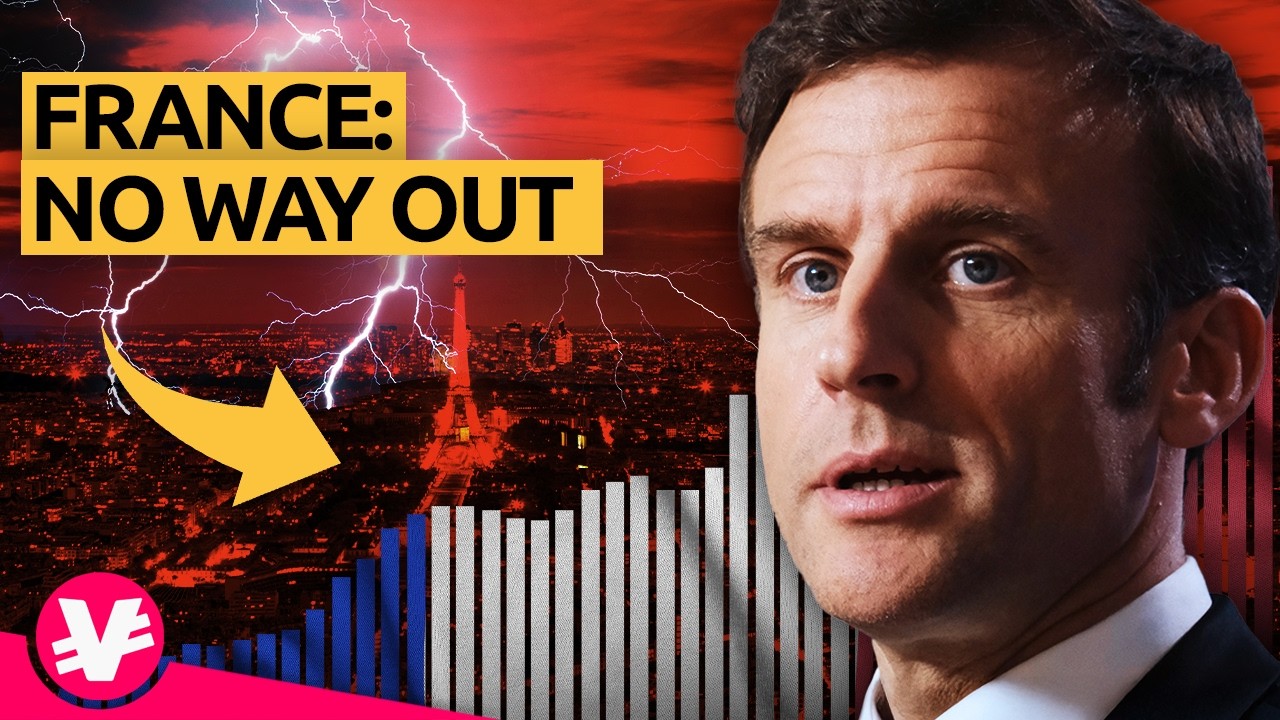
France is facing an unprecedented financial challenge. With public debt exceeding €3.2 trillion, representing more than 110% of gross domestic product (GDP), the eurozone's second-largest economy is on a dangerous path. The budget deficit is around 5.5% of GDP and is expected to rise to over 6% this year. These figures significantly exceed EU targets, which allow a maximum deficit of 3% and a debt ratio of 60% of GDP. The financial markets are becoming increasingly nervous, and interest rates on French government bonds are climbing to record levels. What has led to this debt chaos, and how can France avoid the looming abyss?

The roots of the crisis run deep. For decades, France has had a relaxed attitude towards debt, which differs from the strict budgetary discipline of other countries such as Germany. During the coronavirus pandemic and the energy crisis resulting from the war in Ukraine, the government pumped billions into the economy to support households and businesses. Subsidies for electricity prices and generous social benefits kept the economy stable but led to a sharp rise in debt. Since 2017, when President Emmanuel Macron took office, public debt has grown by almost one trillion euros. Critics accuse the government of delaying necessary structural reforms, while the government's spending ratio is just under 60% of GDP – one of the highest in the world.

The political situation is exacerbating the crisis. Following early parliamentary elections in the summer of 2024, parliament is fragmented and majorities are difficult to form. Prime Minister François Bayrou, who has been in office since autumn 2024, has presented an ambitious austerity programme to reduce the deficit to below 3% by 2029. The measures include the abolition of two public holidays, a freeze on pensions and social benefits, the elimination of 3,000 civil service jobs and higher taxes on high incomes. However, these plans are meeting with fierce resistance. The right-wing nationalist party Rassemblement National and left-wing parties are threatening votes of no confidence, which could bring down Bayrou's government. His predecessor, Michel Barnier, was forced to resign after only three months in office when his draft budget failed.

The financial markets are watching the situation with suspicion. Interest rates on French government bonds are now exceeding those of Greece in some cases, which is an alarming sign. France spends around 50 billion euros a year on debt servicing alone, and the trend is rising. Experts warn that this figure could climb to between 80 and 90 billion euros by 2027, making investment in education, infrastructure and climate protection virtually impossible. Rating agencies such as S&P and Moody's still rate France's creditworthiness as solid, but have threatened downgrades if the deficits are not reduced.

The crisis also has European dimensions. France is systemically important for the eurozone, and an uncontrolled rise in debt could jeopardise the stability of the single currency. Unlike the Greek debt crisis in 2008, when rescue funds were used, a bailout package for France would be almost impossible to finance. The EU has launched disciplinary proceedings against France to exert pressure for budget consolidation, but political instability is hampering reforms.

What can France do? Bayrou's austerity plans are a first step, but their implementation is uncertain. Tax increases are politically sensitive, as France already has one of the highest tax rates in Europe. Spending cuts could slow economic growth, which is just over 1% this year. At the same time, experts are calling for structural reforms to increase productivity and reduce dependence on the public sector. Without clear political majorities, there is a risk that France will slide further into debt.

Citizens are already feeling the effects of the crisis. Strikes and protests against austerity measures are on the rise, and social tensions are running high. Many French people feel caught between high living costs and impending cuts. The government faces the challenge of regaining credibility without losing the trust of the markets or the population.

A way out of the debt chaos requires courage and a willingness to compromise. Bayrou has described the situation as ‘the last stop before the abyss.’ Whether France can overcome this crisis depends on whether politicians and society are prepared to make tough decisions. Time is pressing, because the financial markets will not tolerate any further delays. France is at a crossroads – between reform and risk.
Featured


Marhabaan, welcome to the UAE and Dubai!

Marhabaan, welcome to the UAE and Dubai! The "skyward striving" Dubai next to ancient desert cities. Mysterious Bedouins and magnificent mosques exist peacefully alongside futuristic cities. Discover wadis and oases, golden sandy deserts, paradisiacal beaches and Arabian hospitality. The modern and the ancient Orient united in a book for dreaming.On this journey to Dubai and Abu Dhabi in the United Arab Emirates, the fairy tales of 1001 Arabian Nights meet the modern Arab world. These cascading cities enchant with their sky-high skyscrapers, fragrant souks, huge shopping centres and the ancient cultural heritage of the sheikhs.You can choose to stay in 4- or 5-star hotels with breakfast and swimming pools. You also have more options to book excursions so you can feel the magic of the East even more. If you want to do something out of the ordinary, you can spend an extra night in an enchanting hotel in the middle of the emirate's desert. Experience your own fairytale from 1001 nights and look forward to a holiday with plenty of casual extravagance in two superlative desert cities!

Trade and business at the Dubai Gold Souk

If Naif Deira is associated with a specific context, organization, or field, providing more details could help me offer more relevant information. Keep in mind that privacy considerations and ethical guidelines limit the amount of information available about private individuals, especially those who are not public figures. The Dubai Gold Souk is one of the most famous gold markets in the world and is located in the heart of Dubai's commercial business district in Deira. It's a traditional market where you can find a wide variety of gold, silver, and precious stone jewelry. The Gold Souk is known for its extensive selection of jewelry, including rings, bracelets, necklaces, and earrings, often crafted with intricate designs.Variety: The Gold Souk offers a vast array of jewelry designs, with a focus on gold. You can find items ranging from traditional to modern styles.Competitive Pricing: The market is known for its competitive pricing, and bargaining is a common practice. Prices are typically based on the weight of the gold and the craftsmanship involved.Gold and More: While gold is the primary focus, the souk also offers other precious metals such as silver and platinum, as well as a selection of gemstones.Cultural Experience: Visiting the Gold Souk provides not only a shopping experience but also a glimpse into the traditional trading culture of Dubai. The vibrant market is a popular destination for both tourists and locals.Security: The market is generally safe, and there are numerous shops with security measures in place. However, as with any crowded area, it's advisable to take standard precautions regarding personal belongings.Gold Souk is just one part of the larger Deira Souk complex, which also includes the Spice Souk and the Textile Souk. It's a must-visit for those interested in jewelry, and it reflects the rich cultural and trading history of Dubai.

Dubai: Amazing City Center, Night Walking Tour

During this excursion, we leisurely explore Dubai Downtown and Burj Khalifa in the evening, giving you the chance to witness the captivating transformation of the district as it comes alive with the vibrant glow of thousands of lights. As the sun sets, the illuminated facade of Burj Khalifa and the enchanting Dubai Fountain collaborate to produce a genuinely magical atmosphere.Dubai Downtown, also known as Downtown Dubai, is a distinguished and iconic district situated in the heart of Dubai, United Arab Emirates. It is a renowned neighborhood celebrated for its striking architecture, luxurious living, and exceptional entertainment options. At the core of Downtown Dubai stands the Burj Khalifa, a towering skyscraper that holds the title of the world's tallest man-made structure and serves as an emblem of modern Dubai.Burj Khalifa: The focal point of Downtown Dubai, Burj Khalifa, is famous for its groundbreaking height, reaching an impressive 828 meters (2,722 feet). Designed by architect Adrian Smith, its distinctive Y-shaped design encompasses a mix of residential, commercial, and hotel spaces.Dubai Mall: Adjacent to Burj Khalifa is the Dubai Mall, one of the largest shopping malls globally, featuring an extensive array of retail outlets, from high-end boutiques to international brands. The mall also provides various dining options, and entertainment attractions like an indoor ice rink and an aquarium, and hosts the mesmerizing Dubai Fountain.Dubai Fountain: Located just outside the Dubai Mall, the Dubai Fountain is a captivating attraction that presents a nightly spectacle of water, music, and light, captivating visitors with its perfectly synchronized performances.Emaar Boulevard: Stretching through Downtown Dubai, this boulevard is adorned with restaurants, cafes, and shops, making it a popular spot for leisurely strolls, dining, and people-watching.Luxury Living: Downtown Dubai boasts numerous upscale residential buildings and hotels, making it an appealing locale for those seeking a sophisticated urban lifestyle.Cultural Attractions: The Dubai Opera, an iconic cultural venue within the district, hosts a diverse range of performances, including opera, ballet, concerts, and theater productions.Transportation: Downtown Dubai is well-connected through public transportation, including the Dubai Metro, facilitating easy access to other parts of the city.In summary, Downtown Dubai is a dynamic and vibrant district that stands as a testament to Dubai's modernity and grandeur. It seamlessly combines architectural wonders with shopping, entertainment, and cultural offerings, creating a truly extraordinary destination.