Dubai Telegraph - Rare Florida cactus becomes first US species lost to sea rise

EUR -
AED 4.30339
AFN 77.602095
ALL 96.502193
AMD 446.810154
ANG 2.09797
AOA 1074.528578
ARS 1699.182364
AUD 1.769095
AWG 2.112145
AZN 1.927026
BAM 1.955844
BBD 2.358854
BDT 143.233255
BGN 1.957019
BHD 0.44151
BIF 3462.878699
BMD 1.171787
BND 1.514028
BOB 8.093184
BRL 6.496852
BSD 1.171127
BTN 104.937385
BWP 16.473374
BYN 3.442078
BYR 22967.017958
BZD 2.355454
CAD 1.616527
CDF 2998.012659
CHF 0.931494
CLF 0.027208
CLP 1067.368467
CNY 8.250491
CNH 8.244397
COP 4489.630168
CRC 584.913293
CUC 1.171787
CUP 31.052346
CVE 110.267506
CZK 24.339647
DJF 208.55474
DKK 7.469396
DOP 73.361667
DZD 152.321462
EGP 55.868914
ERN 17.576799
ETB 181.941735
FJD 2.676007
FKP 0.875803
GBP 0.874815
GEL 3.146287
GGP 0.875803
GHS 13.451306
GIP 0.875803
GMD 85.540443
GNF 10237.276339
GTQ 8.974204
GYD 245.025569
HKD 9.117683
HNL 30.853701
HRK 7.535524
HTG 153.551524
HUF 386.564957
IDR 19646.701951
ILS 3.757979
IMP 0.875803
INR 104.947495
IQD 1534.241414
IRR 49332.216942
ISK 147.235095
JEP 0.875803
JMD 187.394259
JOD 0.830816
JPY 184.460896
KES 150.961317
KGS 102.472457
KHR 4700.04665
KMF 492.150699
KPW 1054.607695
KRW 1733.778946
KWD 0.360008
KYD 0.976026
KZT 606.07636
LAK 25365.684707
LBP 104877.783498
LKR 362.609788
LRD 207.294711
LSL 19.64703
LTL 3.459981
LVL 0.708802
LYD 6.348144
MAD 10.735144
MDL 19.827451
MGA 5326.121044
MKD 61.551399
MMK 2461.08804
MNT 4161.150082
MOP 9.386853
MRU 46.870065
MUR 54.077804
MVR 18.103604
MWK 2030.846154
MXN 21.10894
MYR 4.77852
MZN 74.890326
NAD 19.64703
NGN 1709.577768
NIO 43.10098
NOK 11.86482
NPR 167.899816
NZD 2.030419
OMR 0.45136
PAB 1.171127
PEN 3.94399
PGK 4.982134
PHP 68.725871
PKR 328.130957
PLN 4.205273
PYG 7857.178566
QAR 4.269697
RON 5.090195
RSD 117.383169
RUB 94.258175
RWF 1705.238754
SAR 4.395405
SBD 9.546252
SCR 17.755479
SDG 704.827544
SEK 10.85754
SGD 1.514998
SHP 0.879143
SLE 28.181482
SLL 24571.784043
SOS 668.115184
SRD 45.045235
STD 24253.617424
STN 24.500661
SVC 10.247277
SYP 12958.157263
SZL 19.644446
THB 36.742577
TJS 10.792245
TMT 4.101253
TND 3.428078
TOP 2.821381
TRY 50.170513
TTD 7.949215
TWD 36.972098
TZS 2923.607504
UAH 49.519425
UGX 4189.095203
USD 1.171787
UYU 45.981045
UZS 14079.319973
VES 330.630905
VND 30839.666436
VUV 141.821032
WST 3.266739
XAF 655.971908
XAG 0.016999
XAU 0.000267
XCD 3.166812
XCG 2.110757
XDR 0.815819
XOF 655.971908
XPF 119.331742
YER 279.353628
ZAR 19.62186
ZMK 10547.485196
ZMW 26.497602
ZWL 377.314817
  • SCS

    0.0200

    16.14

    +0.12%

  • CMSC

    -0.1200

    23.17

    -0.52%

  • CMSD

    -0.0300

    23.25

    -0.13%

  • GSK

    0.3200

    48.61

    +0.66%

  • RELX

    0.0800

    40.73

    +0.2%

  • RBGPF

    0.0000

    80.22

    0%

  • RIO

    0.6900

    78.32

    +0.88%

  • NGG

    -0.2800

    76.11

    -0.37%

  • BCE

    -0.0100

    22.84

    -0.04%

  • RYCEF

    0.2800

    15.68

    +1.79%

  • BTI

    -0.5900

    56.45

    -1.05%

  • JRI

    -0.0500

    13.38

    -0.37%

  • VOD

    0.0400

    12.84

    +0.31%

  • BCC

    -2.9300

    74.77

    -3.92%

  • AZN

    0.7500

    91.36

    +0.82%

  • BP

    0.6300

    33.94

    +1.86%

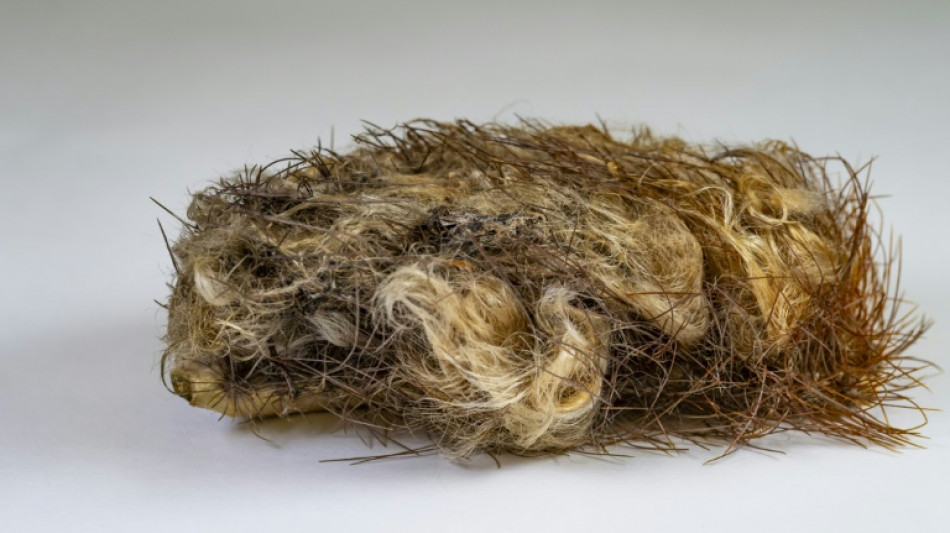
Rare Florida cactus becomes first US species lost to sea rise
Rare Florida cactus becomes first US species lost to sea rise / Photo: Jeff GAGE - FLORIDA MUSEUM/AFP

Rare Florida cactus becomes first US species lost to sea rise

A rare species of tree cactus has gone extinct in Florida, in what is believed to be the first species lost to sea level rise in the United States, researchers said Tuesday.

Text size:

The Key Largo tree cactus (Pilosocereus millspaughii) was restricted to a single small population in the Florida Keys, an archipelago off the southern tip of the state, first discovered in 1992 and monitored intermittently since then.

But salt water intrusion caused by rising seas, soil erosion from storms and high tides, and herbivory by mammals placed significant pressure on the last population.

By 2021, a once-thriving group of roughly 150 stems in an isolated mangrove forest had dramatically declined to six fragile, struggling fragments, which researchers relocated for off-site cultivation in a bid to ensure their survival.

"Unfortunately, the Key Largo tree cactus may be a bellwether for how other low-lying coastal plants will respond to climate change," said Jennifer Possley, the director of regional conservation at Fairchild Tropical Botanic Garden.

Possley is the lead author on a study published Tuesday in the Journal of the Botanical Research Institute of Texas documenting the decline of the species.

Key Largo tree cacti continue to grow on a few scattered Caribbean islands, including northern Cuba and parts of the Bahamas.

These plants can reach heights exceeding 20 feet (six meters) and feature cream-colored flowers with a garlic scent that gleam in moonlight, drawing bat pollinators. Their vivid red and purple fruits are also highly attractive to birds and mammals.

Human-caused climate change is leading to water from melting ice sheets and glaciers flowing into the world's oceans.

Additionally, as water in the ocean warms it expands slightly. Both factors contribute to sea level rise.

W.Darwish--DT