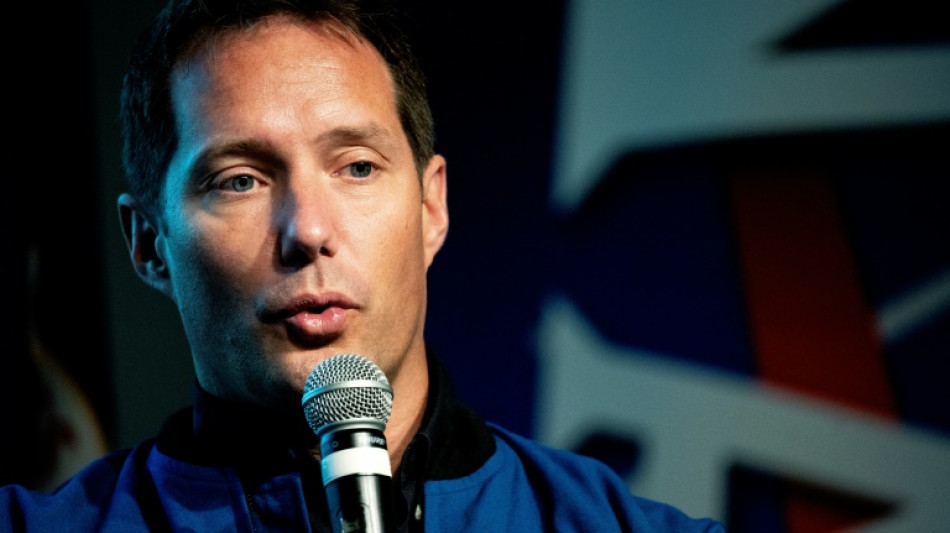
French astronaut Pesquet calls for European space independence / Photo: Stefani Reynolds - AFP
French astronaut Thomas Pesquet on Tuesday urged Europe to seize the momentum created by its newfound diplomatic unity and "start moving now" to develop its own human spaceflight capacity.
The charismatic engineer and pilot, 44, recently completed his second deployment to the International Space Station on the NASA-SpaceX Crew-2 mission, and has arguably the highest profile among the European Astronaut Corps, in addition to being a celebrity in his native France.
Though he has long extolled international cooperation in space and remains in the mix to possibly go to the Moon as part of the NASA-led Artemis missions, Pesquet said it was vital for Europe's leaders to give the European Space Agency (ESA) the funding and mandate it needs to launch its own people, too.
"That topic is gaining momentum now," he told AFP at NASA headquarters in Washington.
"In the late eighties and early nineties, we had this goal of becoming more independent as far as space access for humans, and then it didn't pan out. Several things happened, Germany had to reunite, they had to redirect budgets etc."
Russia's invasion of Ukraine has now unified Europe's once fractious member states, and Pesquest said he hoped ESA member countries will capitalize on the continent's new clout.
"These topics like European diplomacy, European defense are coming back on the table, and part of that process is also that independent human access to space," he argued.
Currently, only the United States, Russia and China have independent launch capacity, while India is looking to acquire the same.
One potential option for ESA is launching crew on a spaceship fixed to the Ariane 6 rocket, which is currently under development and is expected to make its debut launch from French Guiana by the end of this year.
"We have to start moving now, because the development cycles are long. You don't want this to happen in 15 to 20 years," he said.
- Commercial space benefits and challenges -
Pesquet was also keen to push back against the idea that the rise of the commercial space sector was making national space agencies obsolete.
"There's a general perception among the public that the private sector, or Elon Musk, or SpaceX, are calling the shots, which is not true at all."
In fact, said Pesquet, private industry had always been involved -- from building the Space Shuttle to Ariane rockets. "What we've done now is give them more autonomy and say, 'Hey, we need the service. You provide the service at an efficient cost,' which they've been delivering."
Musk might grab headlines for his bombastic announcements about colonizing Mars, but "the small print says, when all the agencies put together the budget to go to Mars, then the private sector is going to deliver the hardware," said Pesquet.
While the private sector was bringing a new level of speed and innovation to the table, Pesquet said there were some challenges -- for example in working with the private, ticket-paying citizens now visiting the ISS with increasing frequency.
"If you mix up professional astronauts... and the spaceflight participants, obviously, it kind of impacts the work that we're doing, because we have to take care of them, because they're less trained, they have less experience on the board," he said, something agencies will need to consider moving forward.
H.Sasidharan--DT