Dubai Telegraph - 'Wake-up call': third of adults not doing enough physical activity

EUR -
AED 4.269099
AFN 72.644925
ALL 95.076242
AMD 427.973788
ANG 2.080952
AOA 1066.940946
ARS 1619.310336
AUD 1.62529
AWG 2.093493
AZN 1.98043
BAM 1.952096
BBD 2.341856
BDT 142.721021
BGN 1.940855
BHD 0.438457
BIF 3459.420975
BMD 1.162245
BND 1.486405
BOB 8.034892
BRL 5.877243
BSD 1.162694
BTN 111.524295
BWP 16.447074
BYN 3.235716
BYR 22779.993656
BZD 2.338503
CAD 1.598842
CDF 2612.149237
CHF 0.914587
CLF 0.026819
CLP 1055.53936
CNY 7.914774
CNH 7.919977
COP 4429.104869
CRC 527.444525
CUC 1.162245
CUP 30.799481
CVE 110.588029
CZK 24.31021
DJF 206.554563
DKK 7.471262
DOP 69.212121
DZD 154.461189
EGP 61.40658
ERN 17.433669
ETB 183.112088
FJD 2.561762
FKP 0.862257
GBP 0.872032
GEL 3.115269
GGP 0.862257
GHS 13.296531
GIP 0.862257
GMD 84.267207
GNF 10201.606223
GTQ 8.870283
GYD 243.262581
HKD 9.103804
HNL 30.944808
HRK 7.532977
HTG 152.244207
HUF 361.702584
IDR 20458.933129
ILS 3.393104
IMP 0.862257
INR 111.565078
IQD 1522.540392
IRR 1533000.593877
ISK 143.572521
JEP 0.862257
JMD 183.721378
JOD 0.824077
JPY 184.466856
KES 150.336783
KGS 101.638735
KHR 4663.510767
KMF 492.792107
KPW 1046.022246
KRW 1740.612787
KWD 0.358716
KYD 0.968978
KZT 545.863586
LAK 25511.268811
LBP 104318.488614
LKR 381.960138
LRD 213.126644
LSL 19.165856
LTL 3.431807
LVL 0.703031
LYD 7.351242
MAD 10.722914
MDL 20.115176
MGA 4861.669457
MKD 61.623504
MMK 2440.295192
MNT 4160.224164
MOP 9.378066
MRU 46.490185
MUR 54.835139
MVR 17.910628
MWK 2024.053269
MXN 20.149374
MYR 4.59029
MZN 74.271763
NAD 19.165851
NGN 1592.845004
NIO 42.678058
NOK 10.814225
NPR 178.438473
NZD 1.985725
OMR 0.446324
PAB 1.162714
PEN 3.989409
PGK 5.093
PHP 71.603608
PKR 323.830439
PLN 4.246552
PYG 7085.554754
QAR 4.236426
RON 5.155838
RSD 117.369313
RUB 84.565601
RWF 1697.458201
SAR 4.397708
SBD 9.316927
SCR 15.774497
SDG 697.932139
SEK 10.984146
SGD 1.488259
SHP 0.867733
SLE 28.595478
SLL 24371.690047
SOS 664.227031
SRD 43.52959
STD 24056.116125
STN 24.755809
SVC 10.173695
SYP 128.465739
SZL 19.165842
THB 37.936092
TJS 10.848401
TMT 4.079478
TND 3.365284
TOP 2.798406
TRY 52.864738
TTD 7.892702
TWD 36.69962
TZS 3021.836282
UAH 51.33988
UGX 4365.715804
USD 1.162245
UYU 46.571628
UZS 14005.047508
VES 592.917692
VND 30630.955755
VUV 137.052406
WST 3.144567
XAF 654.725887
XAG 0.015287
XAU 0.000256
XCD 3.141025
XCG 2.09556
XDR 0.813493
XOF 654.344081
XPF 119.331742
YER 277.315726
ZAR 19.39541
ZMK 10461.600028
ZMW 21.888841
ZWL 374.242279
  • RBGPF

    0.8900

    61.68

    +1.44%

  • RYCEF

    -0.8300

    15.1

    -5.5%

  • BCE

    -0.4000

    23.79

    -1.68%

  • CMSD

    -0.4500

    23.05

    -1.95%

  • BTI

    -1.6100

    65.09

    -2.47%

  • RIO

    -5.9000

    103.69

    -5.69%

  • NGG

    -6.7900

    80.64

    -8.42%

  • GSK

    -0.8289

    49.67

    -1.67%

  • RELX

    0.9400

    32.4

    +2.9%

  • CMSC

    -0.1150

    22.98

    -0.5%

  • VOD

    -0.8000

    14.68

    -5.45%

  • AZN

    -3.3800

    181.58

    -1.86%

  • BP

    0.7292

    44.35

    +1.64%

  • JRI

    -0.5565

    12.45

    -4.47%

  • BCC

    -3.4100

    65.99

    -5.17%

'Wake-up call': third of adults not doing enough physical activity
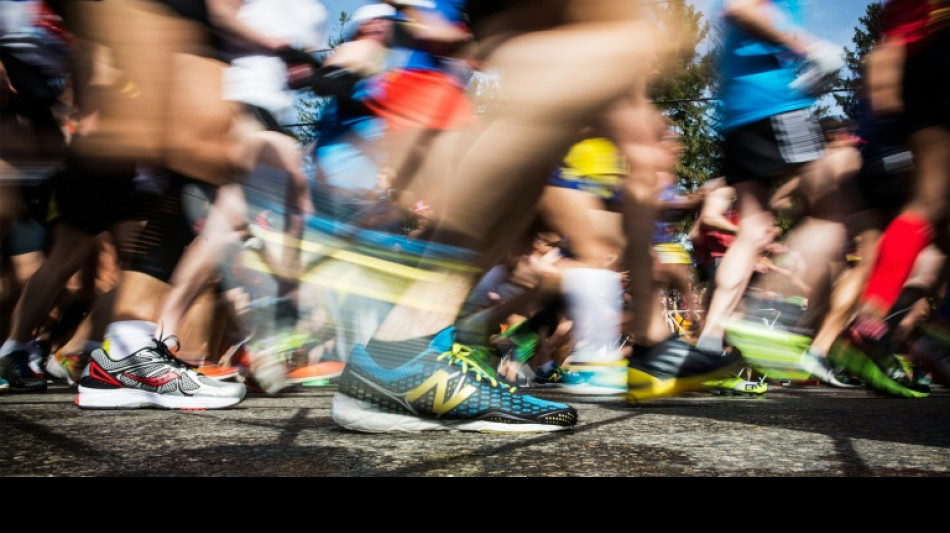
'Wake-up call': third of adults not doing enough physical activity / Photo: Andrew Burton - GETTY IMAGES NORTH AMERICA/AFP/File

'Wake-up call': third of adults not doing enough physical activity

Nearly a third of all adults are not doing enough physical activity, posing a growing threat to health across the world, a major study said on Wednesday.

Text size:

More than 31 percent of adults -- 1.8 billion people -- did not get the recommended amount of physical exercise in 2022, an increase of five percentage points from 2010, according to a study by the World Health Organization and other researchers.

"Physical inactivity is a silent threat to global health, contributing significantly to the burden of chronic diseases," said Ruediger Krech, director of the WHO's health promotion department.

"Unfortunately the world is not going in the right direction," he told an online press conference.

To be healthy, the WHO recommends all adults spend at least 150 minutes every week doing moderate-intensity physical activity -- which can include walking, cycling or even household chores -- or at least 75 minutes of more vigorous exercise, such as running or competing in sport.

A combination of the two will also get people over the line.

Not getting this level of exercise increases the risk of people developing heart disease, diabetes, some cancers as well as mental health problems, Krech said.

If current trends continue, adult inactivity levels are projected to rise to 35 percent by 2030, according to the study in The Lancet Global Health.

This would fall far short of the WHO's goal of reducing physical inactivity by 15 percent by the end of the decade.

Fiona Bull, head of the WHO's physical activity unit, said the research was "a wake-up call that we're not doing enough".

- 'Every step counts' -

Inactivity rates varied widely between countries. For example, 66 percent of adults do not get enough physical activity in the United Arab Emirates, while the figure was under three percent in Malawi.

There was also a gender gap. Nearly 34 percent of women worldwide do not reach the activity threshold, compared to 29 percent of men.

There are "multiple causes" for activity rates declining overall, including that people are walking less, working at computers more and generally spending more leisure time looking at screens, Bull said.

During a busy few months of world sport which includes the Olympics and the European and Copa America football championships, Krech reminded people that "watching sports does not equal being physically active".

"Don't just sit on (your) chairs, get up and be active -- every step counts," he said.

The WHO emphasised that changing individual behaviour is not enough, calling on countries to promote physical activity by boosting community sport as well as walking, cycling and public transport.

For the study, billed as the most comprehensive to look at the subject yet, an international team of researchers combined the findings from more than 500 studies involving 5.7 million people across 163 countries and territories.

It was not all bad news.

Almost half of the countries had made progress over the last decade, and 22 are on track to reach the 2030 target -- as long as they keep moving in the right direction.

S.Mohideen--DT